


Does Your Dog Actually Need a Coat? A Buyer's Guide (Plus 12 We'd Buy)
Before you shop, find out whether your dog needs a coat at all, then match the right type to your weather. A decision-first guide to dog coats, with 12 picks for every body type and forecast.

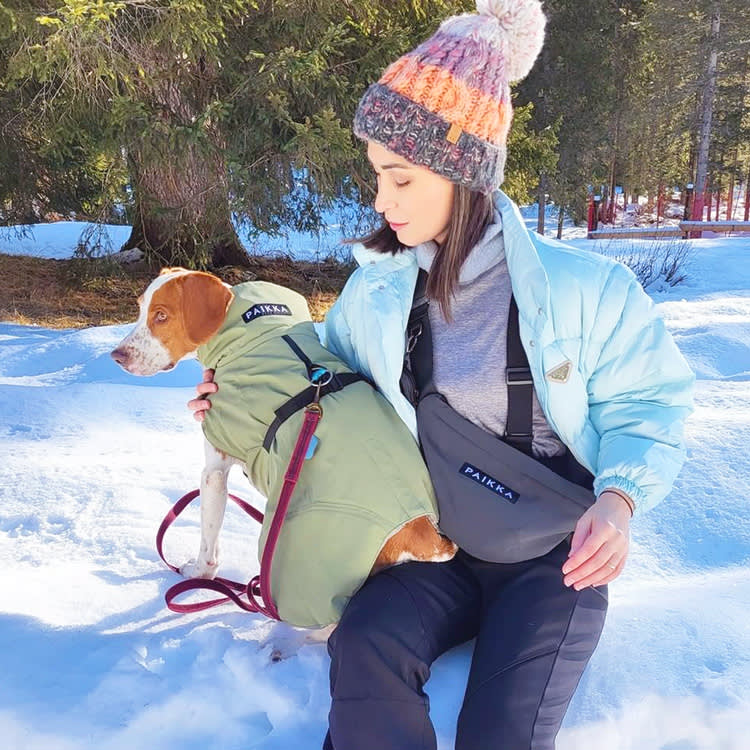
Every winter the same myth resurfaces: a dog has a fur coat, so they’re fine in the cold. Sometimes true, often not, and occasionally dangerous. A Husky bred to sleep in Arctic snow genuinely doesn’t need help. A senior Greyhound with a paper-thin single coat absolutely does, and forcing the first dog into a coat can leave them overheating.
So the useful version of this guide doesn’t start with a product. It starts with a question: does your dog need a coat at all, and if so, for what kind of weather? Get that right and the shopping is easy. Get it wrong and you’ve either left a shivering dog cold or wrapped a polar breed in a sauna. Let’s sort your dog first, then match them to the right coat.
“Dressing a cold-sensitive dog for winter genuinely changes their willingness to go out and do their business,” says Tom Hadley. “But the goal is to help the dogs that need it, not to put a parka on a Malamute who’s already wearing the best coat money can’t buy.”
Step 1: Does your dog need a coat?
Run your dog through these. The more boxes they tick, the more a coat helps.
- Coat type: Short-haired or single-coated (Greyhound, Whippet, Boxer, Doberman, Pit mix, Chihuahua) → likely yes. Thick double coat (Husky, Malamute, Samoyed, Bernese, Great Pyrenees) → usually no.
- Size and body fat: Small and lean dogs lose heat fast and benefit most. Big, well-insulated dogs less so.
- Age and health: Puppies and seniors regulate temperature poorly. Dogs with arthritis, heart conditions, or recent illness feel cold more.
- The dog’s own signals: Shivering, a hunched and tucked posture, lifting paws off cold ground, slowing down, or flat-out refusing to walk all say “I’m cold.” Trust these over the thermometer.
Step 2: Match the coat to your weather
Not all winter is the same winter. Pick the category your climate actually demands:
- Dry cold: A fleece or quilted insulated coat is plenty. Skip the waterproofing you won’t use.
- Wet cold (rain, sleet, slush): Waterproof or water-repellent shell is essential, wet fur loses insulation fast.
- Extreme cold (sub-20, deep snow): A full-body insulated snowsuit with belly coverage, and shorter outings regardless.
- Hassle factor: If wrestling your dog into gear is the real barrier, a two-in-one harness coat (zip, clip, go) wins, because the warmest coat in the closet does nothing.
The 12 best dog coats, by need
They run in job order: serious insulation first, then rain and visibility gear, then the fit-specific problem solvers, with the style pick and the all-rounder closing the list.
Best for extreme cold: AOFITEE full-body puffer
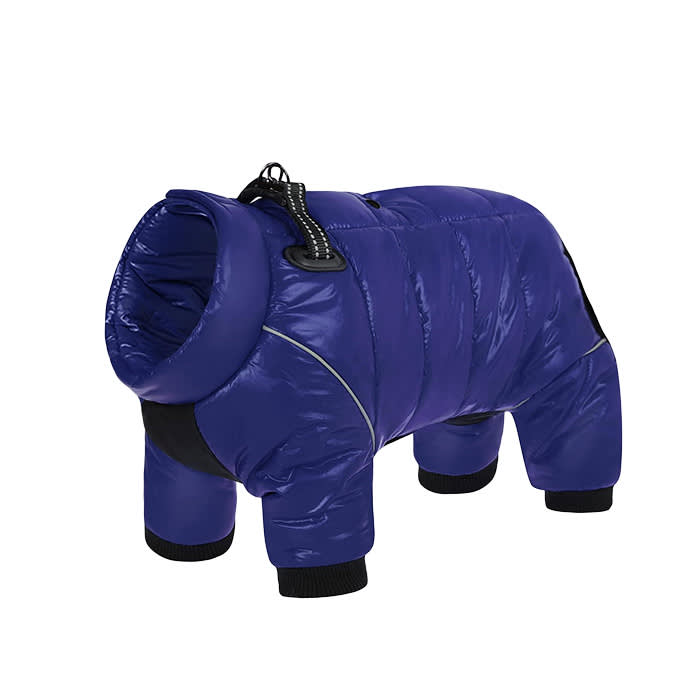 A snowsuit-and-harness combo designed for short coats and brutal temperatures, water- and wind-resistant with full belly coverage, yet surprisingly easy to get on and off. Note the sizing runs small at the top end (largest fits a medium dog).
Best adventure coat: Hurtta Extreme Warmer
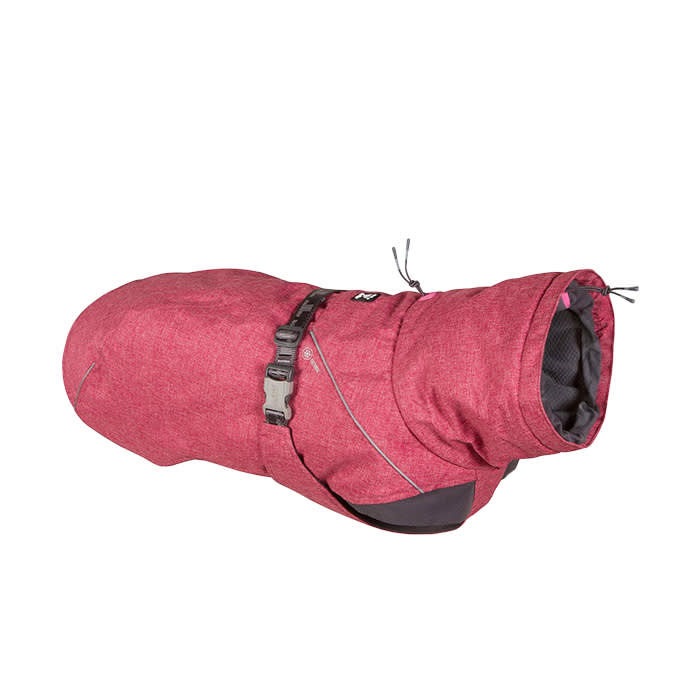 Built for serious cold (rated down to roughly -20°F) with a highly customizable fit by chest girth (8 to 32 inches), plus special cuts for low-riders and thick-necked dogs. The pick for genuine winter expeditions.
Best budget warm jacket: quilted snap-button coat
Hits the trifecta of cute, comfy, and cheap without skimping on warmth, quilted with a fleece lining, snap buttons for easy on-off, and an unusually wide size range (XS to XXXL). Proof you don’t have to overspend.
Best fleece: Pendleton reversible dog coat
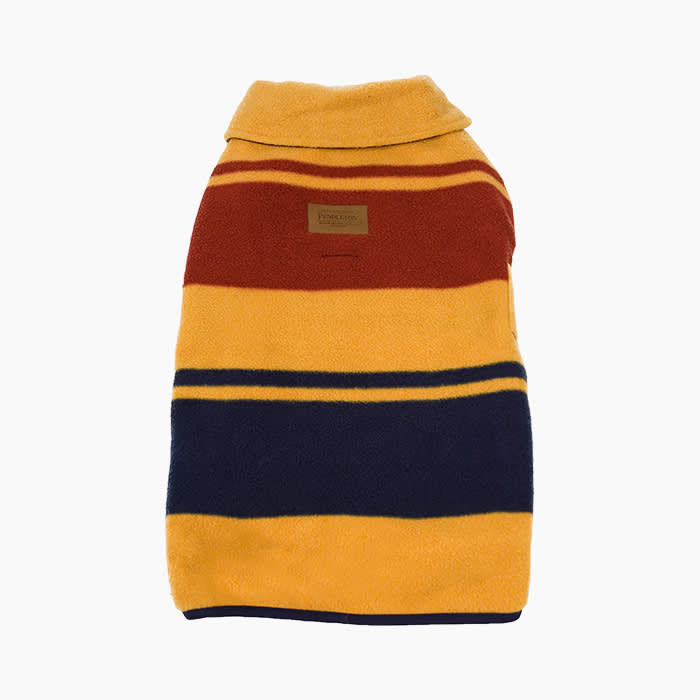 The brand’s iconic striped wool look, reversible, machine-washable, and easy for a dog to move in. Great for dry winter days and light enough to bridge into early spring. Sizes XS to XXL.
Best waterproof: Gooby sleeveless jacket
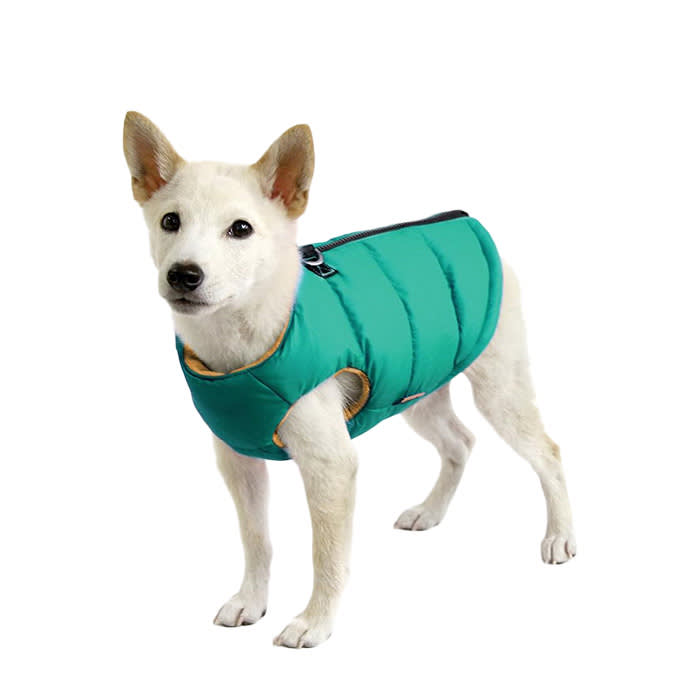 A built-in harness plus a genuinely waterproof shell, with a sleeveless cut that goes on and off without fuss and never binds the shoulders. Sized by chest, XS to XL. The one to grab if rain, not snow, is your enemy.
Best lightweight waterproof: Ruffwear Vert / Overcoat
Warm and genuinely wearable, with an insulated, low-bulk build that lets a dog move freely through snow and slush. Adjustable leg and waist straps, sizes from XXS up. The brand’s outdoor pedigree shows.
Best reflective: Norbi quilted jacket
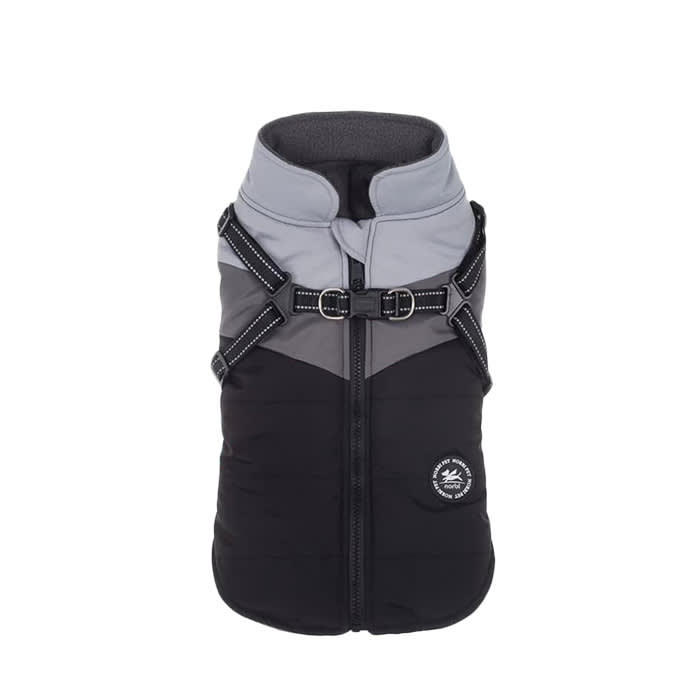 A comfort-forward, visibility-boosting pick for dark winter walks. A fabric flap keeps fur from snagging in the zipper, and the body-close quilting stays warm without limiting movement. Sizes XS to XXL.
Best for small breeds: GF Pet reversible puffer
Built for tiny, shiver-prone dogs, with sizing that starts at 2XS and a single large front-quarter opening that gives little legs real freedom. The water-repellent shell handles light precipitation. A standout for Chihuahuas, Yorkies, and minis.
Best for long-backed dogs: quilted long-body coat
Cut for dachshunds and other long, low frames that standard coats leave gapping or riding up. Fleece lining, reflective piping, and an adjustable belt for deep-barrel chests. Sizes XS to L.
Best for seniors and recovery: soft step-in fleece vest
The twelfth pick, and an easy-to-miss essential. For arthritic or post-surgery dogs who can’t tolerate anything pulled over the head or twisted around limbs, a step-in fleece vest with a wide belly wrap and a single top closure adds warmth with minimal handling. Gentle on stiff joints, and the easiest coat for an anxious or sore dog to accept.
Best stylish pick: Barbour belted dog jacket
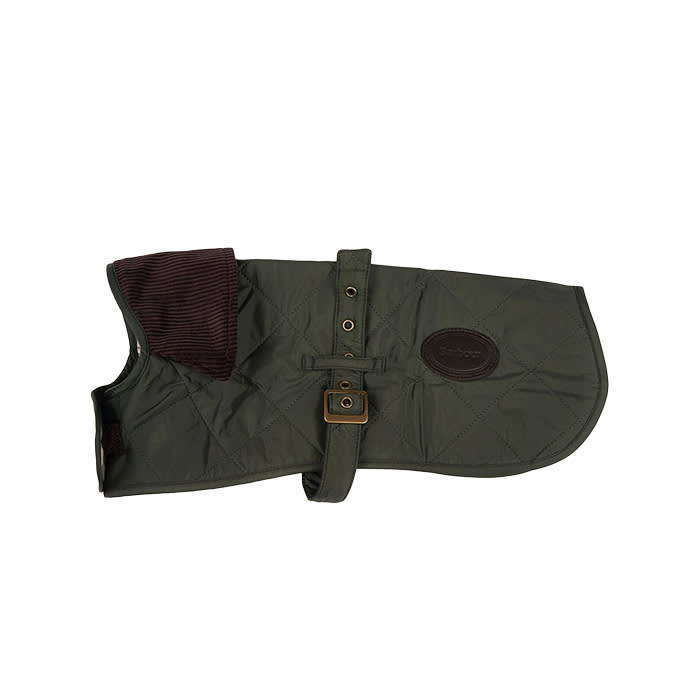 Lightweight but insulating, with a belt that creates a snug, adjustable fit and improves freedom of movement. The belting also lets it grow with a still-maturing puppy. Sizes XS to XL, classic colors. Looks good, works fine, costs more.
Best overall: Puppia two-in-one harness coat
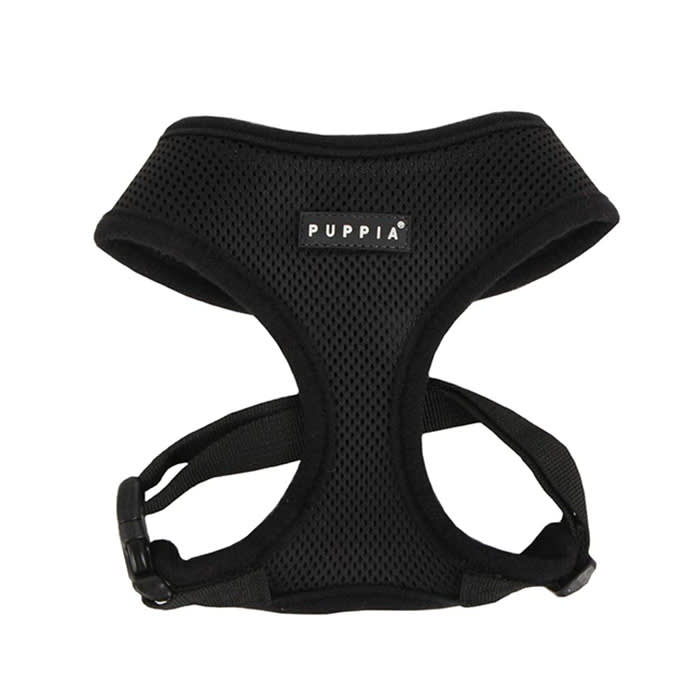 Combines a harness and a fleece-lined coat so you skip the double wrestling match, zip and clip and you’re out. Soft fleece lining, secure D-ring, sizes S to XXL. Measure chest girth for fit. The convenience is the whole point: it’s the coat people actually use.
Step 3: Fit it right (this is where coats fail)
A coat only works if it fits. The two measurements that matter are chest girth (around the widest part of the ribcage, just behind the front legs) and back length (base of neck to base of tail). Many brands also use weight. When you’re between sizes, size up. And check the shoulders: if the coat restricts the front legs’ full stride, it’s too small, your dog will balk at wearing it, and you’ll be back to a cold, coat-less walk.
A safety note worth more than any coat
Don’t let a good coat lull you. Frostbite and hypothermia are real, and they hit the ears, tail, and paws first, areas most coats don’t cover. A coat buys time and comfort; it does not make dangerous cold safe.
“The most effective frostbite prevention isn’t a product, it’s limiting exposure,” says Dr. Priya Nair. “When it’s truly brutal out, the right move is a shorter walk and more couch time, coat or no coat.”
When the forecast turns extreme, shorten the outing, watch the extremities, and head back in. A warm dog is the goal; a safe one is the rule.
References
- “Cold Weather Animal Safety.” American Veterinary Medical Association. https://www.avma.org/resources/pet-owners/petcare/cold-weather-animal-safety
- “Hypothermia and Frostbite in Dogs.” VCA Animal Hospitals. https://vcahospitals.com/know-your-pet/frostbite-in-dogs
- “Winter Safety Tips for Pets.” ASPCA. https://www.aspca.org/pet-care/general-pet-care/cold-weather-safety-tips
Common questions
Does my dog actually need a winter coat?
Some do, many don't. Dogs most likely to need one are small breeds, short-haired or single-coated breeds (Greyhounds, Whippets, Pit mixes, Dobermans), puppies, seniors, and any dog with a thin body or health condition. Thick double-coated breeds (Huskies, Malamutes, Bernese) are usually well insulated and can overheat in a coat. Watch your dog: shivering, hunched posture, lifting paws, and reluctance to walk are the real signals.
How cold is too cold for a dog?
As a rough guide, temperatures below about 45 degrees Fahrenheit start to feel uncomfortable for cold-sensitive dogs, below 32 is potentially unsafe for small, thin, or short-haired dogs, and below about 20 degrees is dangerous for nearly all dogs, with frostbite and hypothermia risk on extremities. Wind chill and wet fur make all of these worse.
How do I measure my dog for a coat?
Most coats are sized by chest girth (the circumference around the widest part of the ribcage just behind the front legs), back length (from the base of the neck to the base of the tail), and sometimes weight. Measure with a soft tape and size up if your dog is between sizes. A coat that restricts shoulder movement is too small.
Is a coat enough to keep my dog safe in extreme cold?
No. A coat extends comfortable time outdoors, but it does not make sub-zero conditions safe. The most reliable protection against frostbite and hypothermia is limiting exposure, shorter walks, and more indoor time when it's truly brutal out.
Marcus Webb writes about the gear, gadgets, and everyday choices that make life with a pet easier. His coverage runs from product picks to training and the causes worth paying attention to, always with an eye on what actually earns a place in your home.
Meet our experts ↗Keep reading
 Product PicksDesigner Dog Knits, Decoded: What Ashley Williams' Punk Sweaters Get RightSasha Ford · 4 min
 LivingWhy the Dog Pee Smell Keeps Coming Back (and the One Thing That Kills It)Nina Vasquez · 7 min
 FoodYour Dog Can't Have Your Ice Cream. Here Are 5 They Can, and How to Pick One.Sara Lim · 5 min
 Product PicksThis Founder Thinks Your Dog Wants a Routine as Badly as You DoSasha Ford · 5 min
 Product PicksThe Dog Coat We'd Buy This Winter, and How to Tell If Yours Even Needs OneLeila Torres · 4 min
 Product PicksThe Tag Does the Job the Microchip Can't: 11 ID Tags Worth WearingSasha Ford · 5 min