


A 108-Year-Old's Secret Was Dogs. The Science Says It's the Routine.
Ada Daniel credits her long life to a houseful of Greyhounds. The research backs the link between dogs and longevity, but the real mechanism is more ordinary than magic.
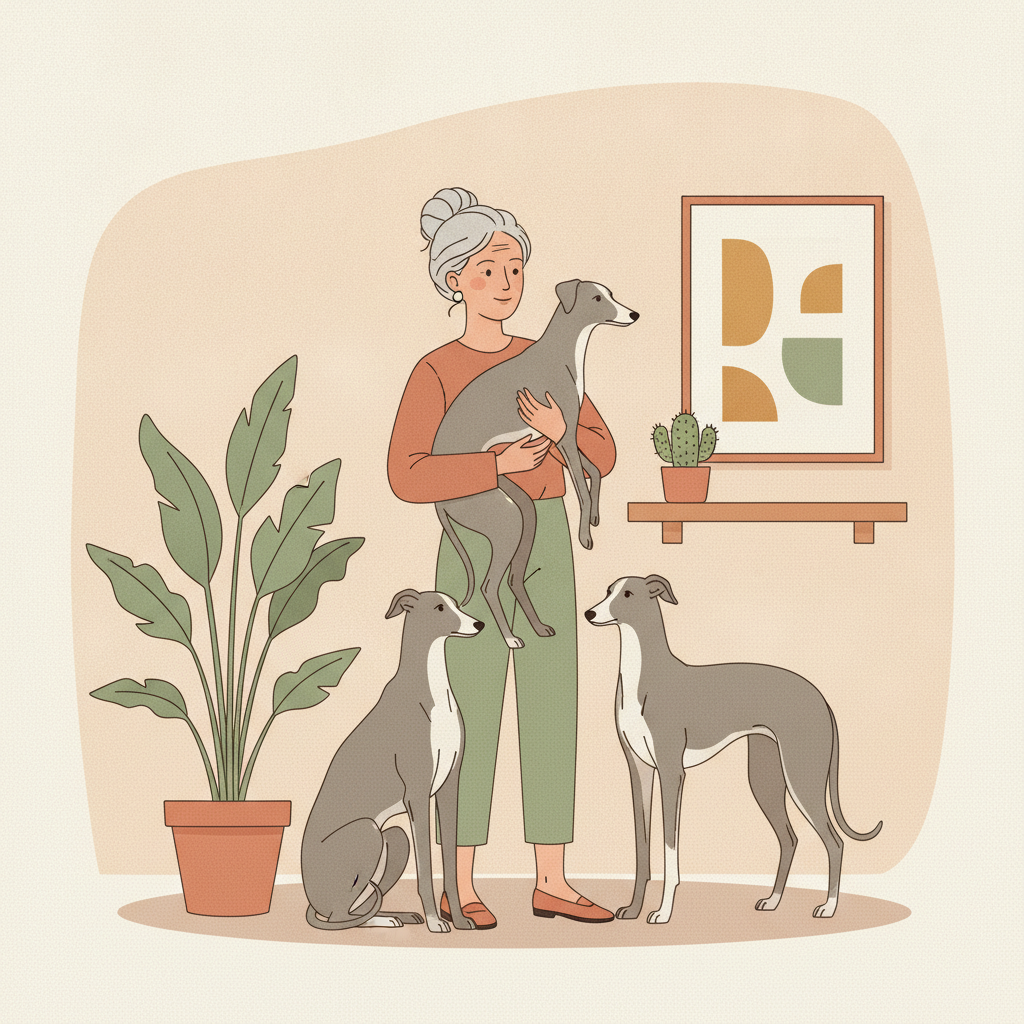
When you reach 108, people want your secret, and Ada Daniel had a blunt one ready. Celebrating her birthday at the Codnor Park Care Home in Derbyshire, England, she chalked her longevity up to two things: never having children, and always having dogs. She was particularly devoted to one breed.
According to Kelly Goucher, an activity coordinator at the home who spoke to the BBC, Daniel kept many Greyhounds over the years. She had lived on Street Lane in Ripley, and, as Goucher recounted, she gave every one of those Greyhounds the same name: Street Lane.
It is a charming claim, and the temptation is to file it under sweet-old-lady folklore. But here is the more interesting question: is she actually right? The research on skipping parenthood and lifespan is genuinely mixed, so we will set that half aside. On the dog half, though, the evidence is surprisingly strong, and what it reveals about why dogs may help us live longer is the real story. It is not magic. It is the unglamorous daily routine a dog forces on you.
The longevity link is real
Stack up the studies and a consistent pattern emerges. Around fifteen years ago, researchers found that simply being near dogs raises human oxytocin, the bonding hormone often tied to childbirth, which lowers anxiety and depression in men and women alike. More striking is an 11-year body of research published in 2019 that found dog ownership meaningfully extended the lives of people recovering from a stroke or living with heart disease. Since heart disease is the leading cause of death in the United States, that is not a small footnote.
The newest research pushes past the heart. Work on aging has linked pet ownership to slower cognitive decline and even healthier-looking brain structures in later life, with one line of work suggesting a difference amounting to years of “brain age.” The benefit is no longer just cardiovascular; it reaches the mind.
The mechanism is the routine, not the dog
Here is the part most coverage skips. Scientists are careful to note a chicken-and-egg problem: how much of this is the dog itself, and how much is the kind of life a dog imposes? Owning a dog drags you outside twice a day, rain or shine. It hands you a fixed schedule, a reason to talk to neighbors, and a living thing that depends on you. Those three ingredients, daily movement, social contact, and a sense of purpose, are exactly what the longevity literature credits for healthy aging in the first place.
That reframe matters, because it means the benefit is not locked inside dog ownership. It is the routine that does the work. The dog is just an unusually effective machine for enforcing it, one that refuses to let you skip the walk or spend the day alone on the couch.
Why that matters most for the people who are most alone
This is where Ada Daniel’s case stops being a curiosity and starts being a blueprint. She has little family left, and she is far from unusual; more than a third of American seniors live alone. The Human Animal Bond Research Institute has noted that chronic loneliness carries a health burden roughly equivalent to smoking 15 cigarettes a day. A dog directly counters that, supplying the purpose and daily connection that hold depression at bay in exactly the people most exposed to it.
We do not get to live forever, and a single centenarian is a story, not a study. But the science underneath her story is sound, and the takeaway is refreshingly actionable: the movement, contact, and purpose that help us age well are the same things a dog builds into every single day. If you want to follow her lead, you do not need her luck. You may just need another dog.
References
- Mubanga, M., et al. “Dog Ownership and Survival: A Systematic Review and Meta-Analysis.” Circulation: Cardiovascular Quality and Outcomes, 2019.
- Friedmann, E., et al. “Dog ownership and the human-animal bond: oxytocin and cardiovascular outcomes.” Frontiers in Psychology.
- Applebaum, J. W., et al. “Pet ownership and cognitive aging.” Journal of Aging and Health.
- BBC News. “Woman celebrates 108th birthday.” bbc.com/news/uk-england-derbyshire-65760819.
- Human Animal Bond Research Institute. “Can Pets Help You Live Longer?” habri.org.
Jordan Ellis is a certified professional dog trainer with a decade of experience working with rescue organisations and private clients. They specialise in anxiety, reactivity, and positive reinforcement methods, and review all training and behaviour content at The Pet Times.
Meet our experts ↗Keep reading
 LivingPride Gear for You and Your Dog: 20 Picks That Give BackJordan Ellis · 10 min
 LivingShould Your Dog Sleep in Your Bed? What the Research Actually SaysDr. Nina Kohl · 4 min
 LivingThe Neighbor's Dog Barks All Day. You Have More Power Than You Think.Marcus Webb · 7 min
 LivingBreed Bans Don't Reduce Bites. They Just Break Up FamiliesLeila Torres · 6 min
 LivingStop Guessing What to Pay Your Dog Sitter. Here's the 2026 Going RateJordan Ellis · 7 min
 LivingThe Hero Dog Who Smelled His Owner's Cancer Before the Doctors DidDr. Mara Chen · 4 min