


The Hero Dog Who Smelled His Owner's Cancer Before the Doctors Did
A 150-pound Great Dane named Maverick won the 2023 American Humane Hero Dog Awards. The headline was the trophy. The real story is what his nose did months before any doctor caught on.

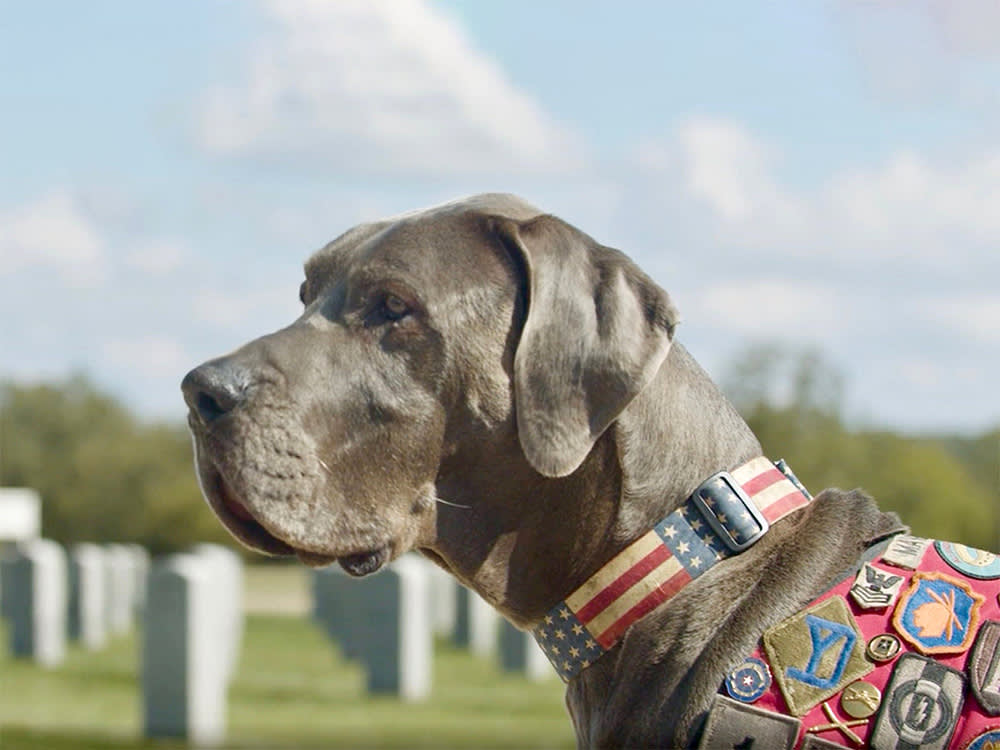
A 150-pound dog winning a national award sounds like a feel-good item you skim and forget. Maverick, a six-year-old European Blue Great Dane, took the 2023 American Humane Hero Dog Awards, and that is the part that made the news. But bury the trophy for a second, because the most remarkable thing this dog did never got entered into any contest. Months before his handler was diagnosed with cancer, Maverick started pressing his head against her and refusing to leave her side. Her doctor would later tell her the dog had almost certainly smelled the disease before a single test found it. That is the story worth your time. The award is just how the rest of us found out about it.
What a dog’s nose can actually detect
It is tempting to file “the dog knew” under sentiment, but the science is less mystical than it sounds. A dog’s sense of smell is estimated to be tens of thousands of times more sensitive than ours, and tumors are known to release volatile organic compounds, faint chemical signatures, into a person’s breath, sweat, and skin. Trained detection dogs have flagged cancers in controlled studies, and untrained pet dogs sometimes fixate, sniff, or nudge at a spot on their owner that later turns out to be malignant.
What we tell owners is to take a sudden, focused change in your dog’s behavior seriously rather than dismiss it. A dog who abruptly becomes clingy, keeps targeting one part of your body, or seems unsettled around you is not diagnosing you, but they may be reacting to something real. It is worth a conversation with your own doctor, not a panic, just a mention.
Maverick fit that pattern almost exactly. According to his handler, Kelly Brownfield, he grew “especially clingy” in the run-up to her diagnosis, constantly resting his enormous head near hers. Whatever he was picking up, he would not let it go.
The job he was actually trained for
The cancer detection was an accident of biology. Maverick’s actual work was deliberate and years in the making. Brownfield met him in 2016 when he was three months old, spent the next year training him, and got him certified as a therapy dog in 2017. From there the pair volunteered through the United Service Organizations, mostly with military families stationed at Fort Leonard Wood in St. Robert, Missouri, the people who carry the quiet weight of deployment, separation, and loss.
What a therapy dog offers those families is not obedience tricks. It is a nervous system that other people can borrow for a few minutes. A calm, friendly animal lowers the temperature in a room full of stressed humans, gives a grieving spouse something warm to hold onto, and gives a withdrawn kid a reason to talk. Brownfield framed his gift simply, in her own words to us: a single touch of his paw seemed to give people the steadiness to take the next step. The remarkable part is that Maverick was doing this for other families while his own person was fighting the same battle he had detected on her.
Why this award exists in the first place
American Humane, the country’s first national humane organization, has run the Hero Dog Awards for over a decade, and across those years the competition has featured more than 1,000 dogs. The point of the program is less the winner than the pattern it documents, year after year, of ordinary dogs doing extraordinary things for the humans around them. Maverick was originally entered in the Therapy Dog category before the public vote and a panel of judges pushed him to the top.
The other 2023 finalists were no less serious about their work: Buda, a four-year-old German Shorthaired Pointer mix from Oceanside, California; Poppy, a five-year-old black Labrador from Columbia, South Carolina; Raina, a 13-year-old Australian Shepherd from Perkasie, Pennsylvania; and Moxie, a five-year-old Mini Goldendoodle from Ballwin, Missouri. Every one of them is a working service dog in their own right.
Brownfield was set to finish her own cancer treatment the following spring, with Maverick still on her support team, the patient now leaning on the dog who noticed first. If you take one thing from his award, let it be this: the trophy recognized the therapy work, but the lesson lives in the head he kept pressing against his person when something was wrong. Pay attention to that. Your dog might be telling you something a lab hasn’t caught yet.
References
- American Humane. “Meet the Winner of the 2023 American Humane Hero Dog Awards.” PR Newswire, 6 Nov. 2023, prnewswire.com.
- American Humane. “Hero Dog Awards.” americanhumane.org.
- Pirrone, Federica, and Mariangela Albertini. “Olfactory Detection of Cancer by Trained Sniffer Dogs: A Systematic Review of the Literature.” Journal of Veterinary Behavior, vol. 19, 2017, pp. 105–117, sciencedirect.com.
- Junqueira, Heather, et al. “Accuracy of Canine Scent Detection of Lung Cancer in Blood Serum.” The Journal of the American Osteopathic Association, vol. 119, no. 7, 2019, pp. 413–418, degruyter.com.
Dr. Chen is a small-animal veterinarian who leads health and safety coverage at The Pet Times. She writes and reviews the bulk of our illness, condition, and safety content, translating clinical guidance into clear, practical advice owners can act on at home.
Meet our experts ↗Keep reading
 TrainingNo, Your Cat Didn't Secretly Raise Your Dog. But Something Real Is Going On.Dr. Nina Kohl · 5 min
 LivingThe Age of the Emotional Support Peacock Is Over. Here's What Replaced It.Dr. Priya Nair · 6 min
 LivingThe Vick Jersey Wasn't Really About Kyler MurraySasha Ford · 5 min
 LivingThe Climate Crisis Has a PR Problem. She Learned the Fix in Kardashian WorldNina Vasquez · 7 min
 LivingThe Dog-Walking Rules Your Neighbors Wish You KnewSasha Ford · 5 min
 Product PicksYour Dog on a Napkin Is Easy. A Whole Wedding Collection Is NotSara Lim · 9 min