


With Wild Mushrooms, the Dangerous Part Is When Your Dog Looks Fine Again
The deadliest wild mushrooms don't just make a dog sick. They cause a false recovery, hours of feeling better that hide fatal liver failure underneath. Here's the timeline that should drive your vet decision.

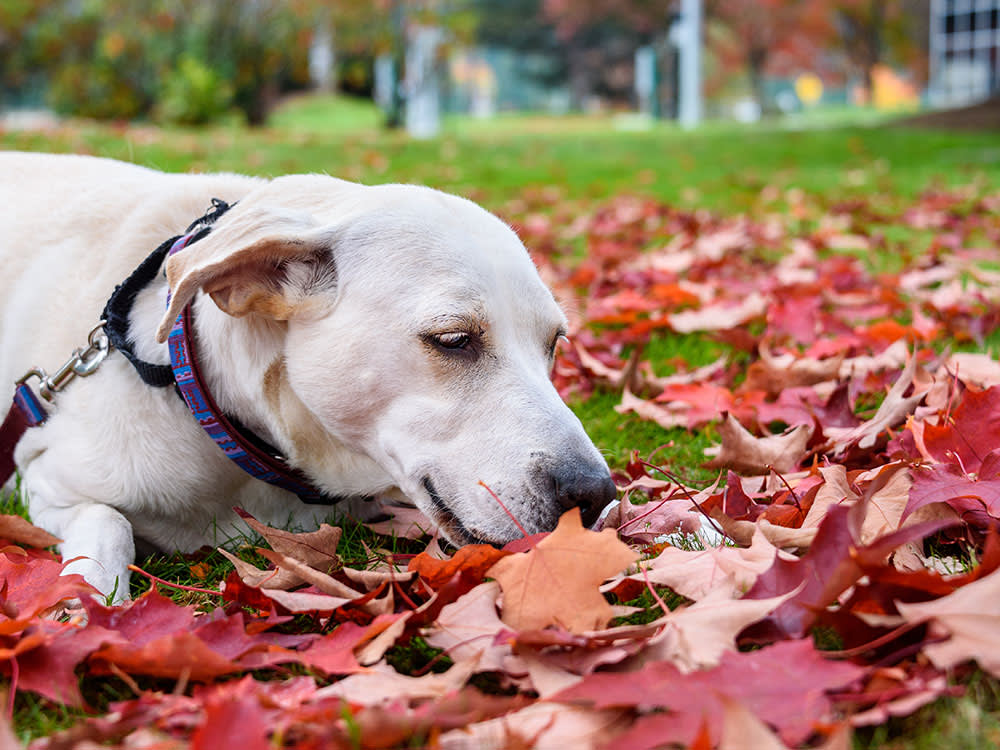
Most advice about wild mushrooms and dogs spends its energy on identification, which species are deadly, what they look like, where they grow. That information has its place, but it buries the single most important fact an owner needs, the one that actually saves dogs: with the most lethal mushrooms, the scariest moment is not when your dog gets sick. It is the moment a few hours later when your dog seems to feel better.
That false recovery is the trap that kills dogs whose owners did everything right except wait. So this piece is built around the timeline rather than the field guide, because understanding when this poisoning is most deceptive is what tells you not to relax, and not to wait.
Why “wait and see” is the wrong instinct here
With most things a dog eats off the ground, watching for symptoms is reasonable. With wild mushrooms it can be fatal, and the reason is the way the deadliest toxins behave inside the body.
The most dangerous wild mushrooms contain amatoxins, the poison in Amanita phalloides, the Death Cap, and its relatives. Amatoxins do not act fast. After a dog eats one, there is typically a delay of roughly 6 to 24 hours before any symptoms appear at all. Then comes a bout of vomiting and diarrhea that looks like ordinary gastroenteritis, the kind of upset stomach a dog shakes off all the time.
And then, cruelly, the dog appears to improve. The vomiting eases, the dog perks up, and an owner naturally exhales and assumes the worst has passed. It has not. During that quiet window, usually around 36 to 48 hours after ingestion, the amatoxin is silently attacking the liver, the organ that filters the body’s toxins and is therefore hit hardest. By the time the second wave arrives, jaundice, a tender belly, bleeding problems, collapse, the liver is already in failure, and the dog can die within a few days. This phased pattern, sickness, false recovery, then catastrophic liver failure, is the defining feature of amatoxin poisoning, and it is exactly why “see if they get better” is the worst possible plan.
The false recovery is the part that haunts these cases. The dog vomits, then bounces back, and the family understandably thinks it is over. Meanwhile the liver is being destroyed on a clock they cannot see. The dogs who do best are the ones whose owners came in right after the mushroom went down, before anything looked wrong, not the ones who waited for symptoms. With these mushrooms, early is everything.
The toxic ranks, briefly
You do not need to memorize a field guide, but it helps to know the danger is not one thing. Mushroom toxins fall into a few broad camps:
- Liver-destroyers (amatoxins). The deadliest. Amanita phalloides (Death Cap), Amanita ocreata and Amanita bisporigera (Destroying Angels), Amanita verna (Fool’s Mushroom), and Galerina marginata (Deadly Skullcap). These drive the false-recovery timeline above and cause liver failure.
- Nervous-system actors. Amanita muscaria (Fly Agaric) and Amanita pantherinoides (panther amanita) cause a different, often faster picture: drooling, agitation, wobbliness, tremors, and sometimes seizures.
- Others worth avoiding. Clitocybe rivulosa (Fool’s Funnel) and Gyromitra esculenta (False Morels) round out the list of species behind serious poisonings.
The practical problem is that these dangerous mushrooms can look unremarkable, and even mycologists do not identify them reliably at a glance in the field. That is the whole case for treating every wild mushroom a dog eats as a potential emergency: you cannot safely sort the lethal ones from the harmless ones in your backyard.
Symptoms, and why their timing matters
Knowing the signs is useful only if you also know that their absence early on means nothing. After eating a toxic mushroom, dogs may show:
- Vomiting and diarrhea
- Drooling, lethargy, loss of appetite
- Loss of coordination, tremors, or seizures
- Trouble breathing
- Yellowing of the gums or eyes (jaundice), a sign of liver involvement
- Bleeding or bruising from impaired clotting
- Collapse or loss of consciousness
For the amatoxin mushrooms, remember that the early hours can look completely normal, and that even a return to normal mid-course can be the false recovery rather than a real one. Treat the timeline, not just the symptom checklist.
What to do, in order
Speed beats certainty here. If you see or suspect your dog ate a wild mushroom:
- Do not wait for symptoms. Act on the ingestion itself. This is the single most important step.
- Call immediately. Your vet, or the ASPCA Animal Poison Control Center at (888) 426-4435, or the Pet Poison Helpline at (855) 764-7661. Get guidance while you move.
- Get to a clinic fast, even after hours, even if your dog seems fine. Earlier treatment means a better outcome with these toxins.
- Bring a sample if you can do it safely. A piece of the mushroom, or a clear photo plus a note of where it grew, can help with identification. Do not delay leaving to hunt for one.
At the hospital, care for amatoxin poisoning centers on aggressive IV fluids and liver support, and veterinary teams may use supportive antidotal approaches, including agents derived from milk thistle (silibinin), used in human amatoxin cases to help protect the liver. None of it changes the core truth: the window where intervention works best is early, which is exactly the window when a dog can still look fine.
Prevention is mostly groundskeeping
Because you cannot count on spotting the dangerous ones, prevention is about removing the chance.
- Patrol your own yard. Mushrooms sprout fast after rain. Walk the yard and clear any that appear before letting your dog out, paying attention to the soil around trees, where many Amanita species grow.
- Stay alert on walks, especially with puppies and known scavengers, who put everything in their mouths. A reliable “leave it” and “drop it” are genuinely protective skills here.
- Learn your local flora. Regional resources like the North American Mycological Association and local mycological societies can tell you which dangerous species grow where you live and what they look like, useful context even if you never rely on sight ID in a pinch.
The bottom line
Wild mushrooms are a risk that punishes patience. The deadliest species, the amatoxin group, do not just make a dog sick; they cause a deceptive false recovery while the liver fails underneath, which is why waiting to see if your dog improves is the mistake that costs lives. You cannot reliably tell a killer mushroom from a harmless one in your yard, so treat every wild mushroom your dog eats as an emergency, act the moment you know rather than the moment symptoms show, and clear the fungi from the places your dog roams. With these mushrooms, the dog who reaches the vet early, looking perfectly fine, is the dog who gets to come home.
References
- North American Mycological Association. “Mushroom Poisoning in Dogs and Cats.” https://namyco.org/interests/toxicology/mushroom-poisonings-in-dogs-and-cats/
- North American Mycological Association. “Mushroom Poisoning Syndromes.” https://namyco.org/interests/toxicology/mushroom-poisoning-syndromes/
- Garcia, Juliana, et al. “Amanita phalloides Poisoning: Mechanisms of Toxicity and Treatment.” Food and Chemical Toxicology, vol. 86, 2015, pp. 41–55. https://doi.org/10.1016/j.fct.2015.09.008
- Tan, H. H., et al. “Amatoxin-Containing Mushroom Poisoning: Clinical Manifestations and Management.” UpToDate / clinical review. https://pmc.ncbi.nlm.nih.gov/articles/PMC11640968/
- ASPCA Animal Poison Control Center. https://www.aspca.org/pet-care/animal-poison-control
Common questions
What is the 'false recovery' phase of mushroom poisoning?
With the deadliest mushrooms, the amatoxin group like the Death Cap, a dog vomits and has diarrhea, then appears to get better for a day or two. That apparent recovery is the trap. The toxin is silently destroying the liver during that window, and severe liver failure follows. A dog who 'got better' after eating a mushroom is not in the clear.
How quickly do I need to act if my dog eats a wild mushroom?
Immediately, before any symptoms appear. With amatoxin mushrooms, treatment works best when it starts early, well before the liver damage becomes obvious. Do not wait to see if your dog gets sick. Call your vet or a pet poison line and head to a clinic the moment you know or suspect your dog ate a wild mushroom, and bring a sample if you safely can.
Which wild mushrooms are most dangerous to dogs?
The amatoxin-containing species are the killers: Amanita phalloides (the Death Cap), Amanita ocreata and Amanita bisporigera (Destroying Angels), and Galerina marginata (the Deadly Skullcap), among others. They cause liver failure. Amanita muscaria and a few others act on the nervous system instead. All of them are reasons to get to a vet fast.
Not a substitute for your vet. Our guidance is educational. For urgent symptoms, contact a vet or emergency clinic right away. Editorial standards
Dr. Chen is a small-animal veterinarian who leads health and safety coverage at The Pet Times. She writes and reviews the bulk of our illness, condition, and safety content, translating clinical guidance into clear, practical advice owners can act on at home.
Meet our experts ↗Keep reading
 Health & WellnessA Red Eye Isn't a Symptom. It's a Countdown.Dr. Amara Solis · 10 min
 Health & WellnessThe 'Miracle' Antibiotic for the Mystery Dog Illness Isn't a Cure. It's a Last Resort.Dr. Lena Park · 6 min
 Health & WellnessPoisoned Bait Killed 3 Dogs and 51 Coyotes in Tucson. No One Was CaughtJames Okafor · 5 min
 Health & WellnessThe Sidewalk Salt Burning Your Dog's Paws Can Also Poison ThemDr. Amara Solis · 8 min
 Health & WellnessEye Gunk Is Normal. The Color and the Count Tell You When It Isn't.Dr. Ravi Mehta · 9 min
 Health & WellnessYour Dog's Eye Is Swollen. The Worst Thing You Can Do Is Wait.Dr. Mara Chen · 7 min