


Comforting Your Storm-Scared Dog Won't 'Reward' the Fear
The advice to ignore a panicking dog during a thunderstorm gets the science exactly backwards. Here's what a storm actually does to your dog's body, why petting them can't make it worse, and the layered plan that calms them before the next boom.

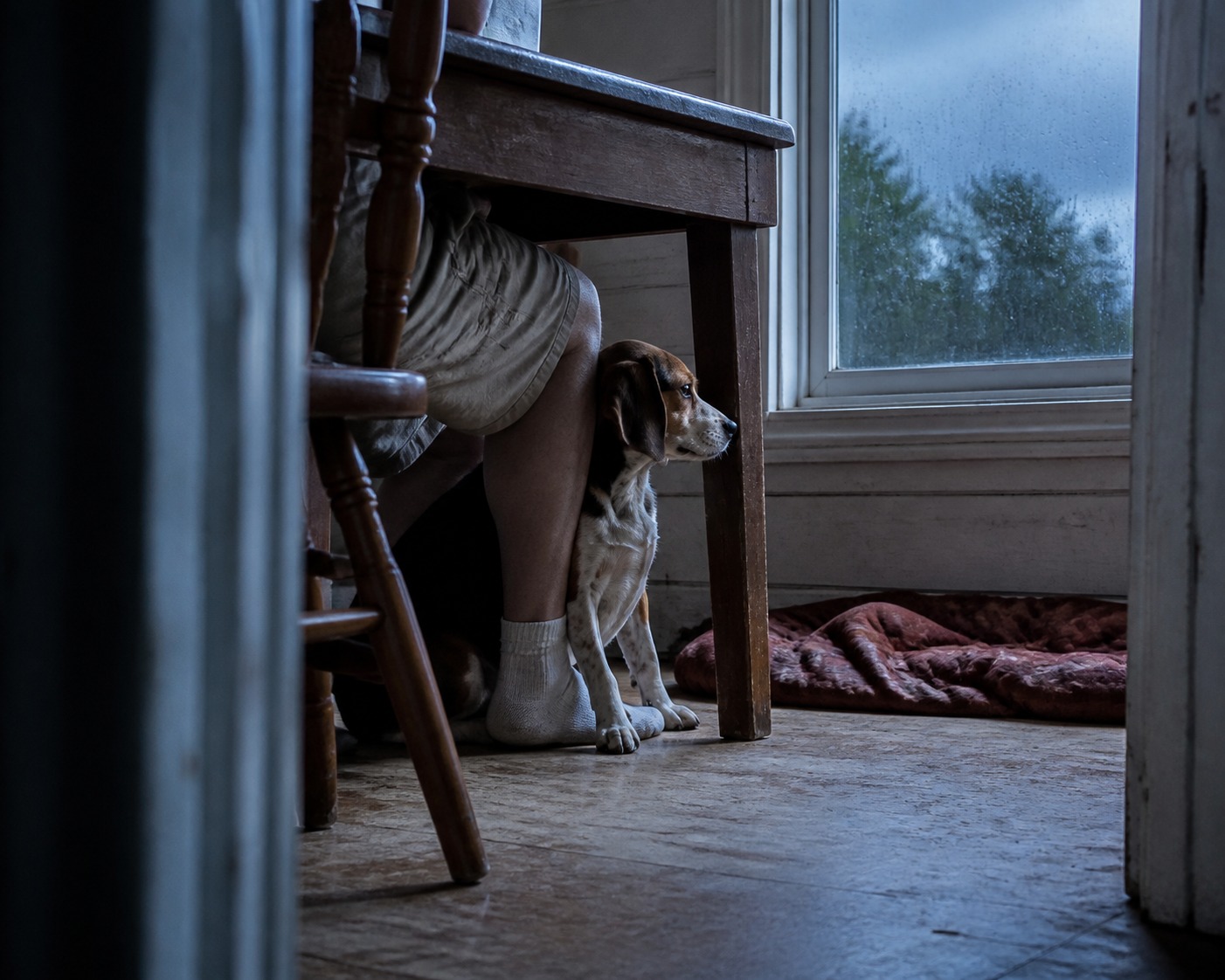
You have probably been told that if your dog panics during a thunderstorm, you should ignore them, because comforting a frightened dog “rewards” the fear and makes it worse. It is repeated everywhere, and it is wrong. Fear is an emotion, not a trick, and you cannot reinforce an emotion by being kind. When your dog presses into your side as the sky cracks open, letting them is not spoiling them. It is answering a request they are genuinely making.
That myth matters because storm anxiety is real, common, and miserable to watch. For a frightened dog, a storm brings trembling, hiding under furniture, howling, and frantic pacing. And the terror often starts before you hear a thing.
A storm is more than a loud noise
The boom is the obvious part, but it may not even be the worst part for your dog. Dogs are thought to be far more sensitive to the whole storm system than we are. Many react to the drop in barometric pressure and to static electricity building up in their coat, which can deliver small, disorienting shocks. Add darkening skies, the smell of rain, and the memory of the last frightening storm, and the panic is already climbing before the thunder arrives. That is why a single fix rarely works: you are dealing with several fears stacked on top of each other, not one.
What the research actually shows
Some of the most useful findings here come from a study of thunderstorm-phobic dogs led by veterinary researcher Dr. Nancy Dreschel at Penn State, which measured the classic stress signs, such as pacing, drooling, panting, trembling, whining, and hiding, alongside cortisol, a stress hormone.
Two results are worth sitting with. First, a sympathetic owner did not measurably lower a dog’s cortisol during a storm, yet the dogs sought their people out for comfort anyway. In other words, your reassurance may not switch off the physiological alarm, but your dog still wants it, and giving it does no harm. Second, dogs living with other dogs tended to have milder stress reactions and bounced back faster than only-dogs. Encouraging as that sounds, the researcher was clear that this is not a reason to run out and adopt a second dog to babysit the first.
What to do before the next storm
The real progress happens between storms, not during them. Three things make the biggest difference.
Build a safe den. Give your dog a spot they can disappear into when the pressure starts dropping. A covered crate, an interior room, or a basement corner, somewhere enclosed and away from windows, lets them do what their instincts are already telling them to do. Never force them in; make it available and inviting.
Counter-condition and desensitize. This is the long-game fix, and it is what behavior professionals reach for. The idea is to teach your dog a new emotional response to storm sounds by playing recordings at a very low volume while something great happens (treats, play, praise), then raising the volume gradually over many sessions. American Humane and most behaviorists recommend it as the preventive backbone of storm-phobia work. Because it is easy to move too fast and backfire, it is worth doing with a trainer.
Try pheromone support. Dog-appeasing pheromone products, sold as diffusers, collars, and sprays, mimic the calming signal a nursing mother gives her puppies and can take a little edge off for some dogs. They are low-risk and pair well with everything else here.
What to do during the storm
When a storm hits, your job is to lower the sensory load and stay available.
Mask the noise. Drown out the thunder with a fan, a running TV, or calming music. There are even dog-specific programming channels and canine noise-reducing earmuffs (Mutt Muffs) made to muffle the sharpest cracks.
Give them something better to do. When a storm is on the way, try to be home and hand your dog a job: a favorite tug toy, or a Kong stuffed and frozen with treats. A good walk earlier in the day helps burn off nervous energy before the sky turns.
Try gentle pressure. People joke about them, but snug wraps like the Thundershirt or Anxiety Wrap apply light, steady pressure, the canine version of swaddling, and genuinely help some dogs feel more secure.
And yes, comfort them. Pet them, talk to them, scratch the spot they love. You are not making it worse.
When it is time for the vet
If your dog’s storm fear is severe, do not white-knuckle through it season after season. Talk to your vet, who can rule out any pain component and, for many dogs, prescribe medication that takes the panic from unbearable to manageable.
What newer research adds
The biggest change since storm-phobia advice first got written down is that there is now an FDA-approved medication built for exactly this. Sileo, an oromucosal gel given between the cheek and gum, is the first and only drug the FDA has cleared specifically for noise aversion in dogs. Given 30 to 60 minutes before an expected storm (or at the first sign of fear), it calms without knocking your dog out, and it stays effective for about three hours. It is not right for every dog, particularly those with heart, kidney, or liver disease, so it belongs in a conversation with your vet, but it means storm season no longer has to be something you simply endure.
The instinct to comfort a terrified dog is a good one, so trust it. You will not teach your dog to be more afraid by holding them through a storm. The fear is already there. What changes it is patient counter-conditioning between storms, and for the harder cases, the right medication.
References
- Physiological and behavioral reactivity to stress in thunderstorm-phobic dogs — Dreschel NA, Granger DA, Applied Animal Behaviour Science (2005)
- SILEO (dexmedetomidine oromucosal gel), NADA 141-456 — U.S. Food and Drug Administration
- Fear, Anxiety and Phobias in Companion Animals — American Humane, on counter-conditioning
- Dog Appeasing Pheromone (DAP): a review — on pheromone therapy for canine anxiety
This article touches on anxiety, which can be a sensitive subject. If your dog’s storm fear is severe, please loop in your veterinarian.
Common questions
Does comforting my dog during a storm reinforce their fear?
No. Fear is an emotional state, not a behavior your dog performs for attention, so reassurance cannot 'reward' it. Research on thunderstorm-phobic dogs found they actively seek comfort from their people during storms, and offering it does no harm. Withholding affection to avoid 'rewarding' the panic is one of the most persistent myths in dog care.
Why is my dog scared before the thunder even starts?
Because thunder is only part of it. Dogs pick up on the drop in barometric pressure, the static electricity building in their coat, and darkening skies well before the first clap. Many also carry a memory of past bad storms, so the fear stacks up in advance.
Should I get a second dog to help my thunder-phobic dog?
Not for that reason alone. One study found dogs in multi-dog homes recovered from storm stress a bit faster, but its author specifically cautioned against adding a dog just to soothe a fearful one. A second dog is a decade-long commitment, not a treatment.
Dr. Solis is a board-certified veterinary dermatologist with over twelve years of clinical experience. She advises on skin conditions, allergies, and grooming practices that affect coat and skin health. All dermatology and allergy content at The Pet Times is reviewed by her team before publication.
Meet our experts ↗Keep reading
 Health & WellnessThe Hot Car Isn't What Gets Most Dogs. The Walk Is.Dr. Priya Nair · 9 min
 TrainingYour Dog Doesn't Need a Muzzle. Train Them for One Anyway.Dr. Mara Chen · 7 min
 TrainingYour Dog Isn't Being Dramatic About Storms. Four Fears Are Hitting at Once.Dr. Nina Kohl · 6 min
 TrainingAggression Is Not Dominance. It's a Request for Distance That You Missed.Dr. Mara Chen · 11 min
 TrainingYour Dog Is Dreading Halloween. 8 Reasons Why (and How to Help)Dr. Amara Solis · 8 min
 TrainingSending Your Dog to Its Crate as Punishment Ruins the One Room That's TheirsDr. Amara Solis · 7 min