


Shelters House Dogs Alone to Keep Them Safe. It's Quietly Costing Them Homes.
The solo kennel is a disease-control decision, and it makes dogs look worse to adopters than they really are. The research on roommates, foster breaks, and stress hormones says the fix is cheap and shelters already have it.


Walk down a shelter corridor and you are looking at a policy decision, not a fact of nature. Almost every dog is alone in a run. That is deliberate, and the reasoning behind it is sound on its face: a dog housed alone can’t catch anything from a kennelmate and can’t get into a fight with one. Disease and injury are the two things that shut a shelter’s adoption floor down, so shelters have optimized hard against both.
The problem is that the solo kennel solves those two risks by creating a third one that nobody is counting. It makes the dogs look bad.
Not bad as in unattractive. Bad as in stressed, and stress reads to a passing adopter as a temperament problem. A dog who is barking, lunging at the front of the run, panting, or shut down at the back of it is not showing you who they are. They are showing you what nine days of isolation in a loud concrete hallway does to a social animal. And the adopter walking past, entirely reasonably, walks on.
That is the trade that a growing body of research says shelters are unknowingly making: a small reduction in medical risk purchased with a real reduction in adoptability. And the fix is not a new building or a new budget line. It’s a roommate.
What the isolation is actually doing
Dogs are a social species. That is not sentiment, it’s the whole reason they’re in our houses. And the effect of social connection on a dog’s health is measurable: earlier work found that dogs with more human and canine companions live longer than dogs who are more isolated, which is exactly the pattern seen across social mammals generally.
Now take that species and put it in a kennel by itself, surrounded by noise it can’t escape, in a space it can’t leave, on a schedule it can’t predict, with nothing to do. The behavioral output is predictable, and it is the same list of things that make a dog hard to place: barking, reactivity, pacing, and, at the other end, the flat, withdrawn dog who won’t engage with anyone who stops at the door.
The shelter didn’t create that dog. The kennel did.
The roommate study
Researchers at Virginia Tech, led by Erica Feuerbacher, ran the obvious experiment at the Humane Society of Western Montana. Sixty-one dogs. Half were carefully matched with a compatible companion and housed together. Half stayed in their kennels alone.
Then the team watched, and measured. On the behavioral side, they scored the standard stress tells: lip-licking, whining, ears pinned back. On the physiological side, they collected urine and measured stress hormones, which is the part that matters, because a behavioral score alone can always be argued with.
The dogs housed alone showed stress behaviors substantially more often than the paired dogs. That much you might have guessed.
The finding that should reorganize shelter policy is the other one. Roommates cut the average wait for a home by four days. Same shelter, same adopters, same dogs. The only difference was who they lived with. The results were published in PLOS ONE.
Four days is not a soft, feel-good number. In a shelter running near capacity, four days per dog, multiplied across a kennel, is the difference between having room for the next intake and not having it. It is, in the plainest terms, a life-safety intervention that costs nothing.
“A dog in a solo run is being asked to audition for a stranger on the worst day of their life,” says Dr. Amara Solis. “Give them a friend and they stop performing their stress at the front of the kennel. What the adopter sees is closer to the dog who’ll actually show up in their living room.”
Why it works: the dog stops being on display and starts being a dog
Here is the mechanism, and it is worth being precise about, because it explains why co-housing beats almost every other enrichment intervention on a cost-per-outcome basis.
A paired dog has something to do that is not “react to the corridor.” They have a social partner, which means their attention has somewhere to go. They rest more, because there is another body in the room and the environment stops feeling like a thing to be constantly monitored. And when a person appears at the kennel door, the dog is not exploding out of a vacuum of stimulation. They are being interrupted mid-nap.
That dog looks adoptable because that dog is behaving the way they’ll behave once adopted. Co-housing doesn’t fake a better dog. It removes the thing that was faking a worse one.
The finding that came next, and it’s the important one
Feuerbacher’s roommate result was the opening argument. The follow-up work, published in PeerJ in January 2026, is the one that tells shelters what to actually do.
A team led by Lisa Gunter, with Feuerbacher as co-investigator, worked with two shelters, one in Arizona and one in Virginia, and tracked 84 dogs across 17 days: five days in the shelter, seven days in a foster home, and five days back in the shelter. They collected more than 1,300 urine samples to measure cortisol and put activity monitors on the dogs’ collars to track rest and movement.
The week in a home dropped the dogs’ cortisol significantly, an effect roughly twice as large as the drop seen in the short, one-or-two-night foster stays studied previously. The sensors showed the dogs spent more time genuinely resting. This is the longest foster period anyone has studied, and the effect got bigger the longer the dogs were out, which means nobody has yet found the point at which a foster stay stops helping.
The obvious worry about foster breaks is that returning to the shelter would be worse than never leaving, a cruel little taste of home followed by the corridor again. It didn’t happen. Cortisol after the foster week was no higher than before it. The dogs did not pay for the rest they got.
And then the two studies snap together. When the dogs came back to the shelter, the ones returned to a familiar kennelmate rested more and spent less time in high-arousal activity than dogs who came back to a solo run, or to a new roommate they didn’t know. Before the foster stay, having a kennelmate made no big difference. After it, familiarity did. A known companion functioned as a stabilizer during the re-entry, the way a friend does when you walk into a room you don’t want to be in.
That means co-housing is not just about avoiding loneliness. It’s about continuity. A dog with a consistent companion has one stable thing in an environment where nothing else is stable.
What this means if you’re adopting
Two practical things.
First, discount the kennel. Whatever you see in a shelter run is a stressed version of the animal, and the more isolated the housing, the more distorted the picture. Ask to see the dog outside the building. Ask whether they’ve been in foster care and what the foster said, because that report is far better data than anything you can observe through a chain-link gate.
Second, if you have the space, foster. The Gunter group’s earlier work across 51 shelters and nearly 28,000 dogs found that even a short outing of one to four hours made a dog five times more likely to be adopted, and a one-or-two-night sleepover made them more than 14 times more likely to find a permanent home. And here is the counterintuitive part: those adoptions mostly weren’t by the foster family. They happened because the dog was seen, out on a neighborhood walk, or photographed in a living room instead of a kennel, and posted somewhere a real person was looking. Visibility did the work.
You do not have to keep the dog to save the dog. You mostly have to take them outside.
What’s new since this was written
The direction of travel in shelter science is now clear enough to say plainly: almost every intervention that gets a dog out of the kennel, even briefly, improves both their welfare and their odds, and the effects scale with duration rather than plateauing early.
The 2026 foster study is the strongest version of that finding to date, and it retired the biggest objection to foster programs, which was the fear that going home and coming back would leave dogs worse off. It doesn’t.
What’s still unknown is where the ceiling is. Gunter’s own read is that they have yet to find the limit of how much a stay in a home helps. That’s an unusual thing for a researcher to say, and it should tell shelters something: this is not a marginal tweak. Solo housing was a reasonable answer to the questions shelters were asking twenty years ago. It is no longer the best answer to the question they’re asking now, which is how to get more dogs out the door alive.
References
- Feuerbacher, E.N., et al. “Effects of single- or pair-housing on the welfare of shelter dogs: Behavioral and physiological indicators.” PLOS ONE, 2024. Link
- Gunter, L.M., Feuerbacher, E.N., et al. “The effects of a week-long foster stay on the welfare of shelter dogs.” PeerJ, 2026. DOI: 10.7717/peerj.20608. Link
- Virginia Tech News. “One week in a foster home dramatically improves shelter dogs’ lives.” January 2026. Link
- Virginia Tech News. “Pairing shelter dogs has ‘pawsitive’ results.” June 2024. Link
- Gunter, L.M., et al. “Emergency fosters and short-term outings for shelter dogs.” Arizona State University Canine Science Collaboratory. Link
Dr. Kohl is a board-certified veterinary dentist with a particular interest in preventive oral care. She reviews all dental health content at The Pet Times and contributes practical guides on home dental routines, professional cleaning, and oral disease prevention.
Meet our experts ↗Keep reading
 LivingYour City Dog Isn't 'Reactive.' The Sidewalk Is Screaming at Them.Dr. Mara Chen · 8 min
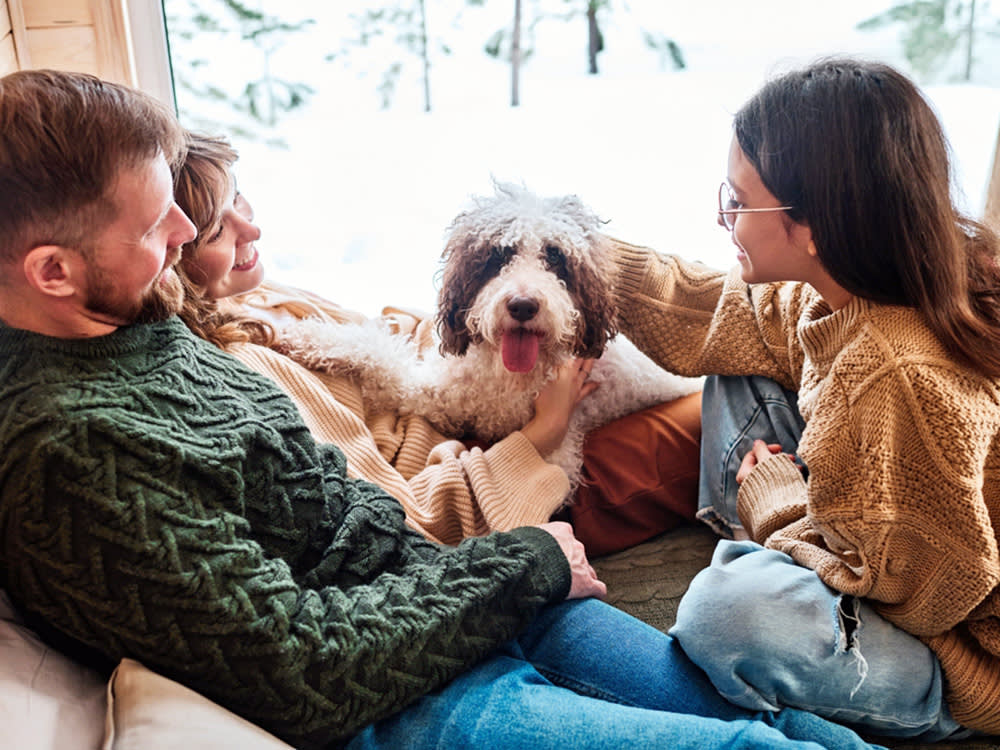 TrainingYour Dog Isn't Reading Your Face. They're Reading Your Hand on the Leash.Dr. Lena Park · 8 min
 TrainingYour Dog Doesn't Miss You. He Can't Predict You.Dr. Ravi Mehta · 7 min
 TrainingYou Can't Train Your Dog in a Moving Car. Start in the Driveway.Dr. Ravi Mehta · 8 min
 TrainingYou Don't Win Over a Scared Dog. You Become Safe and Boring.Dr. Lena Park · 9 min
 Health & WellnessThe Hot Car Isn't What Gets Most Dogs. The Walk Is.Dr. Priya Nair · 9 min