


Rosie Lived to 33. The Title She Held Was Never Real
A tortoiseshell in Norwich died at 33, and her family called her the world's oldest cat. She was never submitted to Guinness, and the actual record is stranger. What her long, boring, windowsill life really tells us about feline longevity is not what it looks like.

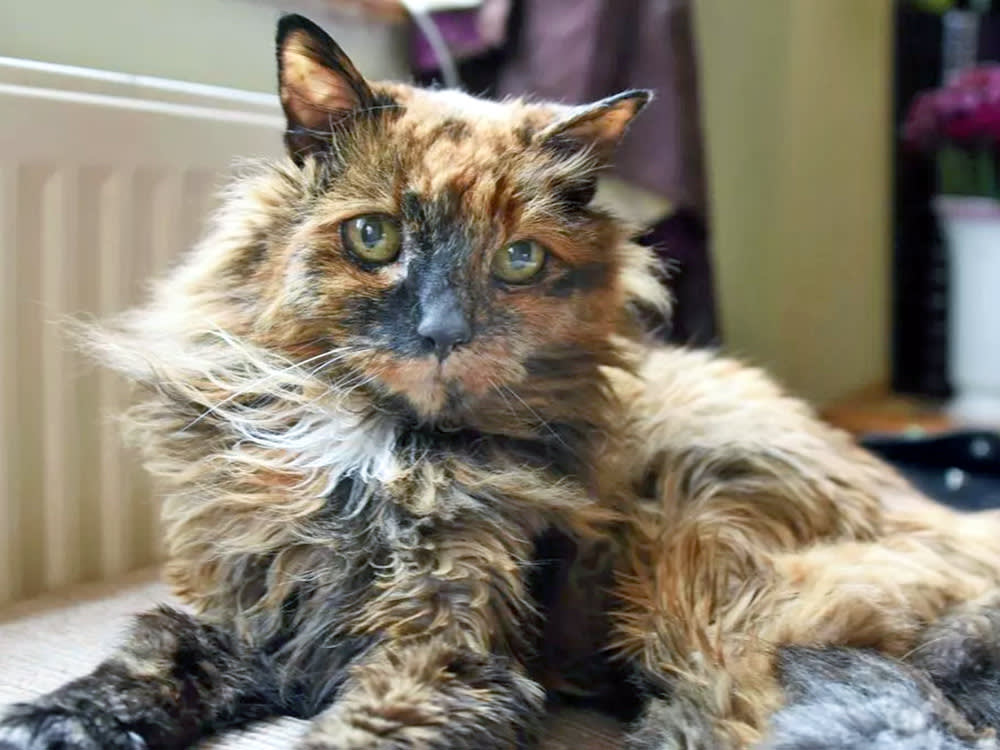
Rosie was born in 1991. She died this month, at 33, in the hallway of a ground-floor flat in Norwich, England, after walking out of the room, lying down, and simply stopping. Her person, Lila Brissett, had adopted her as a kitten, after Rosie’s first family took her to a shelter because their daughter turned out to be allergic.
Thirty-three years. She was alive before the first web page. She outlived most of the appliances in the flat.
Brissett called her the oldest cat in the world, and the papers ran it, and it is a lovely thing to say about a cat you loved for three decades. It is also, in the technical sense, not a title Rosie ever held, and the gap between the claim and the record is worth sitting with, because it explains something about how we talk about long-lived animals.
The record she was never in the running for
Guinness World Records does not track the oldest cat anybody says is old. It tracks the oldest cat somebody has documented. Rosie was never submitted.
The cat who actually holds the living title is Flossie, who was verified in November 2022 at almost 27, and who lives in England with Vicki Green. Flossie’s origin story is its own small miracle: she started life in a feral colony near a hospital in Merseyside, was taken in by hospital staff, and eventually came to Green through the charity Cats Protection when the human and the cat happened to be exactly the same age, 27. Green adopted her assuming she had a few months left and simply wanted them to be warm ones. Flossie is still going, and turns 29 in December.
And the oldest cat ever verified was not Rosie and was not English. Creme Puff lived in Austin, Texas, from 1967 to 2005, and died at 38.
Thirty-eight. That is not a cat who lived a long time. That is a cat who lived roughly twice a normal life, and it is the number that should be haunting this entire conversation.
What Rosie’s life actually looked like
The details that made Rosie a good story are the details that make her a bad instruction manual, and it is worth being precise about which is which.
She lived indoors, in a small flat, on a ground floor. Her days, as described by the person who watched all of them, consisted of sleeping on the windowsill, eating, using the litter tray, and doing it again. She was spayed. She went to the vet, in her entire life, twice: once for that spay, once for a cyst.
If you are reading that list looking for the trick, you will find one thing that is real and one that is a trap.
The real part is the shape of the life. Indoor. Sterilized. Unbothered. No cars, no fights, no infectious disease traded across a fence, no predators, no seasons of hunger. A quiet home with one calm human in it and nothing much happening. That is not a colorful life, and it is very close to what the epidemiology would predict for a cat with a shot at extreme old age.
The trap is the vet count. Two visits in 33 years is not a longevity strategy, it is a survivorship story, and the difference matters enormously.
We only hear about the cat who never went to the vet and lived to 33. We do not hear about the thousands who never went to the vet and died at nine of something we could have caught at seven. Rosie is not evidence that skipping care works. She is evidence that some cats are built like tanks, and that you cannot know in advance whether yours is one.
Survivorship bias, with whiskers
Here is the uncomfortable mechanic underneath every “oldest animal” story.
The cat who reaches 33 is, by definition, the cat for whom nothing went wrong. She is drawn from the far tail of a distribution, and everything about her life gets retroactively promoted into an explanation. She ate one brand of food, so it must be the food. She never saw a vet, so vets must be unnecessary. She slept all day, so sleeping must be the secret.
But we are only looking at her because she survived. The cats who lived exactly the same way and died at 11 do not get an article, and there are a great many of them. Rosie’s routine did not make her live to 33. Her genes, plus a low-risk environment, plus a run of luck, made her live to 33, and her routine happened to be along for the ride.
Which is not to say nothing is in your control. Quite a lot is, and it is not glamorous.
The unromantic things that actually move the number
The interventions with the strongest evidence behind them are almost aggressively boring:
- Keep her indoors, or safely contained. This is the single largest gap in feline life expectancy, and it is not close. Cars, fights, infections, and predators do not get a vote on an indoor cat.
- Spay or neuter. Sterilized cats live longer, and it removes an entire category of cancers and infections from the table.
- Keep her lean. Obesity is the most common preventable condition in cats and it drags diabetes and joint disease along behind it.
- Actually go to the vet, and go more as she ages. Cats are exceptional at hiding illness. Kidney disease, hyperthyroidism, and dental disease are all common, all treatable when caught early, and all silent until they are not. Annual visits, then twice-yearly once she is a senior.
- Make the house un-boring. Vertical space, a window, things to climb and hunt and shred. A stressed, understimulated cat is a cat with more disease and less appetite.
- Look after her mouth. Dental disease is rampant, painful, and quietly wrecks a cat’s ability to eat well for years.
None of that will get your cat to 38. All of it moves the odds, and the odds are the only thing anyone can move.
The part that is not about the record
There is a line in Brissett’s account of the end that is easy to skim past. She said she missed her, that Rosie had not been well, that she walked into the hallway and lay down and died, and that there were a great many good memories.
No fanfare, no title, no adjudication. A cat who lived an extraordinarily long, remarkably uneventful life next to a radiator, and a person who paid attention to all of it.
Whether Rosie was the oldest cat in the world is, in the end, a question for a record book. Whether she had a good life is not a question at all.
References
- Guinness World Records, “World’s oldest cat confirmed at almost 27 years old” (November 2022)
- Green, V. “Experience: I own the world’s oldest living cat.” The Guardian, January 5, 2024.
- Cats Protection, cats.org.uk
- Cornell Feline Health Center, Loving Care for Older Cats
- American Association of Feline Practitioners, Feline Life Stage Guidelines
Dr. Solis is a board-certified veterinary dermatologist with over twelve years of clinical experience. She advises on skin conditions, allergies, and grooming practices that affect coat and skin health. All dermatology and allergy content at The Pet Times is reviewed by her team before publication.
Meet our experts ↗Keep reading
 Health & WellnessA Blind, Paralyzed Cat Isn't a Tragedy. It's a Setup Problem.Dr. Nina Kohl · 7 min
 TrainingYour Cat Is Not Judging You. Your Cat Cannot Judge You.Dr. Mara Chen · 9 min
 Health & WellnessYour Indoor Cat Will Never Get Out. Until the Night She Does.Dr. Amara Solis · 6 min
 TrainingToilet-Training Your Cat Means Throwing Away Their Health ChartDr. Ravi Mehta · 8 min
 LivingYour Cat Has Been Asking for the Same 7 Things. You Keep Hearing 'More Cuddles.'Dr. Priya Nair · 8 min
 LivingScience Finally Cracked Orange Cats. The Gene Pulls a Trick No Other Animal Does.Claire Sutton · 5 min