


Baking Soda in the Litter Box: The Trick Only Works If You Get the Order Right
Baking soda can quietly cut litter-box odor, but only when you fix the dust problem first. Here's the sequence that makes it safe, the math by box size, and the cats who should skip it entirely.

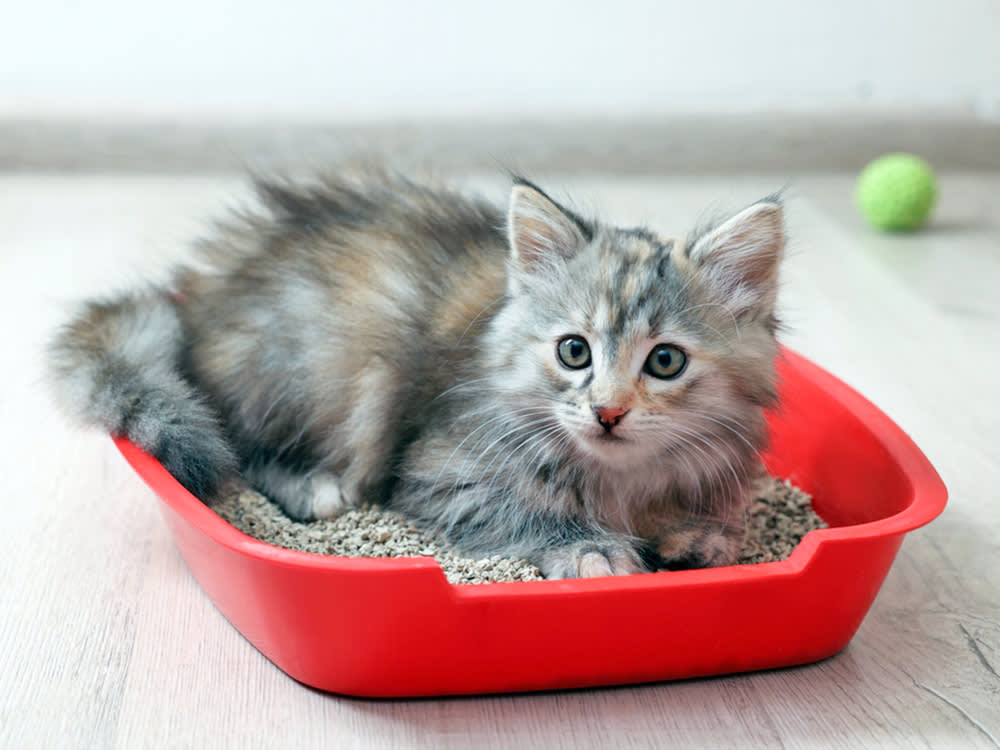
Most baking-soda advice gets the litter box exactly backwards. People reach for the orange box to kill odor, and then quietly create a second, sneakier problem: a fine alkaline dust their cat breathes in every time it digs. The odor was always the easy part. The order of operations is what actually decides whether this cheap kitchen trick helps your cat or irritates its lungs.
So before we talk about whether baking soda works, here is the rule that matters most: baking soda is a finishing touch on an already low-dust box, never a fix for a smelly dusty one. Get that sequence right and a few tablespoons can keep things genuinely fresher for pennies. Get it wrong and you are trading a smell you notice for a hazard your cat can’t tell you about.
The dust problem comes first, not the odor
A litter box has two jobs to fail at: it can smell, and it can throw dust. Baking soda is good at the first and actively bad at the second, which is why the litter underneath it decides everything.
The mistake I see most often is adding baking soda to a clumping clay litter that already runs dusty. Now you’ve stacked fine powder on fine powder, and a cat’s respiratory tract is far more sensitive than ours. If your starting litter isn’t low-dust, baking soda is the wrong tool.
There is real chemistry behind the caution. Clumping clay litters tend to sit high on the pH scale, and so does baking soda, at 8.4 or above. Pile two high-pH products together and you can actually encourage the ammonia smell you were trying to bury, because ammonia from cat urine is itself alkaline. That is the trap: the litter most people own is the litter baking soda helps the least.
The fix is to start one step earlier. Litters made from wood, paper, corn, or tofu produce far less airborne dust and tend to sit lower on the pH scale (roughly 6.0 to 7.0), which means they offset baking soda’s alkalinity instead of amplifying it. Switch to one of those, and only then does a deodorizing additive make sense.
Why baking soda works at all
Once the dust question is settled, the appeal is real. Baking soda is genuinely dual-action: it neutralizes pH and physically traps odor molecules.
“Sodium bicarbonate reacts with both acids and bases, so it can chemically neutralize the alkaline ammonia in urine and the acidic compounds in waste at the same time,” Dr. Kohl explains. “On top of that, its crystalline structure has a large surface area, so it adsorbs odor molecules and holds onto them rather than just covering them up.”
That is the difference between a deodorizer and an air freshener. A scented spray adds a smell on top of the bad one; baking soda removes some of the bad one. The catch is that the effect is modest and short-lived, which is exactly why people are tempted to add more, and exactly why they shouldn’t.
How much to use, by box size
Dosing baking soda by feel is how boxes end up powdery. Measure to the box instead:
- Small box (about 18 by 15 inches): 1 to 2 tablespoons
- Medium box (about 21.5 by 17.75 inches): a little under a quarter cup, roughly 3 tablespoons
- Large box (about 24 by 20 inches): no more than a quarter cup
Add it only when you do a complete litter change, never a sprinkle with every scoop. The every-scoop habit is how a careful quarter cup quietly becomes a buried box over a week.
To mix, either stir the measured amount through fresh litter with a clean scoop or lay a thin dusting across the clean, dry box floor before you refill. You are aiming for a faint haze you can barely see. If you can clearly see a white layer, it is too much.
The cats who should skip it entirely
This is the part most guides bury, and it deserves the spotlight. For a meaningful minority of cats, the right amount of baking soda is none.
Skip it if your cat eats litter. The behavior, called pica, is more common than people think, and ingested baking soda can cause vomiting, diarrhea, stomach pain, lethargy, incoordination, excessive thirst, and in larger amounts, seizures. Because cats love to tip an open box over, store the baking soda itself well out of reach, not on the floor by the litter.
Skip it, too, for any cat with asthma or another respiratory condition. Even a low-dust setup adds some particulate, and a sensitive airway doesn’t have margin to spare.
“If a cat already wheezes, coughs, or has been diagnosed with feline asthma, I tell owners to leave additives out of the box completely and lean on ventilation and scooping instead,” Dr. Kohl says. “The few cents you save on deodorizer aren’t worth an asthma flare.”
And watch every cat, sensitive or not, for the 48 hours after you introduce it. Sneezing or nose-pawing means dust irritation. A rare allergic cat may develop an itchy rash, facial swelling, or labored breathing, all of which mean stop and call your vet.
The alternatives that often beat it
Here is the quiet truth: the things people add baking soda to solve are frequently solved better by other tools, none of which add dust.
Activated charcoal is the standout. Unlike a scent, it traps odor molecules, and unlike baking soda, it adds no powder. Many natural litters now build charcoal in. In informal box-preference testing, cats reliably favor charcoal-containing litter over plain litter, which tells you the smell control is real enough that the cats themselves notice.
A small air purifier or a charcoal odor mat placed near the box does more for a room than any in-box additive, and it does it without touching the litter your cat stands in.
Skip scented litters and essential oils. Heavily perfumed litters are a leading reason cats start avoiding the box, and several essential oils are outright toxic to cats. If you want a cat to keep using its box, unscented plus charcoal beats fragranced almost every time.
Where commercial litter deodorizers are concerned, the instinct to spritz something fresh after cleaning a mess off the floor is understandable and very human. Indulge it on the floor with a pet-safe enzyme cleaner. Inside the box itself, keep the additives boring and the scent out.
The honest bottom line
No additive replaces a scoop. The single highest-impact thing you can do for litter-box smell is to sift once or twice a day and deep-clean weekly, and to use an uncovered box so the air can actually move (hooded boxes trap odor like a porta-potty and undermine everything else you’re doing).
Used in that context, on top of a low-dust litter, in the right amount, for a cat without pica or asthma, baking soda is a legitimately good, dollar-cheap finishing touch. The trick was never the powder. It was the order you reach for it in.
Baking soda also doubles as a cleaning paste for the box itself: mix it with water and a splash of white vinegar, glove up, and scrub away the residue stuck to the bottom.
References
Common questions
How often should I add baking soda to cat litter?
Only when you do a full litter change, not every scoop. Adding a little each time you clean compounds fast and buries your cat's box in powder.
What is the safest homemade litter deodorizer?
Activated charcoal traps odor molecules instead of masking them and adds no dust, which makes it the safer first choice for sensitive cats. An enzyme cleaner for the floor and a charcoal filter or mat near the box handle most of what baking soda is asked to do.
Not a substitute for your vet. Our guidance is educational. For urgent symptoms, contact a vet or emergency clinic right away. Editorial standards
Dr. Kohl is a board-certified veterinary dentist with a particular interest in preventive oral care. She reviews all dental health content at The Pet Times and contributes practical guides on home dental routines, professional cleaning, and oral disease prevention.
Meet our experts ↗Keep reading
 Health & WellnessOnly 5% of a Flea Problem Lives on Your Cat. Here's the Other 95%.Dr. Ravi Mehta · 9 min
 Health & WellnessYour Indoor Cat Can Still Get Fleas. Here's How They Sneak InDr. Mara Chen · 7 min
 Health & WellnessCats Are America's Most Rabid Pet. The Indoor Ones Aren't Exempt.Dr. Ravi Mehta · 8 min
 Health & WellnessThe Flea and Tick Prevention Vets Actually Reach ForDr. Nina Kohl · 9 min
 Health & Wellness'Just a Quick Walk' Can Give Your Dog Heatstroke. Here's the Playbook.Dr. Priya Nair · 9 min
 Health & WellnessA Rabid Bat Turned Up in Pasadena. The Fix Is Almost Boring.Dr. Ravi Mehta · 5 min