


Keeping the Baby Away From the Dog? The Science Says You Have It Backwards.
For years, worried parents kept pets away from infants to prevent allergies. It didn't work, and often backfired. Here's what the hygiene hypothesis and newer gut-microbiome research actually show about growing up with animals.

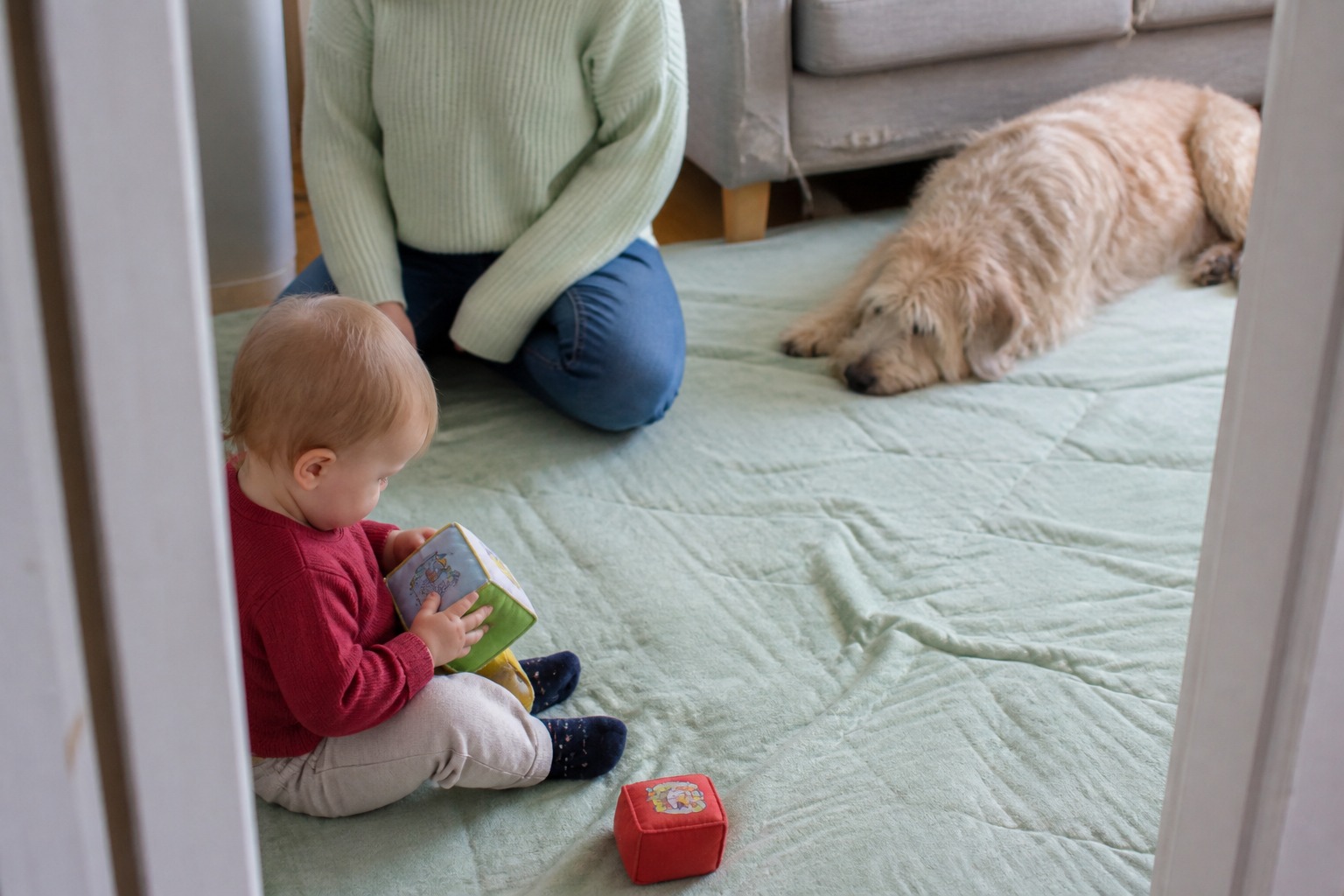
Allergies are miserable, and childhood allergies and asthma have been climbing for years. So it made a certain intuitive sense that, not long ago, plenty of well-meaning parents kept pets at arm’s length from their babies, on the theory that less exposure meant less risk.
It turns out that instinct was not just unhelpful. It was often backwards. The cleaner, more pet-free the environment, the more likely some of those kids were to develop the very allergies their parents were trying to prevent. To understand why, you have to meet the idea that reframes the whole question.
The hygiene hypothesis, in plain terms
The concept is called the hygiene hypothesis, and the short version is this: an immune system that meets very little in its early years never learns to tell friend from foe, and it can end up overreacting later.
A baby’s immune system is essentially in training, and it learns by encountering things, microbes, dander, the ordinary mess of a home with an animal in it. When you strip all of that away in the name of cleanliness, you don’t get a calmer immune system. You sometimes get a jumpier one that overreacts to harmless stuff down the road. Early exposure is how the body calibrates.
In other words, a spotless, allergen-free nursery is not the protective environment it feels like. Some early exposure appears to help the immune system develop normal, measured responses instead of hair-trigger ones.
What the research shows
Apply that to pets and the picture gets encouraging. Exposing a young, allergy-prone child to a dog or cat may actually lower the odds that they develop an allergy to that animal later on. And the benefit seems to reach beyond just pet allergies.
That is because these sensitivities tend to travel together. People allergic to pet dander are also more likely to have asthma and to react to pollen. So a baby with a genetic tendency toward allergies who gets early exposure to pet allergens may end up with a lower chance of several related conditions, not just one. A well-known study published in 2002 found that children exposed to two or more dogs or cats during their first year of life had a reduced risk of becoming sensitized to multiple allergens.
Timing appears to matter a great deal. That first year looks like the critical window, precisely because the immune system is still developing then. Meet an allergen after the system is essentially set, the thinking goes, and you are more likely to get sensitization; meet it early, and the body has a better chance of filing it under “harmless.”
The honest caveats
This is a genuinely hopeful body of evidence, but it is not a magic bullet, and it would be dishonest to sell it as one.
People’s reactions to allergens vary enormously, and a pet is only one factor among many. Other exposures, dust, cockroaches, grass, rodent droppings, all play into whether a child develops allergies. Early life with a dog stacks the odds in a helpful direction; it does not lock in an outcome. So no, you cannot guarantee an allergy-free kid by adopting a puppy. But “good evidence pointing the right way” is, as these things go, nothing to sneeze at.
What newer research adds
The science has moved from “pets seem to help” toward how they help, and the trail leads to the gut. A growing stack of studies over the past few years points to the infant gut microbiome as the mechanism doing the work.
The striking finding is how early it may begin. Research on prenatal dog exposure, meaning the mother lived with a dog during pregnancy, has linked it to a more diverse infant gut microbiome and to lower rates of allergic disease and asthma in the child. Scientists have identified specific beneficial bacteria that become more abundant in babies exposed to household pets, some of which are associated with lower rates of childhood allergy and even obesity. The current thinking is that living alongside an animal seeds a richer microbial community in early life, and that community helps steer the developing immune system away from overreaction.
None of this replaces medical guidance for a specific child, especially one who already has an allergy or asthma diagnosis. But the overall direction is consistent and, frankly, reassuring for animal-loving families: growing up with a dog or cat is far more likely to be part of the solution than part of the problem. If you’re expecting and already have a pet, that is one less thing to worry about, and possibly a small gift to your kid’s immune system.
This touches on children’s health, so treat it as general information and talk with your pediatrician about your own child’s situation.
References
- Ownby, D.R., Johnson, C.C., Peterson, E.L. “Exposure to dogs and cats in the first year of life and risk of allergic sensitization.” JAMA, 2002. pubmed.ncbi.nlm.nih.gov
- Tun, H.M., et al. “Exposure to household furry pets influences the gut microbiota of infants.” Microbiome, 2017. ncbi.nlm.nih.gov
- Wegienka, G., et al. “The impact of prenatal dog keeping on infant gut microbiota development.” pmc.ncbi.nlm.nih.gov
Common questions
When is the best time for a child to be exposed to pets?
The first year of life appears to be the critical window, because that's when the immune system is still learning. Some of the newer research suggests the benefit may start even earlier, during pregnancy.
Does this mean a pet guarantees my kid won't have allergies?
No. The evidence is encouraging but not a guarantee. Individual responses vary widely, and other exposures like dust, pollen, and household pests also shape whether allergies develop.
Dr. Park is a board-certified emergency and critical care specialist. She reviews our health and safety content for clinical accuracy and contributes guides on recognising urgent conditions. Her focus is helping owners act quickly and correctly when it matters most.
Meet our experts ↗Keep reading
 Health & WellnessThe Only Pet Insurance Question That Matters: Can You Write a $6,000 Check on a Tuesday?Marcus Webb · 6 min
 LivingAn Animal Communicator Told Me My Dog Wanted a Cleaner Water Bowl. She Was Right.Claire Sutton · 7 min
 LivingThere's No Such Thing as 'Registering' an Emotional Support Animal. The Registry Is the ScamDr. Nina Kohl · 9 min
 LivingYour Pet Dreads Thanksgiving More Than You Do. Here Are the 8 Relatives to Blame.Jordan Ellis · 7 min
 Health & WellnessCan't Afford the Vet Bill? Don't Panic-Post a GoFundMe YetMarcus Webb · 8 min
 Health & WellnessThe End-of-Life Bill Your Pet Insurance Quietly Leaves OutDr. Nina Kohl · 9 min