


Can't Afford the Vet Bill? Don't Panic-Post a GoFundMe Yet
A big vet bill has an order of operations, and most people work it backwards. Here's the ladder to climb, from the exam-room conversation to the right grant for your situation, with crowdfunding as the last rung, not the first.


The estimate slides across the counter and the number does not feel real. Surgery, hospitalization, a diagnosis you had not braced for, and a total that lands like a second injury. In that moment a lot of loving pet parents do one of two things, and both are the wrong first move. Some quietly decide they cannot do it and start bracing to decline care. Others open their phone and fire off a crowdfunding link before they have asked a single question.
Here is the thing worth knowing before the panic sets in: a vet bill you cannot pay in full has an order of operations. Work it in order and you almost always find more room than the estimate suggested. Skip to the bottom rung first and you leave money, time, and options on the table. This is the ladder, top to bottom.
Rung one: have the real conversation in the exam room
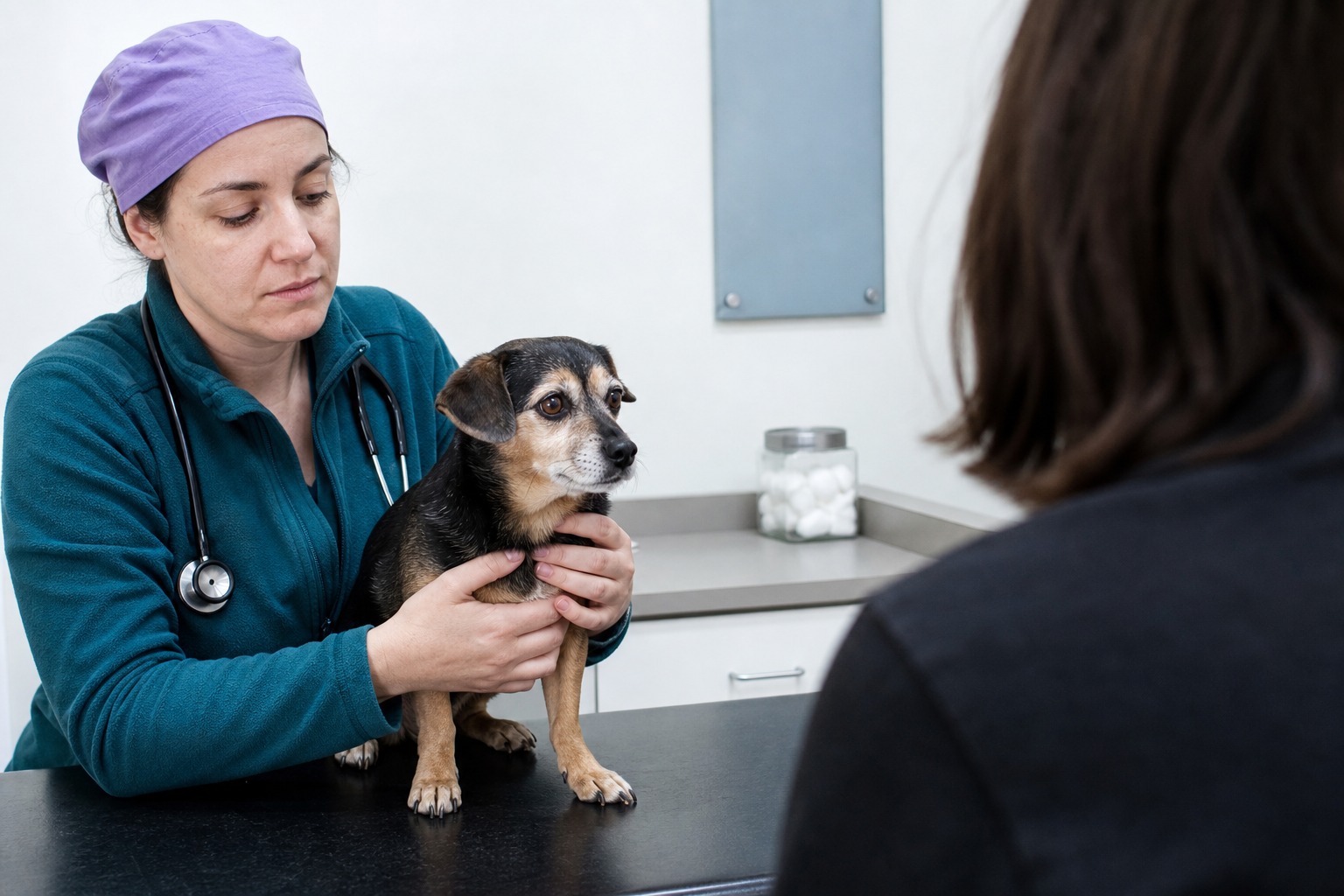
Before you say no to anything, say this out loud to your vet: “I want to treat my pet and I am worried about the cost.” That sentence changes the conversation. A good veterinary team would much rather help you find a path to yes than watch you walk away.
“The worst version of this is the pet parent who never tells us money is tight, so we never get the chance to offer options,” says Dr. Amara Solis. “Say it plainly. Nine times out of ten we can restructure something, spread it out, or point you to a resource you didn’t know existed.”
Ask for an itemized estimate and go through it with someone on staff. Which parts are urgent and which can wait or be staged over time? Is there a lower-cost diagnostic path that gets to the same answer? Many clinics will take a deposit now and let you settle the balance on a schedule, which buys you the days you need to line up funds. Your vet may also know the low-cost clinics nearby by name and by reputation, and some of those clinics run their own hardship funds. None of that happens if you stay quiet.
Rung two: the money tools that stretch the bill
If the clinic conversation does not fully close the gap, the next rung is financing built for medical costs.
A healthcare credit card like CareCredit works at most veterinary practices and covers everything from a sudden emergency to routine dentistry and preventive care. Approved on your credit score, it lets you break a large bill into monthly payments, often with a promotional no-interest window if you pay the balance inside it. Treat it like the loan it is: miss the window and the deferred interest can be steep, so only sign up for a plan you can actually pay down.
Newer in-clinic financing options have widened this rung since these programs first appeared. Point-of-sale lenders such as Scratchpay and clinic-run plans through services like VetBilling let some practices offer structured payment plans directly, sometimes with softer credit checks than a traditional card. Ask your clinic which of these they accept. LendingUSA Pet Loans offers veterinary financing on a monthly repayment schedule, with a no-interest option if the whole loan is paid off inside the first six months. Any of these can turn an impossible lump sum into a manageable monthly line, as long as you budget for the payments.
Rung three: find the grant built for your exact situation
This is the rung people skip because it looks like a wall of names. The trick is to stop reading the list alphabetically and start matching a fund to your specific case. Grants are picky on purpose, so aim at the one written for you.
If it is a life-threatening emergency with a good prognosis: Frankie’s Friends National Fund awards grants for emergency, lifesaving, or specialized care when a vet confirms a good outcome is likely and you meet the financial-need bar. The Mosby Foundation helps dogs facing critical illness, serious injury, neglect, or abuse, though not routine care, and asks that the dog already be spayed or neutered. Friends and Vets Helping Pets funds treatment for curable illnesses and injuries, from broken bones to expensive medication, specifically to keep animals out of unnecessary rehoming or euthanasia.
If you need a small amount to unstick an urgent case: RedRover Relief fills a narrow gap in funding when treatment cannot start or continue without it. Their grants average around $250, so they are designed to bridge, not to cover a whole bill, and they cannot help when the amount still needed is $1,000 or more. Your household income must be under $60,000 a year, and there are other eligibility rules. Paws 4 a Cure mixes grants with crowdfunding help for non-routine care like insulin or heartworm treatment, with a maximum grant around $200 and proof of hardship required.
If it is cancer or another chronic, non-emergency condition: The Pet Fund is built for exactly this, covering care for dogs and cats that is neither an emergency nor routine basics, including several cancers, eye diseases such as cataracts, chronic illness, and heart disease. It does not cover diagnostics, spay/neuter, or life-threatening injuries that need care right now. The Joshua Lewis Animal Cancer Foundation, which focused on cancer treatment costs, now operates under the umbrella of Frankie’s Friends, which handles those applications. The Magic Bullet Fund is no longer issuing grants, but its website still holds useful guidance for families navigating a pet cancer diagnosis.
If the bill has already been charged: most funds only pay forward, which makes Bow Wow Buddies Foundation unusual. It provides grants for urgent care up to $2,500 (average around $1,200) and will consider expenses already incurred if you apply within 30 days of the procedure or hospitalization.
If income is the barrier: Help a Pet prioritizes seniors, people with disabilities, and children in families that cannot afford care, with a household income cap at or below $40,000. Brown Dog Foundation helps bridge a funding gap with a grant and, even when it cannot fund you directly, works to find lower-cost treatment and creative payment options in your area.
If the need is spay or neuter: SpayUSA, a program of North Shore Animal League America, runs a referral network that points you to free and low-cost surgeries. Enter your zip code to find clinics offering financial help nearby.
If you are a veteran with a service dog: the VA’s Service Dog Veterinary Health Insurance Benefit acts as pet insurance for dogs issued to support hearing, vision, mobility, or mental-health needs, covering medically necessary treatment and medication.
Always ask your own vet about local options too, because regional and shelter-run funds rarely make national lists and are often the fastest to reach.
Rung four: crowdfunding, as the last mile
Now, and only now, does crowdfunding earn its place. Waggle is a nonprofit built specifically for pet medical care: it verifies your treatment estimate with your vet and sends money straight to the clinic, and any surplus becomes grants for other pets. GoFundMe is the broader, general-purpose option, where the reach depends entirely on how hard you push the link to friends, family, and social networks.
The reason crowdfunding belongs at the bottom is not that it is bad, it is that it is slow, uncertain, and public. By working the rungs above first, you often shrink the amount you actually need to raise, which makes a campaign far more likely to hit its goal.
The rung you climb before any of this happens
The best time to deal with a catastrophic vet bill is before you have one. Pet insurance is the single most effective proactive move, but only if you buy in before there is a problem, because pre-existing conditions are almost universally excluded and you cannot sign up after the emergency starts. The tradeoff is real and worth doing the math on. According to the North American Pet Health Insurance Association, the average accident-and-illness premium in 2024 ran about $62 a month for dogs and about $32 for cats, and the industry crossed $5.2 billion in written premium, a sign of how many families are now hedging against exactly this scenario. If insurance is not for you, a dedicated pet emergency fund does the same job in a different form: money set aside now so that a future estimate is a stressor, not a catastrophe.
When the pantry is the problem too
Financial strain rarely stops at the vet’s door. If feeding your pet has also gotten hard, look to community resources: many human food pantries stock pet food, plenty of animal shelters give out food and supplies to keep pets in their homes, and local “buy nothing” groups and marketplaces are full of neighbors passing along supplies for free or cheap. Keeping a pet fed is part of keeping them healthy, and asking for that help is not a failure.
The bottom line
A number on an estimate is not a verdict. Start in the exam room, not on social media. Stack the money tools, aim a grant at your exact situation, and let crowdfunding carry the last stretch. Loving a pet through a scary diagnosis is hard enough without doing the finances backwards.
What’s new since this was written
The financing rung has gotten more crowded in a good way. Point-of-sale lenders and clinic-run payment platforms, the kind that live inside your vet’s checkout system, have spread well beyond the single healthcare credit card that used to be the only option, so it is now worth asking your specific clinic what they accept rather than assuming CareCredit is the whole menu.
Insurance has also become a much bigger part of this conversation. The pet-insurance market crossed $5.2 billion in North America, and average accident-and-illness premiums now sit near $62 a month for dogs and $32 for cats. That does not help with a bill you are facing today, but it is a real number to weigh for the next pet, or the next chapter with this one, especially before any condition becomes “pre-existing.”
References
- North American Pet Health Insurance Association. “Average Premiums, State of the Industry Report.” NAPHIA, 2025, naphia.org/industry-data/section-3-average-premiums.
- Park, Rachel M., et al. “Association Between Dog Owner Demographics and Decision to Seek Veterinary Care.” Veterinary Sciences, vol. 8, no. 1, 2021, p. 7, doi.org/10.3390/vetsci8010007.
- Brockman, Beverly K., et al. “The Price of Unconditional Love: Consumer Decision Making for High-Dollar Veterinary Care.” Journal of Business Research, vol. 61, no. 5, 2008, pp. 397–405, doi.org/10.1016/j.jbusres.2006.09.033.
- Best Friends Animal Society. “Summary of Pet Owner Surrender Analysis.” 2018, network.bestfriends.org.
Not a substitute for your vet. Our guidance is educational. For urgent symptoms, contact a vet or emergency clinic right away. Editorial standards
Marcus Webb writes about the gear, gadgets, and everyday choices that make life with a pet easier. His coverage runs from product picks to training and the causes worth paying attention to, always with an eye on what actually earns a place in your home.
Meet our experts ↗Keep reading
 Health & WellnessThe Only Pet Insurance Question That Matters: Can You Write a $6,000 Check on a Tuesday?Marcus Webb · 6 min
 Health & WellnessThe Hardest Part of Your Vet's Job Isn't the Medicine. It's Everything Else.Dr. Amara Solis · 5 min
 Health & Wellness'You'll Just Know' Is the Cruelest Advice in Pet Care. Ask These 12 Questions Instead.Dr. Lena Park · 10 min
 LivingHe Fostered Six Kittens. Two Died in His Hands. He Kept Fostering.Dr. Amara Solis · 8 min
 LivingA Dog Costs More Than a Used Car. Where You Live Swings It by $10,000.Marcus Webb · 7 min
 Health & WellnessHer Dog Collapsed on the Sidewalk. What Looked Like a Stroke Usually Isn't.Dr. Ravi Mehta · 8 min