


A Pet Doesn't Add to Your Life. It Makes Demands. That's the Whole Point.
We talk about pets 'improving' our lives like they hand us something extra. What they really do is make demands, the walk you have to take, the creature that has to be fed, and the research suggests that obligation is exactly where the benefit lives.

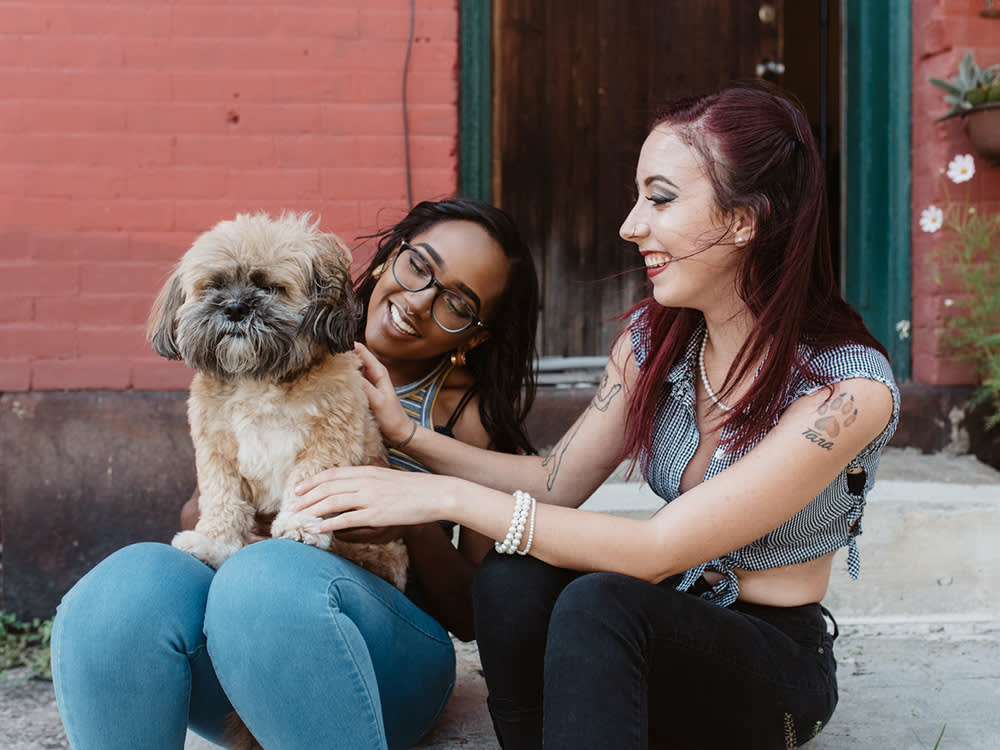
I have cried into my dog’s fur more times than I’d like to admit. Not often, and it’s an embarrassingly dramatic thing to do, and I don’t think she loves it. But every so often, after a bad day or a worse week, burying my face in the scruff of her neck for a minute is the one thing that resets me. That’s the version of the pets-and-wellbeing story we usually tell: the soft comfort, the unconditional presence, the animal as a little emotional heating pad.
It’s true, but it’s not the interesting part. Because a heating pad doesn’t get you out of bed. My dog does, whether I feel like it or not.
We tend to describe pets as things that improve our lives, as if they hand us something extra we didn’t have before. I’ve come to think that’s backwards. A pet doesn’t mainly add to your life. It makes demands on it, and the demands are the medicine. The walk you have to take. The bowl that has to be filled. The creature at the door who needs you to open it. The “benefit” isn’t the cuddle. It’s the obligation, and the way that obligation quietly rebuilds a structure around you when you’d otherwise have none.
The demand that gets you outside
Start with the plainest one. A dog has to be walked, and so, several times a day, you go outside whether or not you wanted to. That sounds trivial until you’ve had a stretch where leaving the house felt impossible. On the days depression pins people in place, the animal that depends on them is often the thing that gets them upright, because the dog’s need doesn’t wait for your mood to improve. The routine, the fixed points of the day when someone has to be fed or let out, becomes a scaffold. You move forward hour by hour because something is counting on you to.
That’s not a small effect. For a lot of people, “I had to, for the dog” is the whole story of how they kept going through a hard season.
The demand that ends up building a community
Here’s the one that surprises people. Pets are astonishing social lubricants, and they work on the exact population that struggles most to make friends: introverts, people with social anxiety, folks who’ve moved somewhere new and can’t crack the community.
The mechanism is simple. A dog gives you a reason to be out in public and a ready-made subject to talk about that isn’t yourself. You get stopped on the sidewalk. Strangers ask to say hello. You meet your neighbors, finally, because you’re both out with dogs at the same corner every morning. The dog park turns into a recurring cast of acquaintances, some of whom become real friends. For someone whose social anxiety usually keeps the spotlight uncomfortably on them, having a dog to focus on flips it, the attention goes to the animal, and connection gets easier almost by accident.
It extends online, too. Sharing a pet’s life on social media has a way of feeling safe in a way that posting about yourself doesn’t, and it routes people toward others who share their obsessions, hiking, fostering, the daily comedy of a specific weird animal. A pet-shaped door into a community turns out to be one a lot of guarded people can actually walk through.
The demand that anchors you
Then there’s the version that’s less about getting out and more about staying tethered. People describe their pets as guardian angels for a reason: in the worst stretches, the animal is simply there, curled on the pillow, following you room to room, a steady presence that says, without words, you’re not alone in this. And underneath the comfort is that thread of obligation again, the knowledge that this creature needs you, loves your company, and doesn’t judge you on your worst day. For someone in a dark place, “I couldn’t leave them behind” is sometimes the exact reason they keep going. The pet needs them, and being needed is its own kind of lifeline.
What the research says
None of this is just sentiment. A 2019 report from the Human Animal Bond Research Institute laid out a strong link between having a companion animal and increased social support, reduced loneliness, and less social isolation, and later research has kept reinforcing that pets help people feel more connected and less alone.
That matters more than ever, because in 2023 the U.S. Surgeon General issued a formal advisory declaring loneliness and isolation a public health crisis, one with health risks the office compared to smoking fifteen cigarettes a day. Against a backdrop like that, an everyday animal that reliably pushes you outside, into conversation, and into being counted on starts to look less like a luxury and more like a small piece of public-health infrastructure sitting on your couch.
One honest caveat
A pet is not a treatment, and it isn’t a therapist. The demands an animal makes can be a powerful support, a reason to move, a bridge to people, an anchor on hard days, but they work best alongside the rest of a life, including professional help when you need it. If you’re struggling, lean on the dog and reach for a person. The animal will happily do its part. It just shouldn’t have to do all of it.
Still, the next time someone says their pet changed their life, listen for what they actually mean. It’s rarely only about the affection. It’s the walks they wouldn’t have taken, the neighbors they wouldn’t have met, the mornings they got up because someone was hungry. The animal didn’t hand them a better life. It asked something of them, over and over, and the asking is what did the work.
References
- Human Animal Bond Research Institute. “Addressing the Social Isolation and Loneliness Epidemic with the Power of Companion Animals.” habri.org, 2019.
- Office of the U.S. Surgeon General. “Our Epidemic of Loneliness and Isolation: The U.S. Surgeon General’s Advisory on the Healing Effects of Social Connection and Community.” hhs.gov, 2023.
Leila Torres leads our Living coverage, from home life and travel to the products and rescue stories that come with sharing a life with animals. She edits and writes across the section, with a soft spot for pieces about the bond between people and their pets.
Meet our experts ↗Keep reading
 LivingShoot Your Pet Like a Cover Star: 7 Phone-Portrait Rules From a ProSasha Ford · 4 min
 LivingThe Weird Little Rituals Pet Parents Refuse to SkipMarcus Webb · 5 min
 LivingShipping Your Dog Overseas Can Cost $10,000. The Military Finally Started Paying.James Okafor · 7 min
 LivingYour Cat Ruins Your Meditation by Sitting on Your Chest. That's the Practice.Jordan Ellis · 5 min
 LivingThe Cutest Pet Doesn't Win. The Most Professional One Does.Sasha Ford · 5 min
 LivingLibra Season Is the Fairest Time to Be a Pet at the Dog ParkSasha Ford · 5 min