


Your Dog's Bowl Is One of the Dirtiest Things You Own. Here's the Fix
Researchers ranked pet bowls among the most bacteria-laden objects in the average home, and the cleaning routine that actually controls it takes about thirty seconds a meal.

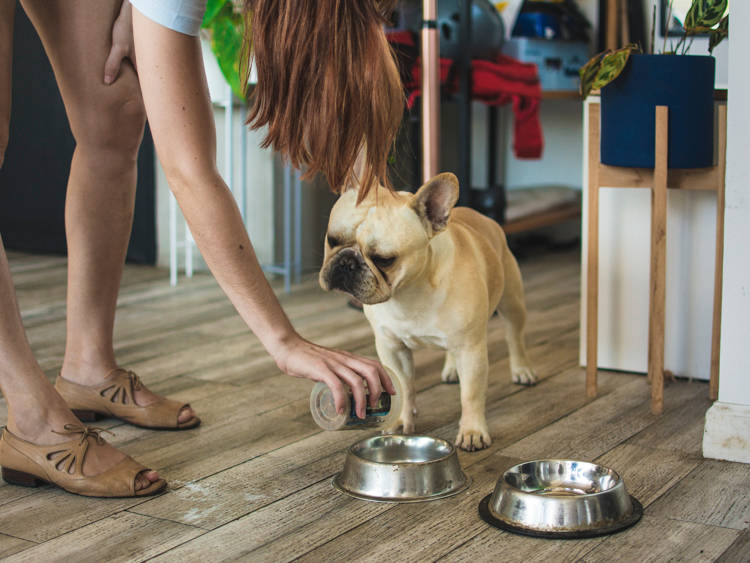
Picture the objects in your home you would call filthy: the toilet seat, the kitchen sponge, the trash can lid. Here is the uncomfortable part. When researchers have swabbed and ranked household surfaces by bacterial load, your pet’s bowls keep landing near the top of the list, ahead of things you would never eat off of. One often-cited survey of household contamination put pet food dishes among the ten dirtiest surfaces in a typical home, and a separate analysis of total bacterial counts ranked the pet water dish third out of twenty-six surfaces tested. The bowl you refill every morning without a second thought is, statistically, one of the germ hot spots in your house.
That reframing matters, because it changes the question from “should I wash the bowl sometimes” to “why am I treating one of the dirtiest objects I own as if it were clean.” A 2021 study from veterinary nutritionist Dr. Emily Luisana and colleagues, run at the time through Friendship Animal Hospital, gives both the bad news and the unusually simple fix.
The number that should bother you
Across the dog owners Luisana’s team surveyed, the hygiene habits were grim. Twenty-two percent washed their dog’s food and water bowls about once a week. Eighteen percent washed them less than once every three months, or never. Fewer than a quarter washed the scoop they use to dish out food, or washed their own hands before and after feeding. And fewer than five percent even knew that the U.S. Food and Drug Administration publishes guidelines for handling pet food and cleaning bowls.
The bacteria harbored in our pets’ bowls does not necessarily stay in the bowl. Once it is established, it gets onto hands, onto counters, onto the kid who pets the dog and then grabs a snack. The dish is a reservoir, and the household is downstream of it.
The organisms in question are not trivial. Pet bowls have been found to carry MRSA, salmonella, and E. coli, all capable of making both pets and people sick.
The experiment that found the fix
What makes Luisana’s study useful is that it did not just count germs, it tested whether a cleaning routine actually moves the needle. The team split 417 dog owners into three groups. Group A followed the FDA’s pet-food-handling guidelines. Group B followed a stricter protocol covering both pet and human food handling, with specifics: wash hands for at least 20 seconds, scrape the bowl before washing, wash with soap and water hotter than 160°F for at least 30 seconds, then dry thoroughly or run it through an NSF-certified dishwasher. Group C carried on as usual.
When the bowls were swabbed, Groups A and B showed significant reductions in bacteria compared with the do-nothing Group C.
Because washing the bowls produced a measurable drop in bacteria, infrequent washing is clearly a driver of the growth we see. It is one of the rare cases where the intervention is cheap, fast, and the data backs it cleanly.
The effect held regardless of whether owners fed wet or dry food, or used plastic, stainless steel, or another material, though the authors note a larger sample could refine the picture.
Don’t let kibble fool you
Dry-food feeders tend to be the most overconfident, and they are often the worst offenders, because a kibble bowl looks clean. There is no greasy film, no obvious residue, so it gets refilled for days. But dry food is no less likely to carry salmonella or E. coli than canned or fresh, and in some cases more so. A bowl that looks spotless after a kibble meal can still be growing a biofilm you cannot see. The look-clean test fails here; the only reliable standard is “washed after the meal.”
Material matters too. Separate research found salmonella, E. coli, and other harmful bacteria turned up more often in ceramic and plastic dishes than in stainless steel, because plastic scratches and degrades over time and those micro-scratches give bacteria somewhere to hide. Food-safe stainless steel, porcelain, or glass is easier to truly clean and holds up better.
The thirty-second routine that actually sticks
The honest obstacle is not knowledge, it is friction. A protocol you will not keep is worthless, so the goal is the smallest routine that controls the bacteria and survives a busy week:
- Wash after every meal, not “regularly.” Soap and hot water, or the dishwasher. After every meal is the standard the study supports, and it is less work than it sounds once it is a habit.
- Keep a rotation of bowls. This is the single best trick for compliance. Own three or four bowls so a clean one is always ready and dirty ones can wait for the dishwasher. Luisana specifically flagged this as what makes the habit stick.
- Wash the scoop and your hands too. The scoop touches the food every day and almost never gets cleaned. Wash it with the bowl, and wash your own hands before and after feeding.
- Use a scoop or spoon, never the bowl, to dig into the food bag. Dipping the dirty bowl into the bag seeds the whole bag with whatever is on it.
- Store food in its original bag. The bag is designed to preserve the food and carries the lot code you would need in a recall. Pouring kibble into a bin and tossing the bag throws that away.
- Pick a material that cleans up. Stainless steel, porcelain, or glass over scratched plastic.
People hear ‘wash it after every meal’ and picture a chore. Set yourself up so it is not one. A few bowls in rotation, a dishwasher you already run, and the habit disappears into your routine. That is the whole game with hygiene, make the right thing the easy thing.
Build the wash into your routine, keep a few clean bowls in the cupboard, and one of the dirtiest objects in your home quietly stops being a problem.
References
- Luisana E, et al., PLOS ONE (2022): Survey evaluation of dog owners’ feeding practices and dog bowls’ hygiene assessment in domestic settings
- U.S. Food and Drug Administration: Tips for Safe Handling of Pet Food and Treats
- Phys.org: Life-threatening bacteria found in pets’ food bowls (bowl-material comparison)
Not a substitute for your vet. Our guidance is educational. For urgent symptoms, contact a vet or emergency clinic right away. Editorial standards
Dr. Chen is a small-animal veterinarian who leads health and safety coverage at The Pet Times. She writes and reviews the bulk of our illness, condition, and safety content, translating clinical guidance into clear, practical advice owners can act on at home.
Meet our experts ↗Keep reading
 Health & WellnessA Dog Who Won't Drink Water Is a Clock, Not a QuirkDr. Lena Park · 7 min
 Health & WellnessThe Puppy Shot Schedule, Minus the PanicDr. Lena Park · 8 min
 Health & WellnessYour Tripod Dog Is Fine. It's the Other Three Legs You Should Worry About.Dr. Mara Chen · 9 min
 Health & WellnessThe Skin-Pinch Test for Dehydration Fails on the Dogs Who Need It MostDr. Amara Solis · 8 min
 Health & WellnessYou'd Expect Giant Breeds to Get the Most Cancer. A Big Study Says It's the Middle.Dr. Mara Chen · 6 min
 TrainingSix Weeks of Crate Rest Will Break You Both. Give the Dog a Job Instead.Dr. Nina Kohl · 8 min