


The Maui Beach Day That Doubles as a Job Interview for a Shelter Dog
Maui Humane Society's Beach Buddies looks like a feel-good vacation perk. It is really a low-cost adoption engine, and the research on what a day out does for a shelter dog is more interesting than the postcard suggests.

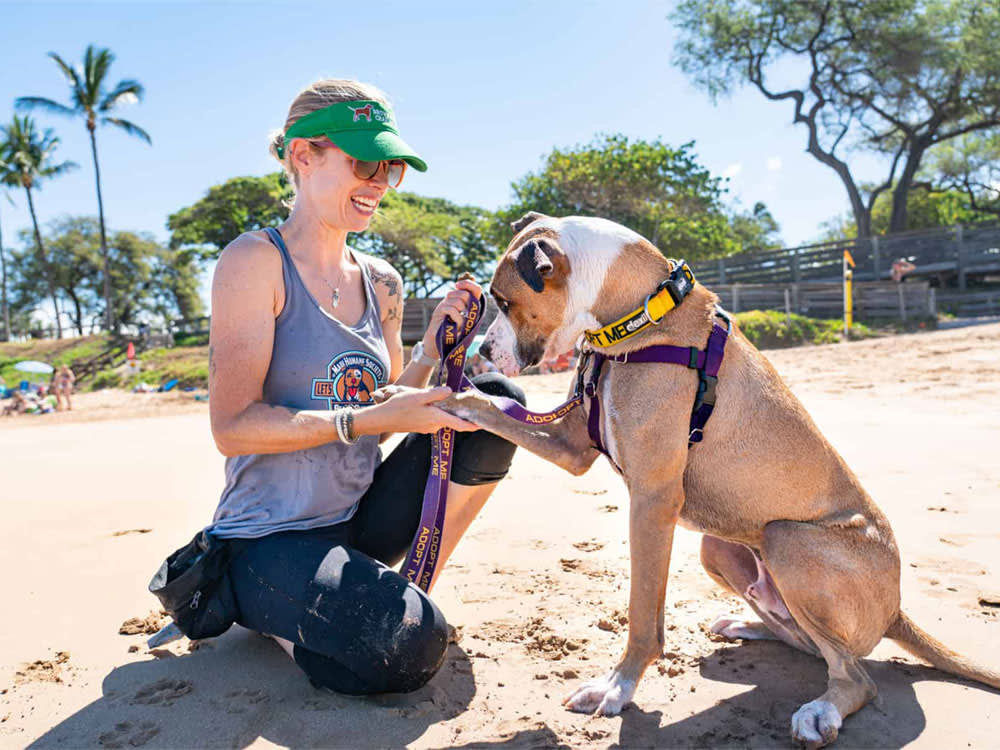
The brochure version of Maui Humane Society’s Beach Buddies program is easy to love: you are on vacation, you borrow a shelter dog for the day, you both have a wonderful time in the sand. All of that is true. But it undersells what the program actually is. Beach Buddies is not really a vacation amenity. It is one of the cheapest, smartest adoption tools a shelter has ever built, a way to turn thousands of tourists into unpaid marketing staff and a dog’s hardest week into the day a stranger falls in love. Understanding it that way, rather than as a beach outing, is what makes it worth copying.
What you actually sign up for
A Beach Buddy outing runs on a fixed window. You register online in advance, often weeks ahead because slots fill fast, you pick up “your” dog around 10 a.m., and you bring them back no later than 3 p.m. The shelter sends the dog out in a bright “Adopt Me” harness and a daypack stocked with a towel, water, a bowl, poop bags, treats, emergency contact information, and a list of dog-friendly spots to try. Before any of that, the dog gets a bath in one of the shelter’s staging areas, so it meets you clean and heads out the door looking its best.
A volunteer coordinator decides which dogs go out, and the bar is deliberately high.
We do not send out a dog we are unsure about. Every Beach Buddy is a calm, sociable, no-surprises dog, because the whole point is a good day for a stranger and a great photo at the end of it. The selection is the quiet work nobody sees.
On a typical day, five or more vetted dogs are available, and participants choose among them first-come, first-served.
The real product is the write-up, not the walk
Here is the part the postcard hides. After the outing, the shelter asks you to do two things: hand back any photos and video you took, and write a short description of what the dog was like. That paperwork is the actual deliverable. A kennel card can tell an adopter a dog’s weight and age. It cannot tell them that the dog ignored the skateboarders, napped under a picnic table, and rode home calmly in a stranger’s back seat. A vacationer’s write-up can, and it does so in language other normal pet owners trust more than any staff note.
Multiply that by every tourist who cycles through, and the shelter is generating a steady stream of real-world behavior reports and shareable content for free. The program “always books out,” and the shelter would add days if it had the staff, because each outing produces an asset it could not otherwise afford: proof, from an ordinary person, that this dog is good company.
What a day out really does for the dog (the honest version)
It would be easy to claim a beach day “cures” a stressed dog. The research says something more specific, and more useful. A 2019 study funded by Maddie’s Fund found that even a single overnight away from the shelter measurably dropped dogs’ cortisol, the main stress hormone, with the biggest benefit coming from sustained rest in a calm home. But a separate peer-reviewed study of shorter, two-and-a-half-hour outings found the opposite in the moment: a dog’s cortisol actually rose during the excitement of the trip, then settled back to its normal level by the next day rather than dropping below it.
Read together, those findings reframe what a five-hour beach day is doing. It is not primarily a stress-reduction treatment, the way an overnight “sleepover” foster is. It is an enrichment break and, above all, an exposure event, a chance to see how the dog behaves out in the world and to put it in front of someone who might adopt it. That distinction matters if you run a shelter, because it tells you a day trip and an overnight foster are different tools for different jobs, and Beach Buddies is squarely the first kind.
The adoption math is where it pays off. A 2023 analysis found that shelter dogs who go on brief outings are roughly five times more likely to be adopted than euthanized, and dogs placed in even short-term foster care are about fourteen times more likely. A beach day is the gateway version of that effect: lower commitment for the human, real visibility for the dog. Plenty of vacationers, it turns out, do not give the dog back. “Some people adopt the dog they took out for the day,” and the program was designed in the hope they would.
Why the model exists on Maui specifically
Beach Buddies launched in April 2015, and it took the shelter a cautious two years to commit. A similar field-trip program on Kauai had run successfully first, and Maui’s then-CEO held off, asking questions, until the welfare case was clear. The deciding factor was never tourism revenue; it was whether the dogs would be better off. They were, so the shelter ran with it.
The program sits on top of a genuine island bottleneck. Maui’s human population is roughly 140,000, and the shelter takes in around 8,000 animals a year, about a third of them dogs, far more than local homes can absorb. Renters face extra hurdles adopting, which shrinks the pool further. That structural shortage of homes is the real reason a beach-day-as-marketing program makes sense here in a way it might not in a big mainland city: when you cannot create enough local adopters, you borrow visitors and ship dogs out.
The other half: flying dogs to their odds
Borrowing tourists handles visibility; it does not solve the supply-demand gap. For that, Maui Humane runs Wings of Aloha, a transport program that flies dogs to mainland and neighbor-island partner shelters where adopters are waiting. It launched in 2012 out of necessity and has moved hundreds of dogs since. The logistics are unglamorous: the program buys airline tickets and crates, then pays to ship the empty crates back, which is cheaper than buying new ones each time.
The pandemic complicated it. Airline rules tightened, with some carriers refusing pets or capping animals per flight, so every transport now takes more coordination. Even so, the shelter moved more than 600 animals through Wings of Aloha in 2022, and the program still helps visitors who adopt a Maui pet arrange to fly that dog home.
The need has only grown. After the 2023 Lahaina wildfire and a long stretch of being over capacity, Maui Humane earmarked a portion of its disaster-relief funding, on the order of half a million dollars, specifically to keep flying animals to the mainland and neighbor islands. In a system that simply has more dogs than island homes, getting them off the island, or into a tourist’s heart for an afternoon, is not a marketing gimmick. It is the survival plan.
If you are headed to Maui, a Beach Buddies day is a real kindness and a genuinely good time. Just know that the best thing you can do for the dog is not the beach itself. It is the honest paragraph you write afterward, and, for the lucky few, the decision not to bring them back.
References
- Beach Buddies, Maui Humane Society
- Wings of Aloha Transfer Program, Maui Humane Society
- Investigating the Impact of Brief Outings on the Welfare of Dogs Living in US Shelters, Animals (MDPI)
- Sleepovers Reduce Stress in Shelter Dogs, Arizona State University / Maddie’s Fund
- Doggy Day Outs, Field Trips and Short-Term Fosters, ASPCApro
Leila Torres leads our Living coverage, from home life and travel to the products and rescue stories that come with sharing a life with animals. She edits and writes across the section, with a soft spot for pieces about the bond between people and their pets.
Meet our experts ↗Keep reading
 LivingThe Most Meaningful Hour of Your Vacation Might Be Spent Walking Shelter DogsLeila Torres · 5 min
 LivingThe Fires Rewrote LA's Dog-Hiking Map. Here's What's Actually Open.Marcus Webb · 6 min
 LivingCamping With Your Dog, Minus the Part Where You Sleep on the GroundNina Vasquez · 6 min
 LivingSan Diego Built the Country's First Dog Beach. Then It Kept Going.Nina Vasquez · 9 min
 LivingRome's Airport Built a Luxury Hotel for Dogs. Rooms Start at €40.Nina Vasquez · 5 min
 LivingEvery Trail Closed to Dogs Was Closed Because of a Dog OwnerMarcus Webb · 8 min