


Lymphoma in Dogs: The Lump to Catch Early, and Why the Odds Beat What You Think
Most dog lymphoma is found when an owner feels a swollen gland under the jaw. Here is how to recognize it, what the diagnosis really means, and the treatment options, including two drugs now fully FDA-approved.

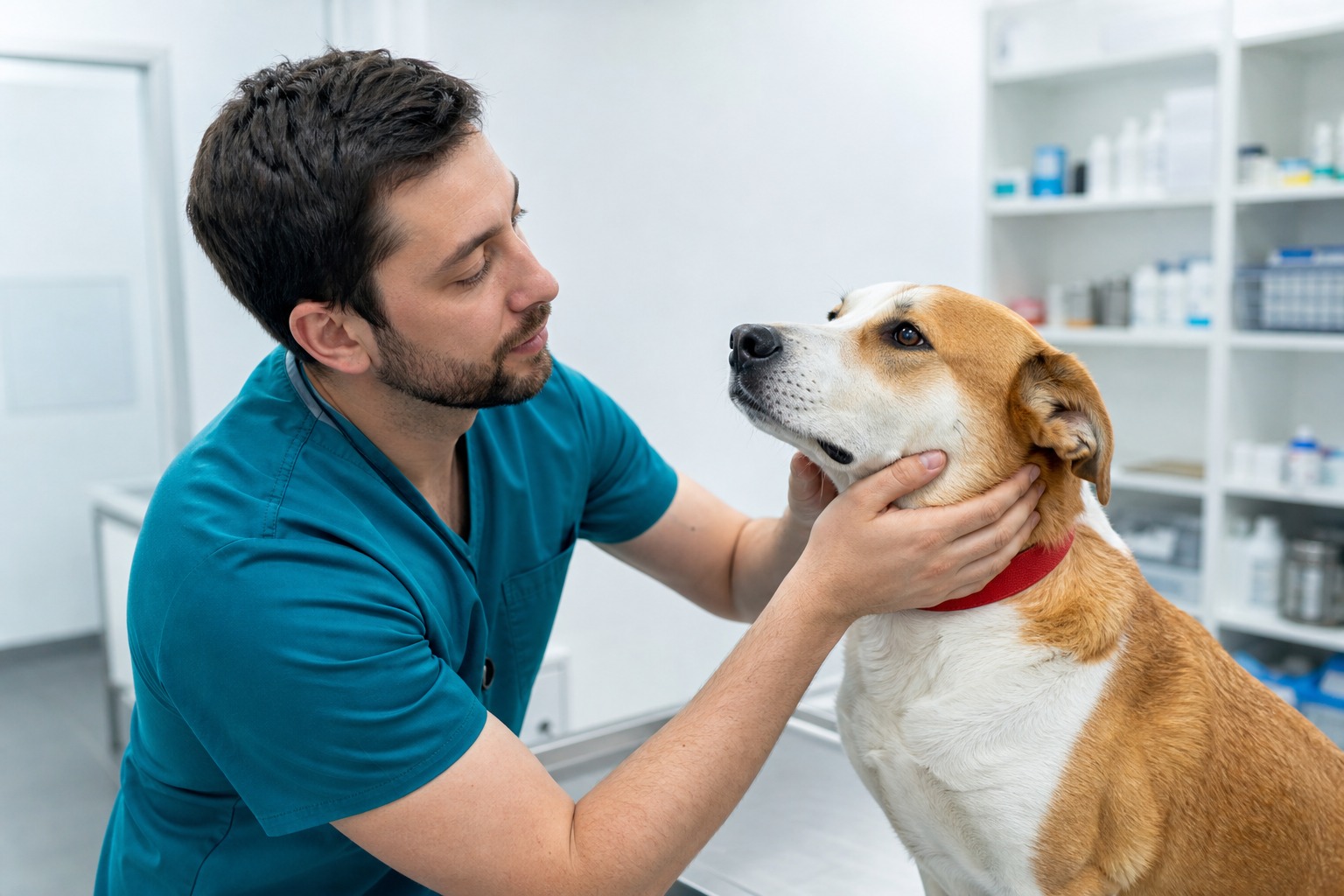
The way most people meet canine lymphoma is not in a vet’s office. It is on the couch, scratching a dog’s neck, when a thumb catches on a lump under the jaw that was not there last month. It is firm, about the size of a grape or a plum, and the dog does not flinch. The dog, in fact, seems fine.
That moment is worth knowing about in advance, because lymphoma is the canine cancer where what you do in the first week matters most, and where the news is genuinely better than the word “cancer” suggests. Among the cancers a dog can get, this is one of the most responsive to treatment. The goal of this guide is to help you recognize the early sign, understand what the diagnosis actually means, and walk into the treatment conversation already knowing the choices, including two medications that have moved, in the last few years, from experimental to fully approved.
The early sign is a swollen gland, not a sick dog
Here is the part that surprises people: in its most common form, lymphoma announces itself through swelling, not illness. The dog is eating, playing, and wagging. The only clue is the lymph nodes.
Lymph nodes sit in predictable places, and you can learn to check them. Run your hands under your dog’s jaw and down the sides of the neck, in the notch in front of each shoulder, in the armpits, and behind the knees. A normal node is small enough that you may not feel it at all. A lymphoma node is firm, often symmetrical (the same gland enlarged on both sides), and can swell dramatically, far beyond the tender little bump you get under your own jaw with a cold. The growth is fast, days to a couple of weeks, which is itself a clue.
If you feel one firm, growing node, that is a reason to see the vet soon. If you feel several at once, make the appointment promptly. Plenty of swellings turn out to be infection or inflammation, not cancer, but the only way to know is a sample, and time is not on your side if it is lymphoma.
When an owner finds a firm gland that doubles in a week and the dog otherwise seems perfectly happy, that combination, big node, well dog, is the one I never want people to sit on. The needle sample is quick and tells us almost everything we need to start.
What lymphoma actually is
Lymphoma is a cancer of lymphocytes, a type of white blood cell the body normally uses to fight infection and run the immune system. Because lymphocytes travel everywhere in the body, the cancer can surface almost anywhere, which is why it takes so many forms.
Most often it settles in the lymph nodes and balloons them, the swelling you can feel. But cancerous lymphocytes can also infiltrate organs, where they are harder to spot: the spleen, liver, kidneys, and lungs are common sites, and a dog with organ involvement may show vaguer signs of being unwell. Some cases race ahead and demand aggressive treatment; others smolder slowly and behave more like a chronic disease. Like most canine cancers, lymphoma has no single known cause and likely arises from a mix of genetics and environment.
The types, and why your vet cares about them
Lymphoma gets sorted along a few axes, and the labels matter because they predict how a given dog will respond.
First, by location. The four common types are multicentric (80 to 85 percent of cases, affecting the lymph nodes, this is the swollen-gland version), alimentary (5 to 7 percent, in the gastrointestinal tract), mediastinal (in the thymus and chest lymph nodes), and extranodal (in a single organ such as skin, eyes, kidneys, lungs, or the nervous system).
Then by spread, called staging, numbered I through V by how far the disease has traveled, with an A or B substage noting whether the dog feels well (A) or sick (B).
Finally by cell type and grade. Lab tests reveal whether the cancer involves B-cells or T-cells, and whether the cells are high-grade (very abnormal) or low-grade (nearly normal-looking). Put together, a dog might be diagnosed with, say, high-grade B-cell multicentric lymphoma. To you that is jargon; to your vet it is a forecast. High-grade B-cell is both the most common form and, fortunately, the one that responds best to chemotherapy.
A full workup, complete blood count, chemistry panel, urinalysis, chest X-rays, abdominal ultrasound, node sampling, and bone marrow cytology, gives the most complete staging picture, but it is expensive and invasive. In practice, many dogs are diagnosed and treated on the strength of a single node sample, with partial staging filled in as needed.
Breeds most at risk
Lymphoma can appear in any breed at any age, but some are over-represented. Golden Retrievers top the list, followed by Boxers, Bullmastiffs, Basset Hounds, Saint Bernards, Scottish Terriers, Airedales, and English Bulldogs. A 2015 genome-wide study even identified shared genetic risk loci in Golden Retrievers, which helps explain why the breed turns up so often. If you have one of these dogs, learning the lymph-node check is doubly worth your time.
What raises the risk
The honest answer is that no one can point to a cause in an individual dog. Surveys have flagged associations, not proven triggers, with a handful of factors: breed-linked genetics, living near an incinerator, radioactive waste, or heavy industrial pollution, regular exposure to professionally applied lawn pesticides, and routine contact with paints or solvents. These come from studies with relatively few cases, so it is hard to lean on them hard. Reducing avoidable chemical exposures is sensible, but lymphoma develops in plenty of dogs with no risk factors at all. If your dog is diagnosed, the search for something you did wrong is a dead end. There usually is no answer, and there is almost never blame.
Symptoms beyond the lump
In early multicentric disease, the swollen nodes may be the only thing you notice. As the disease progresses, or in other forms, watch for:
- Swollen lymph nodes (the cardinal sign)
- Reduced appetite
- Low energy or lethargy
- Fever
- Weight loss
- Vomiting or diarrhea
- Increased thirst and urination
- Labored breathing
- Swelling of the face or limbs
A special case is cutaneous lymphoma, which surfaces on the skin and is often mistaken at first for an allergy or infection. It begins as red, flaky, itchy patches that can progress to moist, open sores. Any skin lesion that will not heal deserves a vet’s eye, not just another round of cream.
When to call the vet, in plain terms
Call promptly if you feel a firm lymph node that is growing, especially more than one. Call the same day if a swollen-node dog also stops eating, becomes lethargic, develops labored breathing, or shows facial or limb swelling, because that can signal more advanced or aggressive disease. And get any non-healing skin sore checked rather than waiting it out.
How it is diagnosed
Because several harmless conditions can swell a node, the vet confirms lymphoma with a sample rather than a guess. The first and least invasive test is usually a fine-needle aspirate: a needle is slipped into the swollen node and cells are drawn out, often without sedation. A healthy node is full of small, orderly lymphocytes; in high-grade lymphoma, those are crowded out by larger, abnormal ones. Seeing that shift strongly suggests cancer.
A general-practice vet may recognize the pattern, but the sample is best sent to a veterinary pathologist, who has the specialized stains and tests to confirm the diagnosis and identify the exact cell type. From there, additional testing, immunophenotyping for B-cell versus T-cell, plus whatever staging the family chooses, refines the prognosis. Many cases never need the full battery; a node sample alone gets most dogs to a diagnosis and a plan.
Treatment options, laid out
This is where the conversation gets individual, because the right choice depends on the dog, the type of lymphoma, and the family’s resources and goals. The common approaches:
- Multi-agent chemotherapy (CHOP): the gold standard, a rotating combination of drugs given over a course of weeks. Most studies show more than 90 percent of dogs on a proven protocol reach remission.
- Single-agent chemotherapy: one drug instead of several; gentler and simpler, with somewhat shorter remissions.
- Tanovea (rabacfosadine): developed specifically for canine lymphoma and given as up to five IV infusions spaced 21 days apart. Used alone, it produces a response in roughly three out of four dogs. Fewer visits can mean a lower total cost despite the drug’s price.
- Laverdia (verdinexor): an oral tablet given at home twice a week, which prevents cancer cells from multiplying. It requires careful handling of the tablets and of the dog’s food bowls, urine, feces, vomit, and saliva.
- Corticosteroids (prednisone) alone: not a cure, but about half of dogs get two to three good-quality months from steroids when chemo is not chosen.
- Radiation or surgery: used for certain localized forms, sometimes combined with the above.
The update worth knowing: two of these are now fully approved
Here is a piece of news that even some recent articles get wrong. Tanovea and Laverdia were both first cleared under the FDA’s conditional-approval pathway for minor uses and species, which is why older write-ups describe them as “conditionally approved.” They have since graduated. Tanovea earned full FDA approval on July 15, 2021, the first animal drug ever to advance from conditional to full approval under that program. Laverdia followed, receiving full FDA approval on June 26, 2026, making it the only fully approved oral treatment for canine lymphoma. The practical meaning for a dog owner: these are no longer experimental options hedged with caveats. They are established, vetted treatments your oncologist can offer alongside traditional chemo, and they exist specifically to make treatment shorter or more home-friendly.
What chemotherapy is actually like for a dog
The word “chemotherapy” frightens people who picture human cancer wards, and that picture is misleading here. Vets dose dogs far more gently than oncologists dose people, because the aim is not cure but durable remission with a good life. A course still involves repeated visits and possibly some side effects, but it is generally shorter and milder than a human regimen. Most dogs keep their coats, keep eating, and keep being themselves. Cure is rare and is not the goal; long, comfortable remission is.
One caution if you are leaning toward steroids alone to save cost or stress: decide deliberately, because prednisone induces drug resistance in lymphoma cells. A dog treated with steroids first is much less likely to respond well to chemotherapy later, so it is not a low-stakes “let’s try this and upgrade if needed” step.
Can it be prevented?
No. You can limit some risk factors, do not raise your dog on a Superfund site, but lymphoma arises without a known cause in plenty of dogs. The most useful thing you can do is the opposite of prevention: early detection. Learn the node check, and act on a growing lump.
How long can a dog live with it?
Every case is its own, so every dog has its own prognosis. As rough guides: untreated, most dogs survive about a month. With full chemotherapy, median survival is around a year, and roughly 25 percent of dogs live more than two years. Steroid therapy alone tends to give two to three comfortable months in dogs whose cancer responds. These are medians, not verdicts, and your oncologist can narrow them once the cell type and stage are known.
Diet during treatment
There is little research on diet and canine cancer, so there is no magic anti-lymphoma menu. Feed a complete, balanced diet your vet endorses, and adjust amounts if cancer-related weight loss sets in. Two specifics: avoid raw diets, because a dog with a compromised immune system is more vulnerable to food-borne pathogens, and do not pin hopes on ultra-low-carbohydrate “starve the cancer” diets, which dogs tolerate poorly and which have not been shown to help.
Lymphoma is a frightening word to hear in an exam room. But of all the cancers that word could attach to, this is among the most treatable, and the thing that most improves a dog’s odds is simple and in your hands: noticing the lump early and getting it sampled. Ditch the blame, make the appointment, and ask your vet about the full menu of options, including the two drugs that have just earned their full approval.
Frequently asked questions
Where would I first feel lymphoma on my dog?
Usually as a firm, painless swelling under the jaw or in the lower neck, and sometimes in front of the shoulders, in the armpits, or behind the knees. These are lymph nodes, and lymphoma typically enlarges them over days to weeks. Many dogs feel completely well at this stage.
Is a swollen gland always cancer?
No. Infections and inflammation enlarge lymph nodes too. But a firm node that keeps growing, especially several at once, warrants a vet visit and a simple needle sample to find out.
How do vets confirm lymphoma in dogs?
Most cases are confirmed with a fine-needle aspirate of an enlarged node, which a pathologist examines. Further tests determine the cell type and how far it has spread, which guide treatment and prognosis.
Which breeds get lymphoma most often?
Golden Retrievers are the most commonly affected, followed by Boxers, Bullmastiffs, Basset Hounds, Saint Bernards, Scottish Terriers, Airedales, and English Bulldogs. Any dog of any breed or age can develop it.
What is the main treatment, and does it work?
Multi-agent chemotherapy (CHOP) is the most effective option, and most dogs on a proven protocol reach remission. Two drugs developed specifically for canine lymphoma, Tanovea and Laverdia, are now fully FDA-approved and offer fewer-visit alternatives.
How long can a dog live with lymphoma?
Untreated, most dogs survive about a month. With full chemotherapy, median survival is roughly a year, and about a quarter of dogs live more than two years. Steroids alone buy a good-quality two to three months for many dogs.
References
- MSD Veterinary Manual: Malignant Lymphoma in Dogs
- Pastor et al. “Genetic and environmental risk indicators in canine non-Hodgkin’s lymphomas: breed associations and geographic distribution of 608 cases diagnosed throughout France over 1 year.” Journal of Veterinary Internal Medicine, 2009.
- Tonomura et al. “Genome-wide association study identifies shared risk loci common to two malignancies in Golden Retrievers.” PLOS Genetics, 2015.
- U.S. FDA: Freedom of Information Summary, TANOVEA (rabacfosadine), full approval July 15, 2021.
- U.S. FDA, Center for Veterinary Medicine: “FDA Grants Full Approval of First Oral Treatment for Lymphoma in Dogs” (Laverdia / verdinexor), June 26, 2026.
- Saba et al. “Multicenter, randomized, double-blinded, placebo-controlled study of rabacfosadine in dogs with lymphoma.” Journal of Veterinary Internal Medicine.
Not a substitute for your vet. Our guidance is educational. For urgent symptoms, contact a vet or emergency clinic right away. Editorial standards
Dr. Chen is a small-animal veterinarian who leads health and safety coverage at The Pet Times. She writes and reviews the bulk of our illness, condition, and safety content, translating clinical guidance into clear, practical advice owners can act on at home.
Meet our experts ↗Keep reading
 Health & WellnessYes, Dogs Get STDs. No, They Don't Have to Mate to Catch Them.Dr. Mara Chen · 8 min
 Health & WellnessYour Dog Can't Have Down Syndrome. What You're Seeing Is Still Real.Dr. Amara Solis · 8 min
 Health & WellnessBig Dogs Die Younger, Everyone Knows. The Surprise Is What Small Dogs Are HidingDr. Ravi Mehta · 5 min
 Health & WellnessYour Puppy Just Threw Up. Here's How to Tell 'Wait and See' From 'Vet Now.'Dr. Lena Park · 7 min
 Health & Wellness'Is My Dog Depressed?' Skips the Question That Matters MoreDr. Amara Solis · 7 min
 Health & WellnessCheck Your Dog's Head Like a Vet Does: The 5-Minute Eyes, Ears, Nose, and Mouth ScanDr. Lena Park · 6 min