


Italy Just Ended the 'Big Dogs Ride in Cargo' Rule. The Rest of the World Is Watching.
Italy became the first country to let large dogs fly in the cabin beside their owners. Here's what changed, why the cargo hold was the problem, and who might follow.

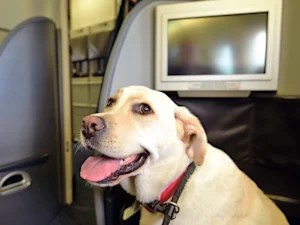
For anyone who travels with a big dog, the math has always been brutal: your dog is family, but the airline treats a 60-pound retriever as freight. Small dogs ride under the seat; large ones ride in the cargo hold, if they’re allowed to fly at all. In May 2025, Italy became the first country to say that default no longer makes sense.
Italy’s Ministry of Infrastructure and Transport announced that its Civil Aviation Authority, ENAC, had approved rules letting dogs of any size travel inside the aircraft cabin. Under the resolution, a pet may ride in a special carrier secured with seat belts or another anchoring system, and the carrier can even be placed above the seats. Notably, the original framework set no specific weight limit, a sharp break from the size caps that define pet travel almost everywhere else.
Why the cargo hold was the real problem
The change matters because of what it replaces. Before this, large dogs flying to or from Italy had to travel in the cargo hold for the entire flight, the same situation that still governs commercial flights in the United States. Cargo holds are generally survivable for pets, but “generally survivable” is a low bar. Humane World for Animals notes that animals have been injured, lost, and killed in transit due to rough handling, poor ventilation, and temperature extremes. Even setting the worst cases aside, a cargo hold is a loud, dark, isolating place, and the separation itself is stressful for dog and owner alike.
“The hold is a sensory assault for a dog, unfamiliar noise, pressure changes, and no one they trust in reach,” says Dr. Lena Park. “Being able to see and touch their person in the cabin doesn’t just feel nicer. It measurably lowers a dog’s stress load, and a calmer dog is a safer passenger for everyone on board.”
A cabin seat beside a trusted owner, with treats and reassurance within reach, is simply a safer and more humane trip.
A “battle of common sense”
Italian officials framed the decision in unusually plain terms. Transport Minister Matteo Salvini called it a “battle of common sense and civility.” ENAC President Pierluigi Di Palma, speaking with Italian broadcaster TgCom24, described the resolution as a response to “new societal needs” that remains “in full compliance with flight safety.” Under the rules, individual airlines set their own policies and pricing and share them with ENAC, so the exact experience varies carrier to carrier.
The reaction from pet owners was immediate and emotional. Social feeds filled with relief and gratitude, owners calling it a long-overdue step and openly hoping their own countries would copy it. Or, as one commenter put it more simply: “BRAVO L’ITALIE!”
Will anyone follow?
That’s the open question. In the United States, large dogs still fly in cargo on commercial airlines, and while a handful of pet-focused charter services have popped up to fill the gap, an international policy shift for scheduled commercial flights remains, for now, a daydream. Italy has provided the template and the political language to go with it. Whether other aviation authorities decide that a securely crated dog beside its owner is a reasonable thing to allow is the story to watch.
What’s new since this was written
Italy moved quickly from announcement to reality. ITA Airways, the country’s flag carrier, became one of the first to implement the change, running an inaugural cabin flight with a larger dog on the Milan–Rome route. And rather than staying open-ended, the framework was refined over the following months: guidance settled around allowing dogs up to roughly 30 kilograms in the cabin on many domestic Italian routes, with the combined weight of animal and carrier kept under a typical seat’s load limit.
Regulators also tightened the safety details. Larger animals are directed to window seats and kept away from emergency-exit rows, and crews and nearby passengers are notified in advance. Individual airlines are still setting their own price and carrier requirements, so anyone planning to fly a big dog within Italy should confirm the specifics with the carrier before booking. As of 2026, Italy remains the notable outlier, no other major market has matched it, but the fact that the rules survived contact with real flights is what makes it more than a headline.
References
- Ministero delle Infrastrutture e dei Trasporti. “Aerei, si allarga la possibilità di trasportare gli amici a 4 zampe in cabina.” Accessed May 2025. https://www.mit.gov.it/comunicazione/news/aerei-si-allarga-la-possibilita-di-trasportare-gli-amici-4-zampe-cabina
- Humane World for Animals. “Travel safely with your pet by car, airplane, ship or train.” Accessed May 2025. https://www.humaneworld.org/en/resources/travel-safely-your-pet-car-airplane-ship-or-train
- Wanted in Rome. “Italy updates travel rules to allow large dogs in cabin on flights.” Accessed May 2025. https://www.wantedinrome.com/news/italy-new-travel-rules-larger-pets-on-flights-in-cabin.html
James Okafor covers rescue, adoption, and the causes shaping animal welfare. His work follows the people and organisations working to give more pets a home, and the issues owners and advocates care about most.
Meet our experts ↗Keep reading
 LivingThe Dreamy Part of Working From Anywhere With a Dog Is a Lie. Here's the Real Job.Marcus Webb · 6 min
 LivingYour Dog's Canoe Problem Isn't the Water. It's the Boredom.Marcus Webb · 6 min
 LivingHe Quit City Life for a Van and a Rescue Puppy. It Grew Into a $200,000 Mission.James Okafor · 5 min
 Product PicksYour Hand Is the Worst Place for a Leash. 7 Hands-Free Picks for Active Dogs.Marcus Webb · 6 min
 LivingBrewery Day With Your Dog: How to Do It Right, Plus 9 Taprooms That Get ItMarcus Webb · 9 min
 LivingMovie Theaters Ban Dogs. These 7 Drive-Ins Never Got the Memo.Marcus Webb · 5 min