


Hops Poisoning Is a Race Against the Thermometer. Every Degree Counts
Hops can kill a dog in hours, and the data shows survival hinges on one number: body temperature. Here's why home brewers need a plan before a spill ever happens.

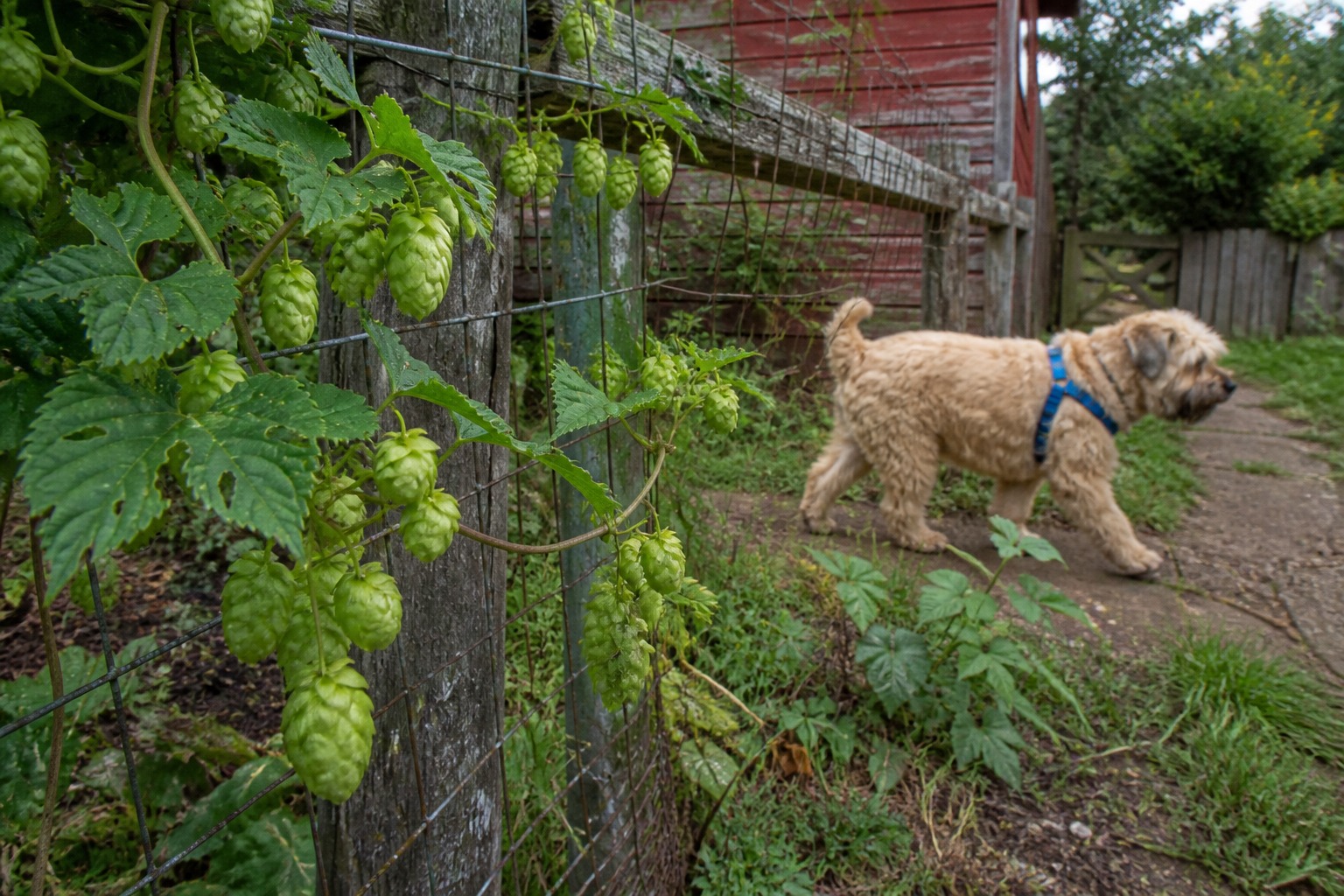
If you brew beer at home, the most dangerous ingredient in your kitchen is not the alcohol. It is the hops, and the thing that makes hops so frightening is not just that they are toxic to dogs. It is that the outcome runs on a clock, and the clock is measured in body temperature. Once a poisoned dog starts heating up, every single degree stacks the odds against survival. That is the fact to organize your whole response around.
This is not a “be careful” article. Hops poisoning is one of the few household toxins that can kill a healthy dog in hours, and the difference between a survivor and a tragedy is often how fast the temperature was brought down. Understanding that turns a vague worry into a concrete plan: prevent the exposure, recognize it instantly, and treat the temperature as the emergency it is.
What hops actually do, and why spent hops are the real trap
Humulus lupulus, the hop plant, gives beer its bitter bite, and it does something far worse to dogs. The exact mechanism of hops toxicity remains unknown. It may involve the plant’s essential oils, resins, phenolic compounds, or nitrogenous constituents, but because many of these substances are degraded or aerosolized during brewing, science still cannot point to the single responsible agent. What is not in doubt is the result: a dangerous, sometimes fatal spike in body temperature.
The version most likely to put a dog in the ER is not the fresh hop cone. Raw hops are intensely bitter, so dogs usually leave them alone. The danger is spent hops, the warm, soft, used material left after a brew. To a dog, that smells and tastes like food, and they will eat it readily, straight out of the compost or the trash. If you brew, the spent-hops bucket is the single highest-risk object in your house.
True flowers and dried hop plugs tend to be more toxic than pellets, which leave less residue. Wild hops, oddly, have been found to be non-toxic, but that is no comfort when your own fermenter is within snout range.
The reason this is a true emergency: the temperature data
Here is the net-new piece that should change how seriously you take a hops spill. A retrospective study published in the Journal of Veterinary Emergency and Critical Care in 2022 reviewed 71 cases of hops toxicosis in dogs over a 12-year span, the largest analysis of its kind, and the central finding is stark.
Body temperature was the critical factor in survival. Every one-degree increase in temperature was associated with roughly a 78 percent increase in the odds of death. Just as sobering, the study found that none of the standard interventions it examined, decontamination, cooling methods, or specific drugs, were statistically associated with improved survival on their own. The takeaway is not that treatment is useless. It is that by the time temperature has climbed, the dog is already in deep trouble, which makes speed everything.
“That study reframes hops poisoning for me,” says Dr. Priya Nair, an emergency and critical care veterinarian who consults for The Pet Times. “It tells us the window where we can change the outcome is early, before the hyperthermia really takes hold. A dog brought in within an hour, cool and stable, is a completely different patient from one that arrives at 108 degrees. The thermometer is the whole story, so the moment you suspect hops, you’re racing the temperature, not the toxin.”
For context, the high end of a normal dog’s temperature is about 102.5 degrees Fahrenheit. Above 106 degrees, the body’s own proteins begin to break down and permanent brain injury becomes a real risk depending on how long the heat persists. The study’s clinical picture has signs typically emerging within 8 to 24 hours, but the heat can climb well before that, which is exactly why you cannot wait for symptoms to declare themselves.
Symptoms to know cold
Watch for these, and treat any of them after possible hops exposure as a five-alarm event:
- Agitation, restlessness, or unusual excitement
- Heavy panting
- Rapid heart rate
- Anxiety
- Vomiting
- Flatulence
- Tremors or seizures
- A dangerously high body temperature (above 105 degrees Fahrenheit)
A dog who got into spent hops and is suddenly panting hard and pacing is not “worked up.” That dog is heating up.
Treatment, and the antidote worth knowing about
Hops toxicity is a hospital problem, period. Veterinary treatment centers on aggressive decontamination (inducing vomiting or gastric lavage, then activated charcoal), and, above all, active cooling by every means available. Intravenous fluids, sedation, and anti-seizure medication are used to stabilize the dog.
One specific drug is worth knowing about. Hops poisoning behaves like malignant hyperthermia, and dantrolene, a muscle relaxant used as the specific antidote for malignant hyperthermia, can be given to help control the runaway temperature. “We don’t have a perfect cure, and the big case review is a humbling reminder of that,” Dr. Nair says. “But dantrolene plus fast, aggressive cooling and good supportive care gives a dog the best shot we can offer. The honest message to owners is that our tools work best when the dog gets to us fast.”
What to do in the moment
If you suspect your dog ate hops:
- Call ahead and go now. Phone your vet or the nearest emergency clinic immediately and drive in. Do not wait for symptoms.
- Take a temperature if you can. A rectal reading above about 105 degrees Fahrenheit means active cooling cannot wait for the clinic.
- Start cooling on the way. Douse your dog’s body with cool (not ice-cold) water, place towel-wrapped ice packs against them, and run the car’s air conditioning. This buys time and can save a life.
- Bring information. Tell the team what your dog ate, whether it was raw or spent hops, roughly how much, and when. It shapes their plan.
Prevention is the only sure thing
Because the prognosis is guarded and the mechanism is poorly understood, prevention beats treatment by a wide margin. If you brew at home, treat hops, raw and spent, like a true hazard: store them sealed and out of reach, never leave the spent-hops bucket where a dog can reach it, and dispose of used material in a secured bin immediately rather than letting it sit in an open compost pile. Any breed can be affected, and dogs predisposed to malignant hyperthermia, including Greyhounds, Labrador Retrievers, Saint Bernards, Pointers, Dobermans, Border Collies, English Springer Spaniels, and northern breeds, may be especially vulnerable, so the bar for caution should be highest in those households.
The bottom line
Hops poisoning is not a topic for casual caution. It can kill a dog in hours, and the best available data shows survival hinges on one number, body temperature, with each degree of elevation sharply raising the risk of death. That makes hops a same-minute emergency: prevent exposure by locking away both raw and spent hops, recognize the signs instantly, get to a vet without delay, and cool aggressively on the way. The toxin is the threat, but the thermometer is what you are racing.
This article covers emergency toxicology, dosing, and treatment and should be reviewed against current veterinary critical-care guidance before any change to your pet’s care. If you suspect hops ingestion, contact a veterinarian or emergency clinic immediately.
References
- Pfaff, A. M., et al. “Retrospective Analysis of Hops Toxicosis in Dogs (2002-2014): 71 Cases.” Journal of Veterinary Emergency and Critical Care, 2022. https://onlinelibrary.wiley.com/doi/abs/10.1111/vec.13141.
- “Malignant Hyperthermia in Dogs and Cats.” MSD Veterinary Manual. https://www.msdvetmanual.com/musculoskeletal-system/myopathies-in-dogs-and-cats/malignant-hyperthermia-in-dogs-and-cats.
- “The Rising Danger of Hops Ingestion in Pets.” ASPCApro / ASPCA Animal Poison Control Center. https://www.aspcapro.org/resource/rising-danger-hops-ingestion-pets.
- “Toxicoses in Animals from Human Dietary and Herbal Supplements.” Merck Veterinary Manual. https://www.merckvetmanual.com/toxicology/toxicoses-from-human-vitamins-minerals-and-dietary-supplements/toxicoses-in-animals-from-human-dietary-and-herbal-supplements.
Common questions
What is the toxic dose of hops for dogs?
There isn't a reliable safe dose. The toxic mechanism isn't fully understood, individual sensitivity varies, and spent hops left over from brewing are a common and very dangerous source because dogs will eat the warm, soggy grain. Treat any ingestion of any amount of hops, raw or spent, as an emergency.
What is the survival rate for hops toxicity in dogs?
The prognosis is guarded, and outcome tracks closely with body temperature. In a large case review, each additional degree of temperature elevation was associated with a roughly 78 percent increase in the odds of death. Dogs treated early, before their temperature spikes, have a far better chance.
What should I do if my dog eats hops?
Call your vet or an emergency clinic immediately and head there. If you have a thermometer, take a rectal temperature; if it is above about 105 degrees Fahrenheit, begin active cooling on the way, dousing with cool water and applying towel-wrapped ice packs while running the AC. Do not try to manage this at home.
Not a substitute for your vet. Our guidance is educational. For urgent symptoms, contact a vet or emergency clinic right away. Editorial standards
Dr. Mehta is a board-certified veterinary nutritionist who evaluates pet food formulations, ingredient quality, and the science behind dietary trends. He writes and reviews all nutrition content at The Pet Times, including our food rankings and feeding guides.
Meet our experts ↗Keep reading
 Health & WellnessThe Deadliest Thing in Your Garden Is Flavored Like DessertDr. Lena Park · 6 min
 Health & WellnessA Dog Who Won't Drink Water Is a Clock, Not a QuirkDr. Lena Park · 7 min
 Health & WellnessBlood in Your Dog's Vomit? The Color Is a Map. The Timeline Is a Warning.Dr. Priya Nair · 6 min
 Health & WellnessThe 8 Dog Emergencies That Can't Wait Until MorningDr. Ravi Mehta · 6 min
 Health & WellnessParvo in Dogs: Two Levers Decide Whether Your Puppy LivesDr. Priya Nair · 7 min
 Health & WellnessDogs Barely Sweat to Cool Down. That's Why Heat Sneaks Up on Them.Dr. Mara Chen · 8 min