


A Mississippi Pit Bull Had a Green Puppy. The Reason Is Real Science, Not a Curse.
A pup named Fiona was born mint-green in a litter of white siblings. It looks like an omen and it's actually a harmless, temporary quirk of biology, one that's turned up in puppies from Florida to Italy. Here's what causes it.

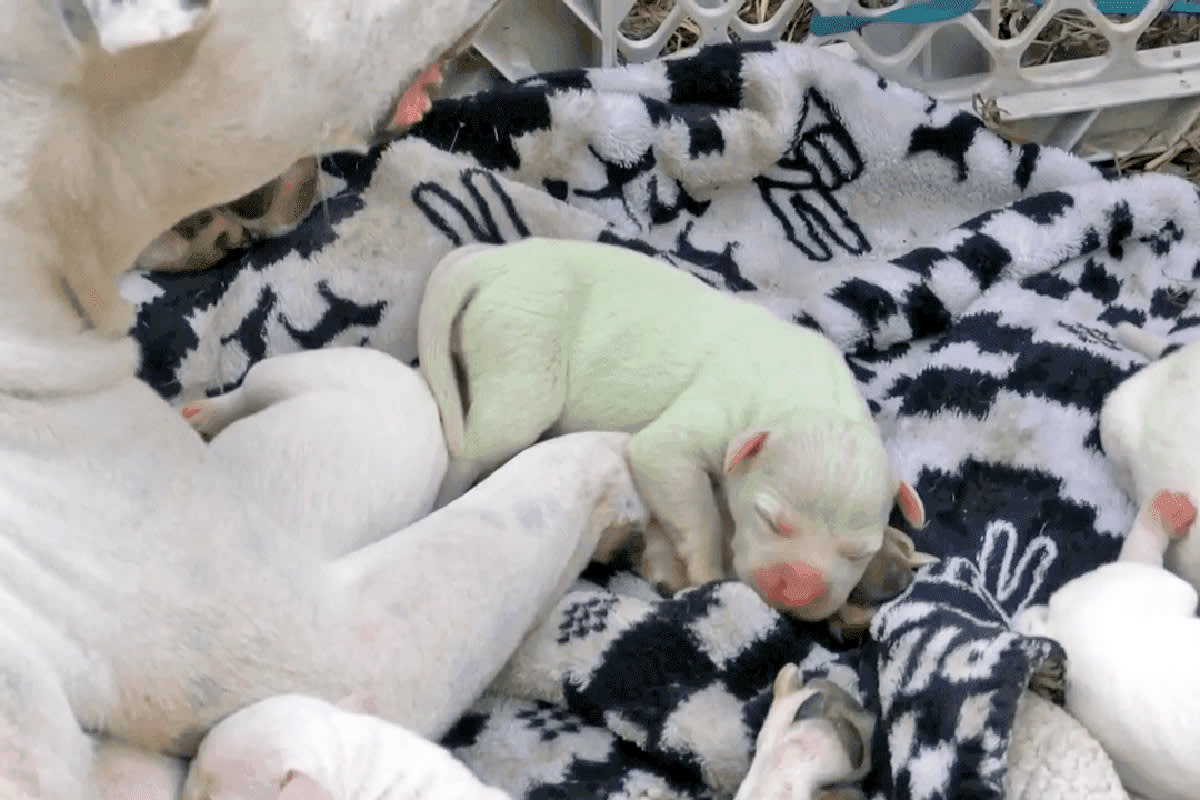
Some newborn photos make you say “aww.” This one makes you do a double take. In a litter of plump white puppies, one is unmistakably, vividly green, the color of a faded lime, curled up asleep against her siblings as if nothing were unusual at all. She belongs to a Mississippi dog named Pearl, an American Pit Bull Terrier, and when she arrived she looked less like a puppy and more like a small mint-tinted omen.
Her owners had the good sense to laugh rather than panic. But the obvious question, the one that would send anyone straight to a search bar, is a fair one: how does a dog get born green?
Meet Fiona
Pearl’s owners, Annise Tooley and her partner Greg Fucich, welcomed the litter on November 3. Not long after, they noticed one pup carried a distinct green tint next to her snow-white littermates, and they gave her the only fitting name: Fiona, after the green ogre-princess in Shrek. Tooley, understandably baffled, admitted she’d turned to Google to figure out why one of her American Pit Bull’s puppies had come out green, and told local station WLOX the family had been surprised by the whole thing.
Wait, this keeps happening
Here’s the twist that turns a one-off oddity into a genuine science story: Fiona is not alone. Green newborns are rare, but they crop up often enough to form a small, strange club.
Earlier that same year, a Golden Retriever puppy was born green in Pensacola, Florida, right around St. Patrick’s Day, cheekily named Shamrock. The breeder said they’d been startled and had rubbed at the coat only to find the color didn’t wipe away. Go back further and there’s a green pup named Pistachio, born on the Italian island of Sardinia. And in 2020, a green German Shepherd puppy arrived in a North Carolina litter. Different breeds, different continents, same eerie hue, which is the clue that this isn’t a fluke of one bad batch of anything. It’s biology doing something reproducible.
What actually turns a puppy green
The culprit is a pigment called biliverdin. It’s a greenish compound produced when the body breaks down hemoglobin and other heme proteins, the same family of pigments that can tinge a healing bruise green. In rare cases, biliverdin in the mother’s system mixes with the amniotic fluid surrounding a developing puppy, and a light-colored, white-coated pup soaks up the tint like a cloth dipped in dye. Some experts point to a related source: meconium, a puppy’s first stool, which can be passed before birth, along with pigments from the placenta.
Whichever the exact route, the important words are harmless and temporary. The color doesn’t signal illness or a defect. It simply fades over the following days and weeks as the pigment wears off, helped along by the mother’s licking and ordinary baths. Owners of past green puppies have described the tint gradually washing out until the pup looks like any other in the litter.
“The green looks alarming, but it’s really just a staining event, not a health condition,” says Dr. Mara Chen. “A pigment from the normal breakdown of blood proteins ends up in the fluid around a pale-coated pup and dyes the fur. There’s nothing wrong with the puppy, and the color lifts on its own as it grows in new coat. It’s one of those cases where the biology is far more reassuring than the photo.”
Fiona’s happy ending
That’s the whole mystery, and it’s a gentle one. No omen, no curse, no cause for worry, just a quirk of pigment and timing that briefly turned an ordinary puppy into an internet sensation. As for Fiona herself, the plan was the best kind of ordinary: once she was old enough, the little green pup would head off to a good home, her novelty color long since faded, indistinguishable from every other well-loved dog on the block.
References
Tom Hadley writes about training and behavior, helping owners understand what their pets are trying to tell them. His work covers everyday manners, decoding common behaviors, and the small changes at home that make dogs and cats easier to live with.
Meet our experts ↗Keep reading
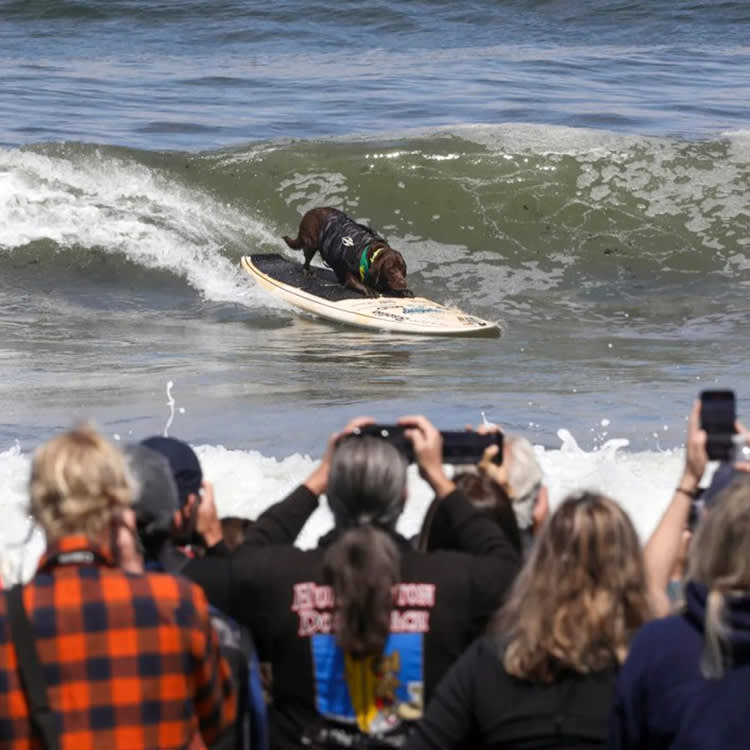 LivingA Lab From Brazil Went Back-to-Back. The Better Story Was in Third.Nina Vasquez · 5 min
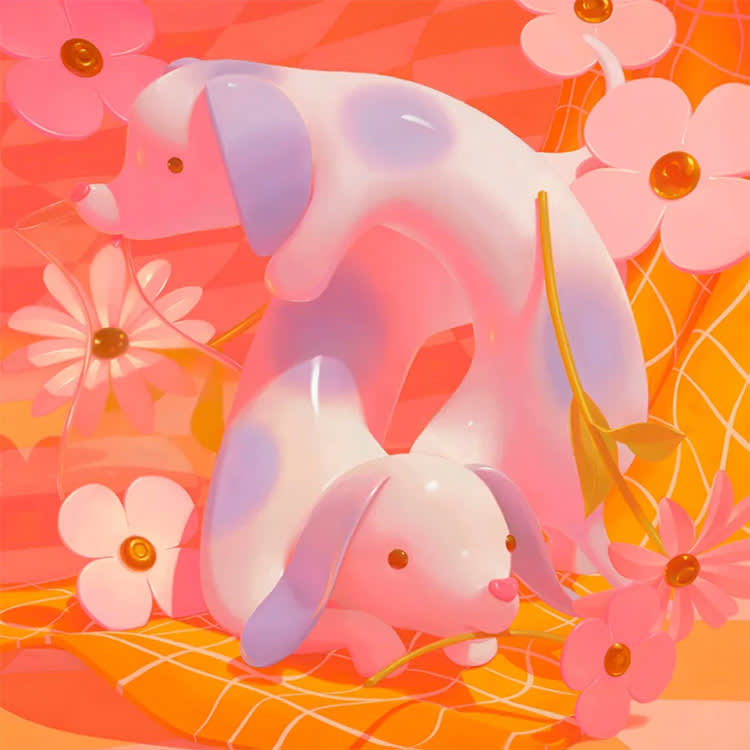 LivingAn Art Show Where Every Piece Is a Dog, and Every Ticket Helped OneSara Lim · 3 min
 LivingA Shelter-Style Mutt Just Topped a 350-Dog Field at Westminster. Meet Nimble.Marcus Webb · 4 min
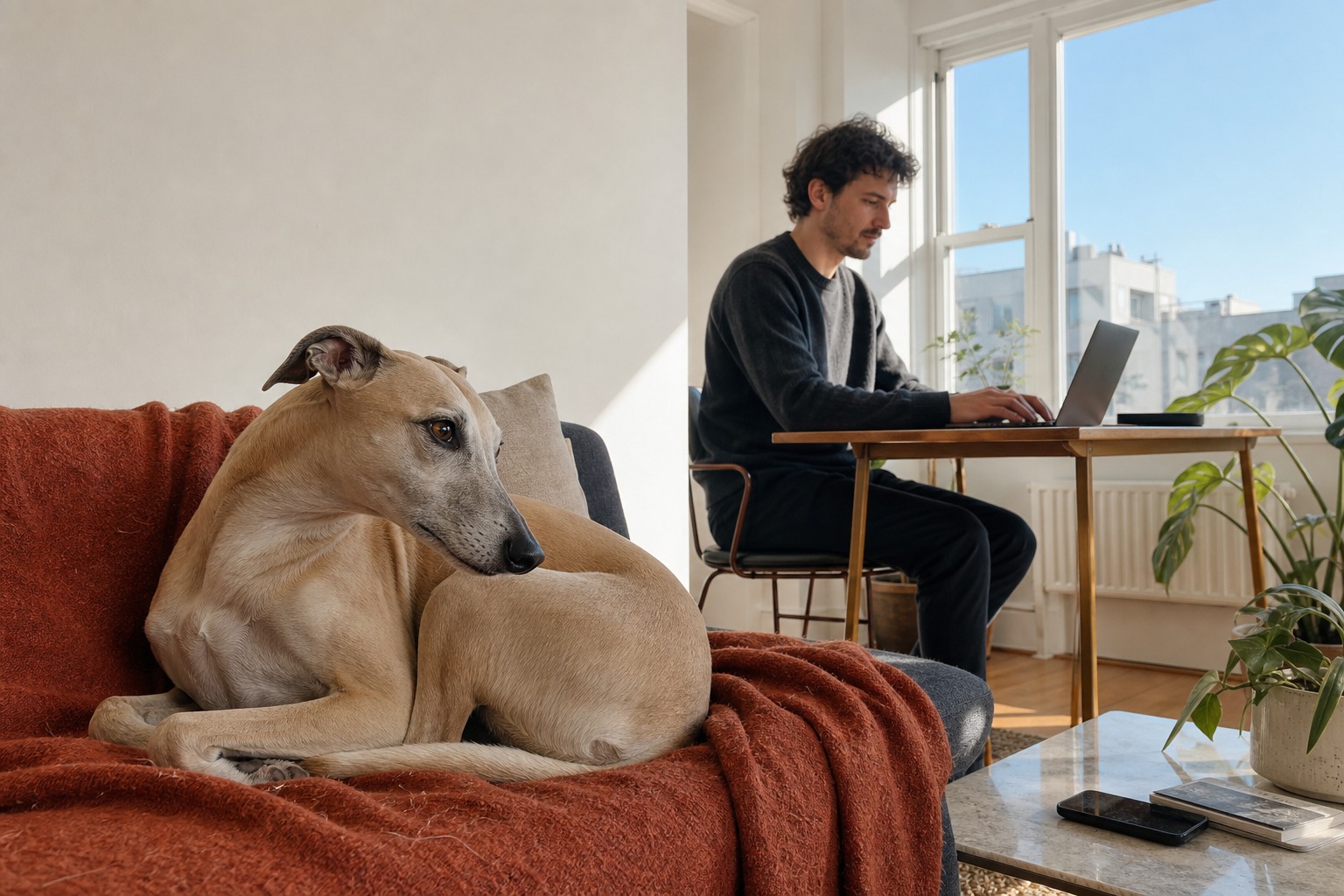 LivingSize Was Never the Point: 14 Dogs Built for Apartment LifeJordan Ellis · 8 min
 LivingThe Shelter Dog Everyone Called 'Aggressive' Just Needed a PlaygroundDr. Mara Chen · 8 min
 First DaysThe 3-3-3 Rule Is Two-Thirds Made UpDr. Mara Chen · 10 min