


Green Beans Are a Great Dog Treat. The 'Green Bean Diet' Is Not
Green beans are one of the best low-calorie snacks you can hand a dog. But the popular trick of swapping half a dog's dinner for green beans backfires, and here is the line between smart snacking and a diet that quietly starves your dog of nutrients.

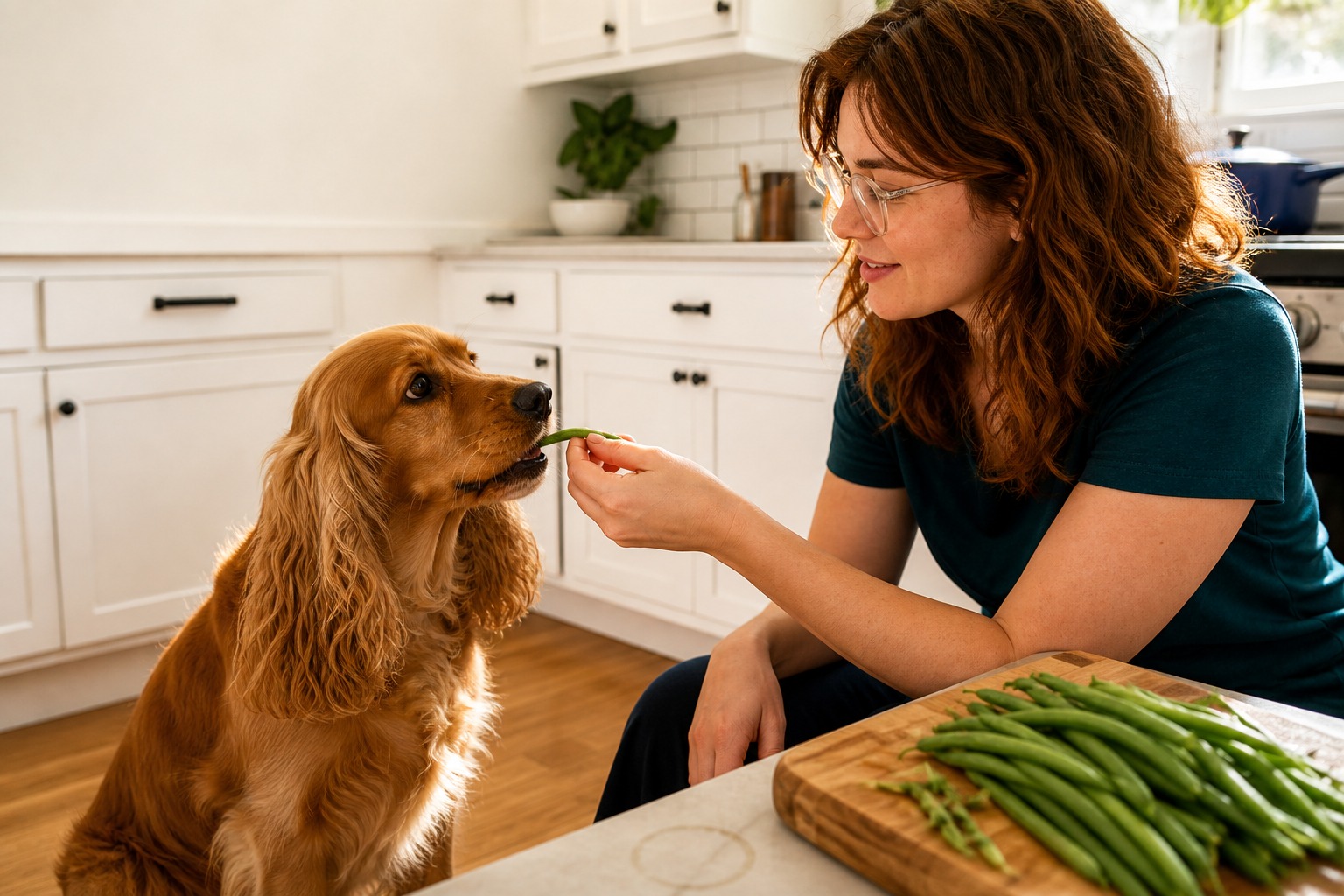
Green beans are one of the few human foods that are almost impossible to get wrong as a treat. They are safe, genuinely nutritious, low in calories, and most dogs love the snap. So this article is not going to spend long convincing you that green beans are fine, because they are. It is going to spend its time on the one place green beans go wrong, which is not the beans themselves but a popular piece of internet advice about them: the “green bean diet,” where owners swap out a big share of their dog’s dinner for green beans to force weight loss. That trick is where a great snack turns into a genuine nutritional problem, and knowing the difference is the whole point.
Why green beans earn their place in the treat rotation
For people and dogs alike, green beans punch above their calorie count. They deliver protein, fiber, calcium, iron, and vitamins B6, A, C, and K, all in a package light enough that a handful barely registers against a day’s calories.
That mix does real work. The fiber supports digestion and keeps a dog regular, and it can lend a hand with cholesterol. The potassium supports heart health and healthy blood pressure. The protein backs immune function, while the vitamins help calm inflammation, maintain bone tissue, and support healing. Vitamin B6 even plays a small role in mood, since it feeds the pathways that make serotonin and norepinephrine.
Green beans are my go-to swap for a high-calorie treat. They are crunchy enough that a dog feels genuinely rewarded, light enough that they will not pile on weight, and they slot right into a training session. As a snack, they are close to perfect.
That crunch is not just satisfying, it is motivating. A cold, crisp green bean is a real reward for a dog working through a training session, which makes them one of the most useful low-value-calorie, high-value-experience treats you can keep in the fridge.
The green bean diet, and why vets keep warning against it
Here is the idea that circulates online: your dog is overweight, so you replace part of each meal with green beans, then more, sometimes working up to half the bowl or beyond, until the pounds come off. It sounds logical. Green beans fill the stomach, so the dog feels fed while eating fewer calories.
The logic breaks on nutrition. A complete dog food is formulated so that a normal portion delivers a full day’s protein, essential fats, vitamins, and minerals. When you swap out a large chunk of that food for green beans, you are not just cutting calories, you are cutting everything else too. Green beans do not carry enough protein to meet a dog’s needs, and a dog eating a diluted diet for weeks can lose muscle mass and slide into real deficiencies. That risk climbs the longer the diet runs and the bigger the green bean share.
There is a better tool for the same job. Veterinary therapeutic weight-loss foods are built to do exactly what the green bean trick attempts, cut calories, while staying fortified with the protein, vitamins, and minerals a dog needs even on a restricted intake. That is the safe way to slim a dog down: a purpose-built food, portioned to a target, with your vet checking the pace. Green beans can absolutely be part of that plan as a low-calorie topper or treat. They just cannot be the plan.
“I love green beans as a tool and I dislike the green bean diet, and there is no contradiction there,” Dr. Nair says. “A few beans mixed into a measured, complete meal to help a hungry dog feel fuller? Great. Swapping out half the bowl for beans and calling it a diet? That is how you get a thinner dog who is quietly short on nutrients. If your dog needs to lose weight, let’s set a target and use a food designed for it.”
Serving them the right way
Green beans are safe, but preparation still matters. The big rule is to keep them plain. Never season them with garlic or onion powder, both of which are toxic to dogs. If you are sharing a dish that happens to contain green beans, confirm every other ingredient is dog-safe first.
Cut beans into bite-sized pieces so an excited dog cannot choke on a long one. Raw beans are ideal because they hold the most nutrition and the best crunch. Steamed or boiled beans are fine too, though cooking softens the texture and trims a little of the nutritional value. One form to go easy on is canned green beans, which are often loaded with sodium, if you use them, choose a no-salt-added can or rinse them well.
And keep the total honest. Treats that fall outside a dog’s balanced diet, green beans included, should stay under 10 percent of daily calories. Lean too hard on any single snack and you throw off the balance a complete food is designed to provide.
Other low-calorie produce worth rotating in
If green beans are a hit, a few other vegetables and fruits ride along nicely, each with its own small caveat:
- Carrots: crunchy and sweet, with real fiber and vitamin A. Their natural sugar means going easy for diabetic or overweight dogs.
- Cucumber: about 95 percent water, nearly calorie-free, and a refreshing summer crunch. Slice it to avoid a choking hazard.
- Asparagus: low-calorie and nutritious, best served cooked and cut small, since raw stalks are tough to chew.
- Blueberries: bite-sized, antioxidant-rich, and low in sugar for fruit, great frozen on a hot day.
And a few to keep off the menu entirely: onions and garlic in every form (they damage red blood cells), avocado (persin, plus a choking-hazard pit), and pecans (which can cause GI upset and carry a mold-toxin risk).
The bottom line
Green beans are a safe, nutritious, low-calorie treat, and one of the best crunchy rewards you can keep on hand. Serve them plain, cut them to bite size, and keep the total under 10 percent of your dog’s calories. The one real pitfall is not the bean, it is the green bean diet: swapping out a big share of your dog’s balanced food dilutes the nutrients a dog needs and can cost them muscle over time. Use green beans as a treat and a topper, and if your dog needs to lose weight, do it with a vet-guided plan and a food built for the job.
References
- Freeman, Lisa M., et al. “Weight-Loss Diets for Dogs and Cats.” Cummings School of Veterinary Medicine at Tufts University, Clinical Nutrition Service. https://vetnutrition.tufts.edu/
- American Kennel Club. “Can Dogs Have Green Beans?” https://www.akc.org/expert-advice/nutrition/can-dogs-have-green-beans/
- Association for Pet Obesity Prevention. “Pet Obesity Prevalence Surveys.” https://www.petobesityprevention.org/
- U.S. Department of Agriculture, FoodData Central. “Beans, snap, green, raw.” https://fdc.nal.usda.gov/
Common questions
Is the green bean diet safe for dogs?
Not as a do-it-yourself weight-loss plan. Replacing a large share of your dog's food with green beans dilutes the protein, vitamins, and minerals a dog needs, and prolonged versions can cause muscle loss and nutrient deficiencies. Green beans are a fine treat and a fine small topper, but a purpose-built veterinary weight-loss food keeps nutrients intact while cutting calories. Slim a dog down under a vet's guidance, not by swapping out half the bowl.
How many green beans can a dog eat?
Treats, green beans included, should stay under 10 percent of your dog's daily calories, with the rest from a complete and balanced food. A few beans for a small dog and a small handful for a large one is plenty.
Should green beans be raw or cooked for dogs?
Both work. Raw beans keep the most nutrients and the best crunch. Steamed or boiled beans are fine too, just plain. Skip canned beans when you can, because many are heavily salted.
Not a substitute for your vet. Our guidance is educational. For urgent symptoms, contact a vet or emergency clinic right away. Editorial standards
Dr. Nair is a veterinarian focused on diet and feeding. She covers everyday nutrition, treats, and the many "can they eat this?" questions owners ask, grounding each answer in what is actually safe and sensible for dogs and cats.
Meet our experts ↗Keep reading
 FoodYou're Counting Dog Treats WrongDr. Ravi Mehta · 6 min
 FoodHoneydew Is Mostly Sugar Water. That's the Catch for DogsDr. Priya Nair · 5 min
 FoodThe Xylitol in Raspberries Sounds Scary. The Math Says Feed Them AnywayDr. Mara Chen · 6 min
 FoodOnly 6% of Homemade Dog Diets Are Complete. Yours Is Probably in the Other 94%.Dr. Amara Solis · 12 min
 FoodWhy Adult Dogs Shouldn't Live on Puppy Food Comes Down to One MineralDr. Lena Park · 8 min
 FoodYour Dog Isn't Spoiled. 6 Fixes That Actually Get a Picky Eater EatingDr. Amara Solis · 6 min