


8 Habits of a Great Dog Owner That Have Nothing to Do With Money
The best thing you can give your dog isn't in a shopping cart. Eight daily habits that shape a dog's whole quality of life, and not one of them requires spending a dime.

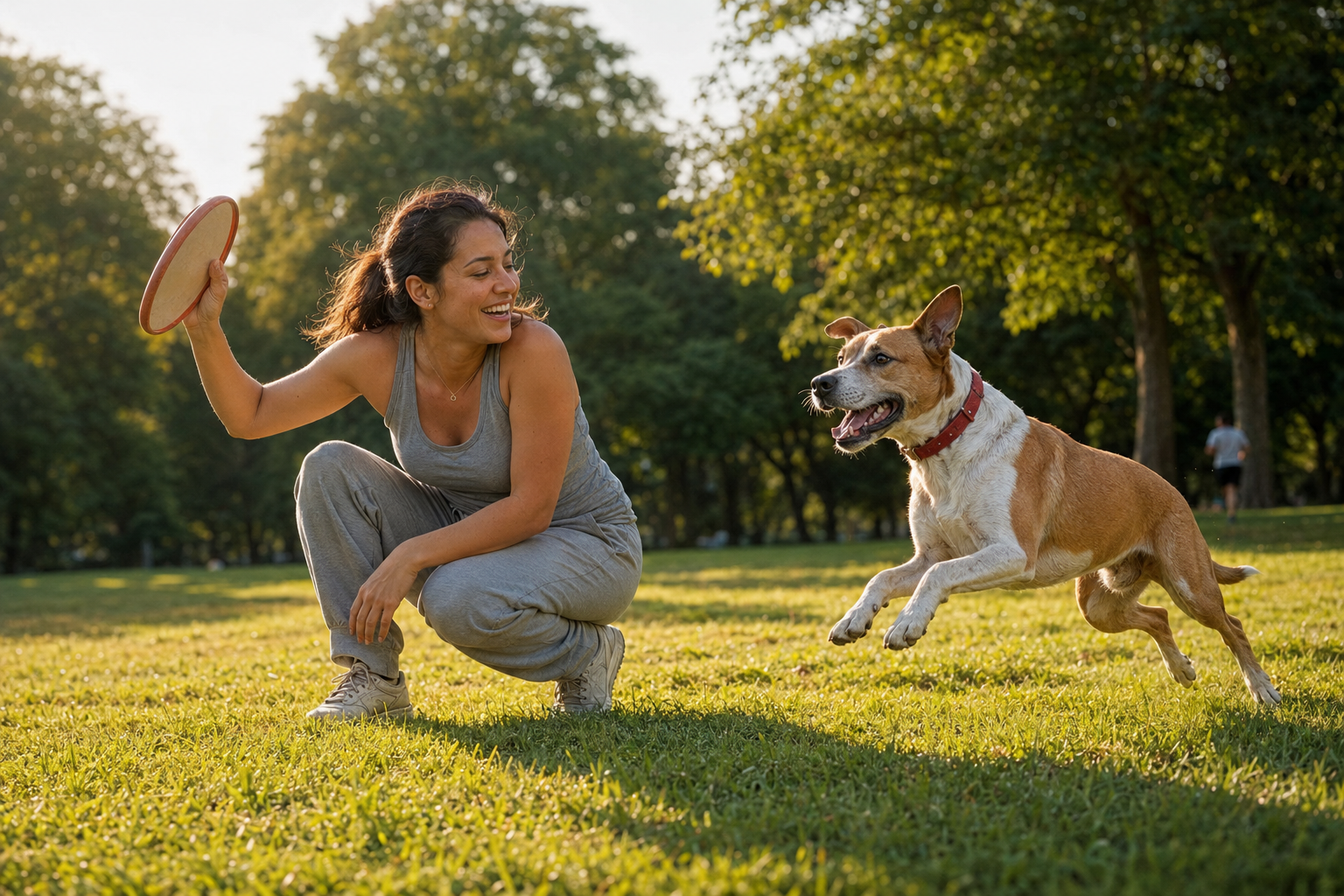
Walk into any pet store and the message is loud: being a good dog owner is something you buy. A smarter bowl, a plusher bed, a subscription box, a fourth harness. Your dog has read exactly none of the marketing. What your dog actually notices is far smaller and far more repeatable, the texture of an ordinary Tuesday: whether you looked up from your phone, how long the walk lasted, whether the day held anything to think about.
That is the whole thesis here. A great dog owner is not defined by the gear in the closet but by a handful of daily habits, most of which cost nothing. Here are eight worth building, ordered by what your dog would probably care about most, starting with the thing they can never get enough of and none of us can buy.
1. Be present, especially when it’s boring
Dogs are extraordinary readers of attention, and they know the difference between you being in the room and you being with them. This is the hardest habit for most of us, because our phones are always right there. On the walk, on the couch, at the dog park, put the phone away and actually watch your dog. It keeps them safer (you catch trouble before it starts), and it gives them the thing they want most, which is you, undistracted. The attention itself is a reward they thrive on, and it costs nothing but your focus.
2. Let the walk be for the nose, not the mileage
A dog experiences the world mostly through smell, and a good sniff is not a delay in the walk, it is the point of the walk. When you let a dog stop and read the fire hydrant, the tree trunk, and the patch of grass another dog visited an hour ago, you are handing them a newspaper written in scent. Slow, sniff-led walks (sometimes called decompression walks or “sniffaris”) do more for a dog’s mental state than a brisk march around the block, even a long one.
The habit is simple: once a day, drop the agenda. Let the leash go loose, let your dog pick the route and the pace, and give them the full length of the walk to investigate. You will cover less ground and your dog will come home more satisfied.
3. Feed the brain every single day
Mental work tires a dog out in a way physical work alone cannot. Enrichment toys, food puzzles, and scatter-feeding all make a dog use their head for dinner, and most dogs love the challenge as long as it is winnable. You do not need a shelf of gadgets, either. A few minutes of training built into a normal walk counts: ask for a sit, a recall, a down, reward it, release, keep moving. Those tiny reps keep a dog switched on and keep the two of you tuned to each other.
4. Give the body real exercise, matched to the dog
Sniffing feeds the mind, but the body still needs to move, and what counts as enough depends entirely on the dog in front of you: a border collie and a bulldog do not have the same account to empty. Beyond the standard walk, there is a whole menu, agility, flyball, rally, hiking, swimming, stair climbing, a hard game of fetch, or a flirt pole in the backyard for dogs who love to chase.
Pick something that suits your dog’s build, age, and joints, and make it a regular part of the week rather than a once-a-month burst. A dog whose physical needs are met is a calmer, easier dog at home.
5. Keep training a conversation, not a puppy phase
Training is not something you finish. The dog who nailed loose-leash walking at six months will get sloppy at three years if nobody keeps up the practice. Treat basic skills, waiting at the door, a solid stay, a reliable recall, as a lifelong dialogue rather than a box you checked once. Refresher sessions, a new trick now and then, or a group class all keep those cues sharp. Even a genuinely well-behaved dog benefits from the fine-tuning, and the practice itself is quality time.
6. Add variety and moisture to the bowl
The same dry food, scoop after scoop, day after day, is nutritionally fine and experientially bland. You can add interest and a little extra nutrition with vet-safe fresh additions, a spoon of plain cooked egg, some plain cooked vegetables, a little lean meat, or a splash of water or broth to soften kibble. Homemade dog treats and a “barkuterie” spread of safe foods are cheap, easy projects too. Check that anything new is actually safe for dogs first (skip onions, garlic, grapes, xylitol, and other known toxins), then let the bowl surprise them now and then.
7. Do a hands-on check-over regularly
A grooming session doubles as a health exam, and it is one of the most underrated habits an owner can build. When you brush the coat, clean the ears, trim the nails, comb through the fur, and brush the teeth, your hands pass over the whole dog. That is how you catch the new lump, the sore ear, the cracked nail, or the sensitive spot early, while it is still small. Do it often enough and you will know your dog’s normal well enough to notice when something is off.
8. Keep the come-home insurance current
An ID tag and a microchip are the difference between a lost dog and a returned dog, and both quietly go out of date. Tags wear smooth and phone numbers change. Microchip registrations get forgotten the moment you move or switch numbers. Twice a year, read your dog’s tag out loud to check it is still legible, and log in to your microchip registry to confirm your contact info is current. If your dog isn’t chipped, book it, it is a quick appointment. Research on shelter intakes found microchipped dogs were reunited with their owners far more often than unchipped ones, and a chip only works if the registration behind it is right.
What newer thinking adds
The biggest shift in how trainers and behavior folks talk about dogs in the last few years is the move away from “tire them out” toward “let them decompress.” We used to treat a restless dog as a dog who needed more miles. Now the emphasis is on sniffing, choice, and mental rest, letting a dog make small decisions on a walk, giving them chew time and quiet, and not scheduling every waking minute. Sniffing in particular seems to have a genuinely calming, self-soothing effect, which is why a slow, nose-led walk can settle a dog that a hard run only winds up further.
None of that requires new gear. It requires the thing your dog was asking for all along: your time and your attention, given on purpose.
If you have the room to give more, fostering or sponsoring a shelter dog is a generous next step. But the daily list above is where being a great dog owner actually lives, and every item on it is free.
References
- Lord, Linda K., et al. “Search and identification methods that owners use to find a lost dog.” Journal of the American Veterinary Medical Association, vol. 235, no. 2, 2009, pp. 160-167.
- American Veterinary Medical Association. “Microchipping of animals.” avma.org.
- Duranton, Charlotte, and Alexandra Horowitz. “Let me sniff! Nosework induces positive judgment bias in pet dogs.” Applied Animal Behaviour Science, vol. 211, 2019, pp. 61-66.
Claire Sutton writes about life with pets, from the first days home to the small daily routines that make a household work. Her reporting spans people-and-pet relationships, training basics, and the practical side of bringing a new animal into the family.
Meet our experts ↗Keep reading
 LivingDon't 'Demote' the Dog When the Baby ArrivesDr. Amara Solis · 6 min
 LivingInside the 'Soho House for Dogs,' Where a Dog Park Costs $1,400 a YearSasha Ford · 6 min
 LivingYour Dog Walker Loses $5 of Every $15 Walk. Here's Where It Goes.James Okafor · 8 min
 LivingHe's Dressed Beyoncé and Michelle Obama. His Irish Terrier Won't Wear a Thing.Nina Vasquez · 5 min
 LivingPride Gear for You and Your Dog: 20 Picks That Give BackJordan Ellis · 10 min
 LivingCelebrate the Holidays With Your Dog Without Landing in the ERNina Vasquez · 5 min