


The Cheapest Part of Owning a Bulldog Is Buying One
Bulldogs are the chillest, most charming dogs alive, and a near-guaranteed schedule of vet bills written into their anatomy. A devoted Bulldog parent on the real budget, the real conditions, and the honest decision.

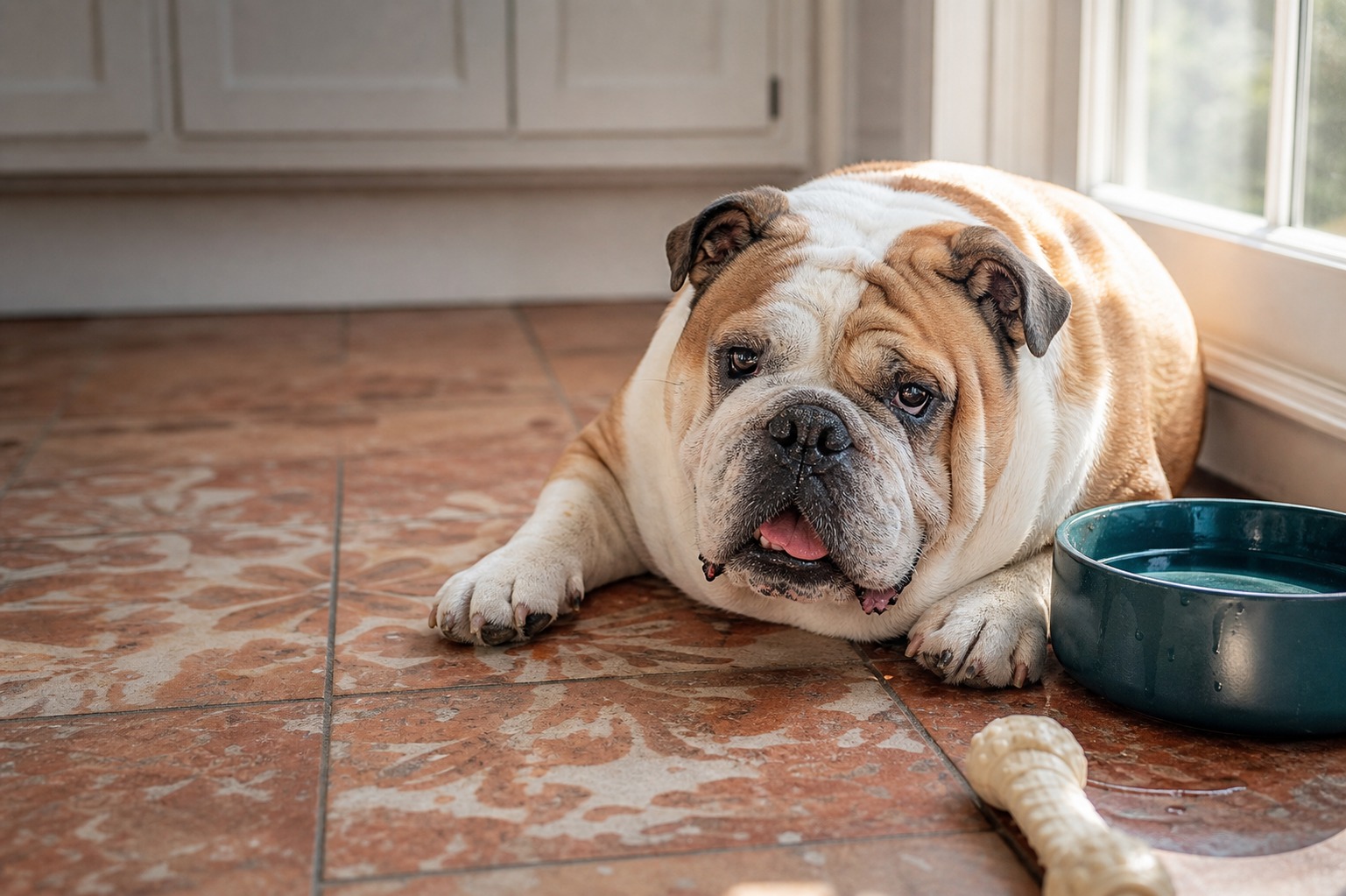
My vet has a line she likes to use on prospective Bulldog parents, and it has stuck with me for years: the cost of buying a Bulldog is the cheapest part of owning one. She means it as a warning, delivered with love, and it is the single most useful thing anyone told me before I fell completely for the breed. Because here is the trap with Bulldogs. They are so charming, so smushy, so disarmingly friendly that you meet one, decide you need one, and never get around to asking the question that actually matters: not “how much does a Bulldog cost to get,” but “how much does a Bulldog cost to keep, in money and in years?”
I can answer that, because I have a Bulldog named Joan whom I consider the favorite being in my world. This is the budget I wish someone had handed me, the conditions that come standard with the face, and the honest decision you should make before you commit.
I didn’t research the breed. I got lucky, then I didn’t
I have always been a dog person, but I became a Bulldog person in Paris, of all places, mooning over the squishy-faced dogs trotting after their owners on café errands during my year abroad. Back in the States I got an English and American Bulldog mix named Chauncy, did zero research, and got away with it: he was fairly healthy and lived to 16. That is the exception, not the rule, and it taught me a bad lesson I had to unlearn.
Less than a year after Chauncy passed, I adopted Joan, a one-year-old white English Bulldog with brown and brindle markings, from a Brooklyn shelter. She had been neglected, had never lived indoors, and arrived with pneumonia and mange. Loving her has meant a special shampoo for her sensitive skin, daily wrinkle cleaning, watching whether she is licking her paws raw from allergies, and a genuinely ridiculous sum spent on a recurring UTI. None of that is bad luck. For a Bulldog, that is Tuesday.
The lifespan number you should see first
Before the cute pictures, the hard number. A large UK study using veterinary records (the VetCompass project) found English Bulldogs live an average of just 7.2 years. Broader research on more than half a million dogs found that flat-faced breeds live roughly 1.5 years shorter than typical dogs. When you take on a Bulldog, you are very often signing up for a shorter relationship than you would get with almost any other dog of the same size, and that is the cost that does not show up on any invoice.
The conditions that come standard
The reason the years run short and the bills run long is anatomy. Bulldogs have been bred into a shape, the flat face, the dense wrinkles, the compact frame, that humans find adorable and that the dog’s own body struggles with. The same UK records quantify just how lopsided the risk is. Compared with other dogs, English Bulldogs are far more likely to develop:
- Skin fold dermatitis (about 38 times the risk). Those charming wrinkles trap moisture and bacteria, which is why daily cleaning is not optional grooming, it is preventive medicine.
- Cherry eye, a prolapsed tear gland (about 27 times the risk). It often needs surgery.
- An undershot jaw and the dental and feeding quirks that come with it (about 24 times the risk).
- Brachycephalic obstructive airway syndrome, or BOAS (about 19 times the risk), the breathing disorder behind the famous snoring. Joan’s snore swings from a gentle purr to a chainsaw, and that sound is exactly what eventually puts a palate surgery on the calendar.
- Interdigital cysts between the toes (about 13 times the risk), painful and prone to recurring.
On top of that list, Bulldogs are prone to several cancers, can be genuinely hard to housebreak, and are exquisitely vulnerable to heat. A flat-faced dog cannot pant efficiently, so overheating is a real emergency risk in summer, not a minor caution.
“With a Bulldog the question is never whether the vet bills arrive, only which system sends them first: airway, joints, heat tolerance, or skin, and skin usually wins the race,” says Dr. Mara Chen, a veterinarian who works with brachycephalic breeds. “Anyone shopping for a low-effort, healthy-by-default dog should keep walking. The features people fall for, the pushed-in muzzle, the compact frame, the wrinkles, are engineered defects. The cuteness and the medical file are the same trait.”
The real budget, beyond the price tag
Translate the conditions above into a household budget and you get the picture nobody shows you on the puppy listing. Plan for routine costs most dogs do not have: medicated shampoo, wrinkle wipes, and allergy management as ongoing line items, not occasional buys. Plan for the probable big-ticket procedures, palate or airway surgery for BOAS, a cherry-eye repair, possible dental work. Plan for mobility aids as they age, a dog stroller for walks longer than a few minutes, a carrier for stairs they can no longer climb (I am biding my time on both for Joan, who lives up four flights). And plan for the recurring small emergencies that, for a Bulldog, are routine.
This is the case where pet insurance stops being a nice-to-have. If your heart is set on a brachycephalic dog, enroll early, before any condition becomes a documented pre-existing exclusion. The premium is real, but it is dwarfed by what a single airway surgery costs out of pocket.
So should you get one? Yes, with eyes open, and please adopt
None of this is an argument against Bulldogs. They are wonderful: good family dogs, patient with kids, packed with personality, the chillest of the chill. People who swear they do not like dogs tend to make an exception for Bulldogs. I would not trade Joan for any healthier breed on earth.
It is an argument for getting one on purpose, with the full budget and the shorter timeline in front of you, rather than on a wave of feeling at the sight of a wrinkly face. And if you do commit, adopt rather than shop. Social media makes inhumane puppy mills look legitimate, and even some licensed breeders are now breeding irresponsibly for novelty, miniature Bulldogs, or “blue” and “silver” coats, none of it for the health of the breed. Plenty of purebred Bulldogs end up in shelters and regional Bulldog-specific rescues needing homes, and those organizations will tell you the truth about what an individual dog needs.
Because how could I begrudge anyone the joy that Joan gives me, wrinkles and snoring and vet bills and all? I just want you to know the price of that joy before you sign for it. The dog at the shelter is the cheapest part. Everything after is the commitment.
References
- O’Neill, D. G., et al. “English Bulldogs in the UK: A VetCompass Study of Their Disorder Predispositions and Protections.” Canine Medicine and Genetics, 2022. https://pubmed.ncbi.nlm.nih.gov/35701824/. Accessed June 2026.
- Teng, K. T., et al. “Life Tables of Annual Life Expectancy and Mortality for Companion Dogs.” (Brachycephalic lifespan findings.) https://www.vettimes.com/news/vets/small-animal-vets/research-study-reveals-short-lives-of-brachycephalic-dogs. Accessed June 2026.
- American Kennel Club / Bulldog Club of America rescue network. Accessed June 2026.
Sasha Ford is a certified cat behaviour consultant who has worked with shelters, catteries, and private clients across the country. They review all feline behaviour content at The Pet Times, with expertise in multi-cat households, indoor enrichment, and stress-related disorders.
Meet our experts ↗Keep reading
 Health & WellnessDog Flu Is Usually Mild. In a Shelter, It Emptied Tampa's Kennels.Dr. Mara Chen · 5 min
 Health & WellnessThe English Bulldog Isn't Dying Out. Its Own Breed Standard Is Killing It.Dr. Priya Nair · 7 min
 Health & WellnessHow to Read a Shelter Dog's Medical Paperwork Without PanickingDr. Priya Nair · 6 min
 Health & WellnessReaching for Dramamine for Your Carsick Dog? Read This FirstDr. Amara Solis · 6 min
 Health & WellnessHer Dog Collapsed on the Sidewalk. What Looked Like a Stroke Usually Isn't.Dr. Ravi Mehta · 8 min
 Health & WellnessBath Day Wrecks Your Back Because You're Doing It in the Wrong RoomLeila Torres · 6 min