


He Photographs Dogs Like Vogue Cover Stars. His Best Assistant Was a Terrier.
Gerrard Gethings turned pet portraits into fine art, sent 'Do You Look Like Your Dog?' viral, and shot drag queens on the side. His secret isn't directing animals. It's reading them.
Affiliate disclosure. This article contains affiliate links. We may earn a small commission if you buy through a link, at no extra cost to you. How we handle recommendations.
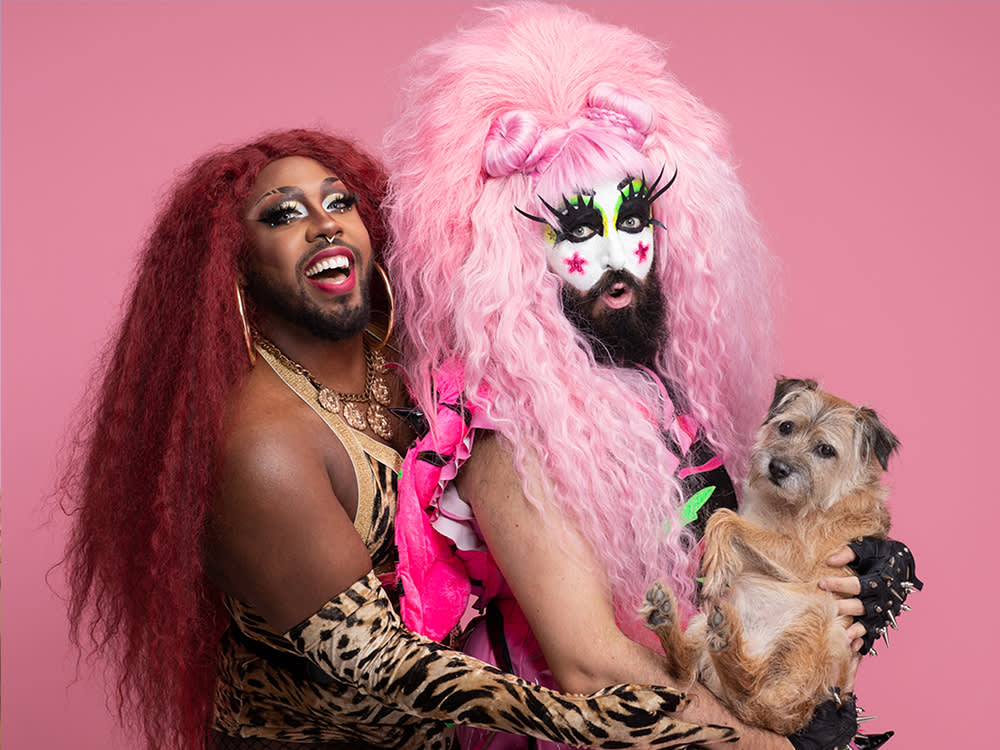
Most pet photography aims for cute. Gerrard Gethings aims for a soul. The London-based artist makes studio portraits of animals so exacting that he’s been dubbed the Richard Avedon of animal photography, and the comparison isn’t flattery. He lights a Bulldog or a Maine Coon the way a fashion photographer lights a cover star, then waits for the one flicker of expression that turns a cute pet picture into a real portrait.
You’ve very likely seen his work without knowing his name. His 2020 project Do You Look Like Your Dog?, a memory game pairing pets with their human lookalikes, went viral almost instantly, and its companion, Do You Look Like Your Cat?, followed. The gag underneath them is as old as a New Yorker cartoon, the jowly businessman walking a Bulldog, the elegant woman with a Poodle. But in Gethings’ hands the joke curdles into something stranger and more moving: you start seeing the animal in the person and the person in the animal, and looking for the soul in both.
The terrier who set the lights
That sensibility didn’t come from nowhere. For twelve years, Gethings’ constant companion and, he only half-jokes, his studio assistant, was a Border Terrier named Baxter, whom he recently lost to illness. In portrait work, someone has to stand in the subject’s spot while the lighting gets dialed in, and Baxter, Gethings has said, was better at that job than any human. A raised eyebrow got a raised ear. A certain tone of voice got a cocked head. Bring the dog to a human shoot, he’s noted, and the whole energy of the room changes, like laying your cards on the table.
Gethings has been candid about why he wanted a dog so badly in the first place, describing a long-held feeling that he wasn’t fully himself without one, and crediting Baxter with proving he could give another creature a good life. The animal thread, as he tells it, runs through everything he makes. He’s since brought home another Border Terrier, a puppy he named Barry Gibb, who at the time of our reference reporting was a still-wild fourteen weeks old and already learning a few tricks. Gethings has a soft spot for older dogs, partly because an aged dog at your side quietly tells clients you’re the kind of person who sticks around.
How you actually photograph an animal
Ask him for the secret to shooting animals and the answer is less about gear than about reading the room. With an animal, he’s explained, there’s no pretense and no subtext, you simply work with what’s in front of you. He leans on the basics: almost every dog will work for food, some breeds lock onto movement, others onto sound. A Whippet, he points out, physically cannot ignore something that moves.
The goal is never a specific expression, you can’t ask a Bichon Frise to look wistful, he jokes. You just keep working until the animal offers something, whatever that something turns out to be, and you’re fast enough to catch it. Cats, predictably, are their own universe. For the cat book he often had to travel to each cat’s home, and even then some simply refused to perform. One supposedly studio-ready, train-tested cat behaved perfectly right up until the actual shoot.
From cats to drag queens
That cat project led somewhere unexpected. Through one of the people he met while shooting it, a performer who goes by Daisy Puller, Gethings got connected to a wider circle of drag artists, many of them out of work during the Covid shutdowns. The result was Drag Match, a series of striking before-and-after portraits, and it became a book of its own. Baxter’s final gig, as it happened, was on that shoot.
Photographing the performers taught him something about performance itself. Some, he found, were toned-down versions of their stage selves; others were genuinely shy, and the challenge was drawing them out when they were out of costume, since the stage persona is built to be photographed. Beautiful subjects, he’s said, make it almost hard to take a bad picture.
He’s clear-eyed about his influences, too. He admires William Wegman’s cinematic Weimaraner work and calls grey a photographer’s dream color, while gently drawing his own line: he doesn’t dress his animals up. He prefers his subjects, as he puts it, nude, no costumes, ideally not even collars.
In 2021, Gethings’ animal photography appeared in a group show at the Musée de la Vie Wallonne in Belgium. The through-line across all of it, portraits, party games, drag, is the same instinct that made a scruffy Border Terrier the best assistant he ever had: take the animal seriously, and it will hand you something worth framing.
Sasha Ford is a certified cat behaviour consultant who has worked with shelters, catteries, and private clients across the country. They review all feline behaviour content at The Pet Times, with expertise in multi-cat households, indoor enrichment, and stress-related disorders.
Meet our experts ↗Keep reading
 TrainingThere Are Two Kinds of Anthropomorphism. One Helps Your Pet, One HurtsSara Lim · 7 min
 LivingAquarius Was the Original Internet Pet Person, and the Science Backs It UpNina Vasquez · 6 min
 LivingYour Pisces Pet Feels Everything. Loving Them Back Is Its Own Art.Sasha Ford · 4 min
 LivingThe Cutest Pet Doesn't Win. The Most Professional One Does.Sasha Ford · 5 min
 Product PicksSkip the Pride-Washing: 5 Queer-Owned Pet Brands That Actually DeliverSasha Ford · 5 min
 Living8 'Foster Fails' Who Were Never Really Going AnywhereNina Vasquez · 9 min