


Your Dog Isn't Hungry. Your Litter Box Is Just Unlocked.
Dogs raid the litter box because they can. Here is the health risk, the medical causes worth ruling out, and the fix that actually holds.

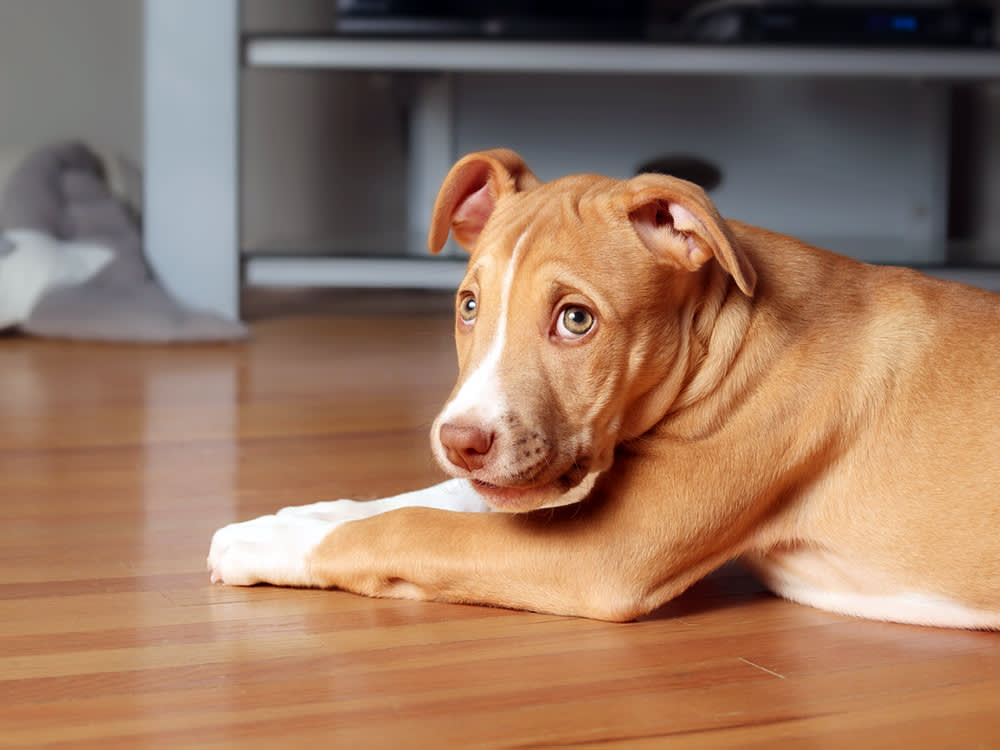
Your dog trots over, delighted with himself, wearing a fine dusting of clay litter on his nose. You already know what he has been doing.
Here is the thing worth understanding before you buy a single deterrent product: for most dogs, this is not a nutritional deficiency, a psychological disorder, or a message about your parenting. It is an access problem. There is a warm, unattended, protein-rich buffet sitting on the floor of your bathroom, and nothing is stopping him from using it.
That reframing matters, because it changes what you do first. You do not start by fixing the dog. You start by locking the box.
That said, there is a version of this behavior that is a real medical signal, and there are genuine health risks even when it is just opportunism. So let’s do this in the right order: the risk, the exceptions, the fix.
First, the risk is real, and it runs both ways
The gross-out factor gets all the attention. The health case is more interesting.
Parasites. Cat feces can carry intestinal parasites that transmit straight to a dog, including roundworms (Toxocara cati) and Giardia, whose cysts are infective the moment they are passed. If your cat is strictly indoors and reliably dewormed, the risk is much lower, but it is never zero. If your dog is eating stool from stray or indoor-outdoor cats outside, the risk climbs sharply, because those cats are far more likely to be carrying something.
Toxoplasma, and the part people miss. Eating cat feces is a documented risk factor for Toxoplasma gondii infection in dogs, and a serological survey of dogs identified coprophagy, living with cats, and outdoor access as risk factors for exposure. Most infected dogs never look sick. But dogs can also act as mechanical carriers, moving infective material around on their coat and face, which is why this stops being purely a dog problem in a household with a pregnant person or anyone immunocompromised.
Swallowed litter. This is the one that actually sends dogs to the emergency room. Litter is not digestible. A mouthful causes stomach upset, vomiting, or diarrhea. A serious quantity, especially of a clumping clay litter, can cause severe constipation, impaction, or a full intestinal blockage. That is an emergency.
Litter additives. Most litters are non-toxic, but some carry odor-control or moisture-absorbing ingredients that are not meant to be eaten. Read your label, and call a pet poison line if you are unsure what your dog swallowed.
The signs that turn this from disgusting into urgent
Small amounts often produce no symptoms at all. Parasites may cause nothing for weeks, then show up as bloating, diarrhea, or unexplained weight loss.
The emergency picture is different and much louder: repeated vomiting, refusing food, straining to defecate with nothing coming out, lethargy, and a painful, tense belly. That is a possible obstruction, and it needs a veterinarian immediately, not in the morning.
The exceptions: when it isn’t just opportunism
Most litter-box raiding is a dog being a dog. Some of it is a symptom, and the way to tell them apart is scope and intensity.
A dog who snacks from the box when it happens to be full is being opportunistic. A dog who obsessively hunts for feces, who eats non-food items generally, or whose appetite has become insatiable, is showing something else, and that dog needs a workup before you try to train it away.
Eating non-food items is called pica, and the medical causes are worth knowing:
- Gastrointestinal disease. Food allergies, inflammatory conditions, and intestinal parasites can all drive dogs to eat strange things, sometimes as an attempt to soothe discomfort.
- Nutritional deficiencies. Vitamin B12 deficiency and anemia can both be involved.
- Conditions that ramp up appetite. Diabetes and Cushing’s disease drive hunger hard, as do steroid medications. A dog on prednisone who has suddenly discovered the litter box is not being naughty.
- Neurologic disease. Less common, but it belongs on the list.
If your vet clears all of that, then the remaining behavioral causes, compulsive behavior, anxiety, and boredom, come into play, and they respond to a behavior plan rather than a pill. The sequence matters: rule out the body first, then address the mind.
The fix, in the order that works
1. Make the box inaccessible
This is the entire game, and it is the step people skip in favor of buying a supplement. If the dog cannot reach the poop, the dog cannot eat the poop.
Options, roughly in order of how well they hold up:
- A door with a gap. Put the box in a room and fit a baby gate raised a few inches off the floor, or propped open just wide enough for the cat. Most cats can slip through a gap a medium dog cannot.
- Height. Cats jump. Dogs mostly do not. A box on a sturdy surface a dog cannot reach solves this cleanly, provided your cat is young and mobile enough to make the leap.
- A cat door into a closed room, closet, or basement. The most durable answer in a multi-pet house.
- A top-entry or covered box. Works against some dogs. Determined dogs, and dogs with long noses, defeat it.
Whatever you choose, the constraint that outranks all of the above is that your cat must still be willing to use the box. A cat who feels trapped, ambushed, or cramped will stop using it and pick a corner of your carpet instead, and you will have traded one problem for a worse one. Watch closely for the first week.
2. Scoop the moment it happens
The other half of access. Scoop daily at minimum, and scoop right after you know the cat has used the box. This is unglamorous and it works. No stool, no snack.
3. Teach a real “leave it”
Not a shout. A trained, rehearsed, paid-for cue that means take your face away from that and look at me. It is the single most useful behavior a dog can have, and it transfers straight to walks, where the same dog will find deer and rabbit droppings and make identical choices.
Mat training helps too: a dog with a clear “go here and settle” default is a dog you can redirect instead of chase.
4. Fill the day
Boredom-driven scavenging responds to enrichment, and enrichment is not a euphemism for a longer walk. Food puzzles, snuffle work, chew time, short training sessions, and real physical exercise all reduce the amount of time your dog spends generating his own entertainment. A dog with a job is less interested in the bathroom.
5. Skip the supplements
Products marketed to make stool taste unappealing have a poor track record. If your dog is eating cat poop because he likes it, is bored, or has an anxiety problem, no additive is going to outcompete the litter box. The exception is a dog with a specific diagnosed deficiency, where a targeted supplement prescribed by your vet is treating an actual medical problem, not papering over an access one.
When to call the vet
- Your dog ate a significant amount of litter, or you find him vomiting, refusing food, straining, lethargic, or tender in the belly. That is same-day.
- The behavior is obsessive, or he is eating other non-food items too.
- He has other symptoms: diarrhea, weight loss, a bottomless appetite, or new lethargy.
- Nothing has worked and you need a behavior plan. For dogs who cannot be kept safe from scavenging, a properly fitted basket muzzle on walks is a humane, effective tool, not a failure.
What’s new since this was written
The most useful recent shift in thinking is about who is at risk. Research on Toxoplasma exposure in dogs keeps returning to the same set of risk factors, coprophagy, cohabiting with cats, and outdoor access, and to the idea that dogs can shuttle infective material around a home even when they themselves stay perfectly healthy. So the reason to shut down litter-box raiding is not only for the dog’s sake.
The second shift is toward treating pica as a symptom rather than a personality trait. The instinct to reach for a training fix first is understandable, but the dogs who eat non-food items compulsively are the ones most likely to have something findable going on inside them. A workup is not an overreaction. It is the fastest route to the answer.
And the boring conclusion holds: for the ordinary dog with the litter dust on his nose, the fix is a gate, a scoop, and a solid “leave it.” Not a supplement.
References
- Companion Animal Parasite Council. “Who Is Uniquely Susceptible to Parasites Transmitted by Dogs and Cats?” https://capcvet.org/articles/who-is-uniquely-susceptible-to-parasites-transmitted-by-dogs-and-cats/
- “Risk Factors for Toxoplasma gondii Infection in Dogs: A Serological Survey.” Parasites & Vectors, 2024. https://www.ncbi.nlm.nih.gov/pmc/articles/PMC10964533/
- Merck Veterinary Manual. “Behavioral Problems of Dogs.” https://www.merckvetmanual.com/behavior/normal-social-behavior-and-behavioral-problems-of-domestic-animals/behavioral-problems-of-dogs
- Boze, B. G. V., et al. “The Paradox of Canine Conspecific Coprophagy.” Veterinary Medicine and Science, vol. 4, no. 2, 2018, pp. 106–114. https://doi.org/10.1002/vms3.92
- Centers for Disease Control and Prevention. “About Toxoplasmosis.” https://www.cdc.gov/toxoplasmosis/about/index.html
Common questions
Can a dog get worms from eating cat poop?
Yes. Several intestinal parasites, including roundworms and Giardia, transmit through feces, and a dog eating cat stool is a direct route.
How do I clean my dog's mouth after they raid the litter box?
Encourage them to drink water and brush their teeth with a dog-safe toothpaste if they will tolerate it. Do not put mouthwash or human products in their mouth.
Can my dog get sick from eating cat litter?
Yes. Litter is not digestible. Small amounts can upset the stomach, larger amounts can cause impaction or an intestinal blockage, and some odor-control additives are not safe to swallow.
Will a supplement stop my dog from eating cat poop?
Usually not. Deterrent supplements have a poor track record. Blocking access to the box and cleaning it promptly work far better.
Not a substitute for your vet. Our guidance is educational. For urgent symptoms, contact a vet or emergency clinic right away. Editorial standards
Dr. Nair is a veterinarian focused on diet and feeding. She covers everyday nutrition, treats, and the many "can they eat this?" questions owners ask, grounding each answer in what is actually safe and sensible for dogs and cats.
Meet our experts ↗Keep reading
 Health & WellnessYour Dog Drinks From Puddles. There's a Parasite Waiting in Them.Dr. Priya Nair · 7 min
 Health & WellnessForget the Rusty Nail. Here's How Dogs Actually Get Tetanus.Dr. Mara Chen · 6 min
 Health & WellnessDistemper Was Nearly Beaten by a Vaccine. It's Creeping BackDr. Priya Nair · 10 min
 Health & WellnessThe Scary Headline Was Chemicals. The Real Culprit Is Your Dust.Dr. Nina Kohl · 4 min
 Health & WellnessTums for Dogs: A Prescription Drug in Disguise, Not a Stomachache FixDr. Nina Kohl · 6 min
 Health & WellnessLyme Doesn't Announce Itself. It Fakes a Limp Months Later.Dr. Ravi Mehta · 7 min