


Your Dog Ate a Chicken Bone. Where It Lands Decides Everything.
The panic is understandable, but the smartest response isn't automatic. Whether a swallowed chicken bone is an emergency or a wait-and-watch depends almost entirely on where it goes.

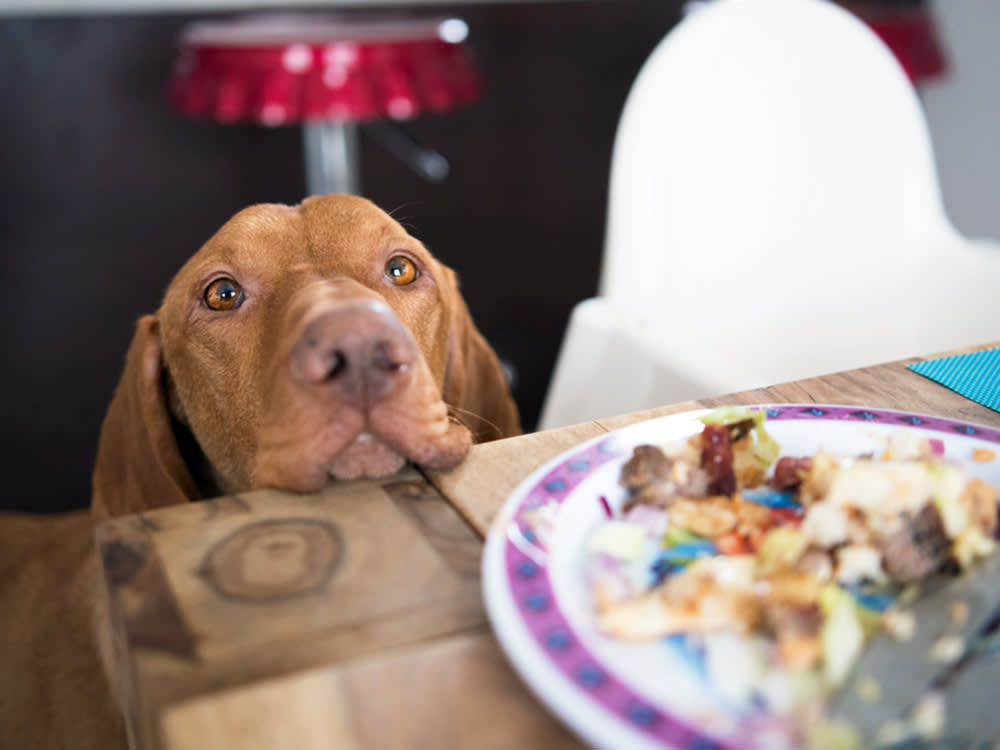
Your dog just inhaled a chicken bone off the sidewalk, or the counter, or the trash, and your stomach dropped. That reaction is right, chicken bones can hurt a dog. But the reflex that usually follows, either “make him throw up” or “rush to the ER no matter what,” is where people go wrong. The single most useful thing to understand is that a chicken bone’s danger depends almost entirely on where it ends up, and that changes what you should do.
Dogs are opportunistic scavengers, wired to grab whatever food crosses their path, so a dog going for a chicken bone is not misbehavior, it is instinct. Here is how to respond to it intelligently.
Why chicken bones are risky in the first place
Chicken bones are hollow and, when cooked, brittle. Chewed, they can splinter into sharp shards, and those edges are what cause trouble: they can puncture the digestive tract or lodge and block it. That said, a dog’s stomach acid is strong and plentiful, and plenty of dogs eat a chicken bone with no consequences at all. The risk is real but not guaranteed, which is exactly why the response should be measured rather than frantic.
The part that changes everything: location
Here is the reframe that recent veterinary research makes possible. A 2022 study in the Journal of Veterinary Internal Medicine looked at 129 dogs with bone foreign bodies, and it found that bone is the most common esophageal foreign body in dogs, accounting for somewhere between 30 and 80 percent of cases. More importantly, it split the danger cleanly by location.
Bones stuck in the esophagus, the tube between throat and stomach, warranted removal, and vets retrieved them with endoscopy. That is the genuine emergency: a bone hung up in the esophagus can cause serious damage and does not pass on its own.
Bones that reached the stomach were a different story. Of 84 dogs with gastric bone foreign bodies, 49 were simply left to digest the bone, and none were determined to have died from short-term complications or chronic disease related to it. In other words, a bone that makes it to the stomach frequently gets broken down or passed uneventfully, and pushing for surgery or scoping in those cases is often unnecessary.
The question I’m really asking on the phone isn’t ‘did the dog eat a bone,’ it’s ‘where is that bone right now.’ A dog gagging, drooling, and struggling to swallow tells me the esophagus, and that’s a same-hour visit. A dog who swallowed it clean and is bouncing around normally is usually a watch-and-monitor, because the stomach handles a lot more than people expect.
This is not a license to shrug off a swallowed bone. It is a reason to observe the right things and let your vet, who can feel the abdomen and take an X-ray to see where the bone actually is, make the call, rather than defaulting to the scariest intervention.
What to do right away
Do not induce vomiting, and do not give any medication, unless your vet directs you to. A sharp bone can do more damage on the way back up than it did going down.
Call your vet even if your dog seems completely fine. Many chicken bones pass unnoticed, but that is not a reason to skip the call, it is a reason to make it and then monitor carefully. If your vet okays it, a little bread or a bland meal of boneless boiled chicken and rice can help cushion sharp edges as the bone moves along.
Then watch, closely, for at least 72 hours. The red flags that mean go to the vet now: choking, hacking, gagging, drooling, vomiting, abdominal pain, lethargy, or refusing to eat. Any of these can indicate a puncture or obstruction.
What the vet may do
Expect an exam that includes feeling the abdomen for pain, and likely X-rays to locate the bone and lab work to check that everything is functioning. From there, treatment tracks the location: an esophageal bone is removed, usually endoscopically, while a gastric bone may be left to pass under monitoring. Your dog might get fluids to stay hydrated and a special digestive diet to give the gut a rest, with probiotics or other support as needed. Surgery is reserved for the serious cases, a puncture or a true obstruction.
The risks worth knowing
Perforation. A puncture through the digestive wall lets gut bacteria spill into the abdomen, causing a dangerous infection called peritonitis.
Choking. A dog who grabs a bone often tries to gulp it whole, and a large piece can lodge in the esophagus or airway, a potential emergency.
Obstruction. The intestines can only stretch so far. A bone can get stuck in the twists and turns, and a gut that cannot empty needs immediate care.
GI upset. Even without a blockage, a bone can trigger gastroenteritis, vomiting, diarrhea, belly pain, poor appetite, and lethargy.
Bacterial contamination. Raw chicken bones in particular can carry bacteria like Salmonella, which your dog will happily ingest without a second thought.
The bottom line, and prevention
Chicken bones do not belong in your dog’s bowl, and cooking them (or not cooking them) changes nothing about that. The same verdict covers the pork and beef bones people assume are the safer option. The reliable prevention is access control: store chicken where your dog cannot reach it, and use a trash can with a locking lid or one tucked behind a cupboard door. If your dog does get a bone anyway, do not panic and do not force vomiting. Call your vet, describe what you are seeing, and let where the bone landed guide the plan. Most dogs are fine. The ones who are not need you calm, observant, and quick, not guessing.
Common questions
Will a chicken bone dissolve in a dog's stomach?
Often, yes. A dog's stomach acid is strong, and many bones that reach the stomach are broken down or passed without incident. The bigger risk is a bone that lodges in the esophagus on the way down, which is a true emergency.
How long after eating a chicken bone will a dog show symptoms?
Problems can appear within hours if a bone lodges or punctures, but complications can also develop over a few days as the bone moves. Monitor closely for at least 72 hours and call your vet at the first sign of trouble.
Not a substitute for your vet. Our guidance is educational. For urgent symptoms, contact a vet or emergency clinic right away. Editorial standards
Dr. Mehta is a board-certified veterinary nutritionist who evaluates pet food formulations, ingredient quality, and the science behind dietary trends. He writes and reviews all nutrition content at The Pet Times, including our food rankings and feeding guides.
Meet our experts ↗Keep reading
 Health & Wellness10 Memorial Day Hazards an ER Vet Sees Every Single YearDr. Amara Solis · 8 min
 Health & WellnessThe Sidewalk Salt Burning Your Dog's Paws Can Also Poison ThemDr. Amara Solis · 8 min
 Health & WellnessThe Summer Weed That Burrows Into Your Dog and Doesn't StopDr. Ravi Mehta · 8 min
 Health & WellnessYour Dog Ate Chocolate. The Word 'Toxic' Won't Tell You What to Do. The Math Will.Dr. Ravi Mehta · 8 min
 Health & WellnessThe Sweetener That Kills Dogs Often Isn't Labeled "Xylitol"Dr. Ravi Mehta · 8 min
 Health & WellnessThe Scrape You Shrug Off Is the One That Turns DeadlyDr. Amara Solis · 6 min