


Do Dogs Really Cry Happy Tears? The Truth Is Messier
A widely shared study found dogs' eyes well up when they reunite with their favorite people. Here is what it really proved, what it did not, and what it means for you.

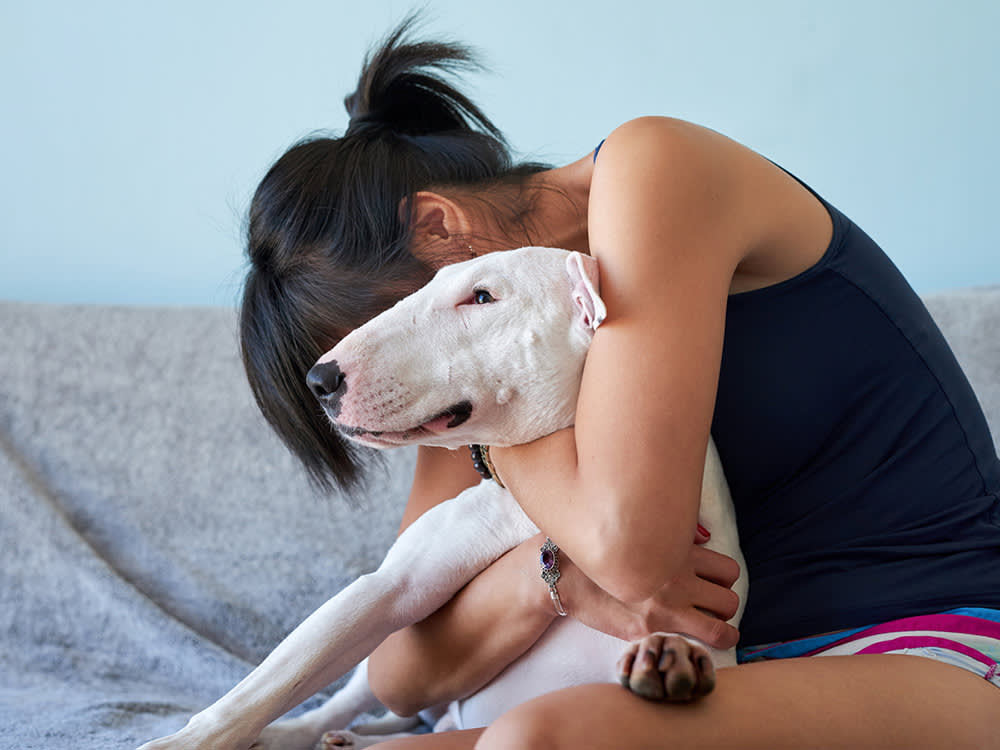
You already read your dog’s face all day long. The open mouth that looks like a grin, the head dropped into your lap, the eyes that seem to soften when you walk in the door. Most of it is interpretation. So when headlines announced that dogs “cry happy tears,” it landed somewhere between believable and too good to check. The honest version is more interesting than the headline: a real study found a real effect, but what it proved is narrower than what it got credit for.
Here is the useful way to hold it. Something measurable happens at your dog’s eyes when you come home. Calling it crying is where the science and the storytelling part ways.
The everyday claim, and the careful version of it
The research that started all of this came out of Azabu University in Japan and was published in Current Biology in 2022. The setup was simple enough to picture: researchers measured how much moisture sat in dogs’ eyes using a standard strip test, once during a calm stretch at home and again right after the dog reunited with its owner after several hours apart.
The reunion eyes held more moisture. And the bump showed up specifically when dogs greeted their own person, not when they greeted another familiar human they liked. That detail is what makes it interesting rather than random. Whatever was happening, it tracked with the relationship, not just with seeing any friendly face.
What it is not is sobbing. Nobody filmed dogs with tears rolling down their cheeks. The change was a small rise in the film of moisture that already coats a healthy eye, detectable on a test strip, not a Hollywood close-up.
Why oxytocin is the part worth remembering
The second half of the study is the part I would actually keep. When researchers put a little oxytocin directly onto dogs’ eyes, moisture went up compared with a placebo. Oxytocin is the same hormone that surges during nursing, during physical closeness, and during the long mutual gaze that dogs and people fall into with each other. Petting your dog raises it in both of you.
So the chain the study draws is: reunion, oxytocin, more tears. That is a believable biological story, and it is the reason this is more than a cute anecdote.
What I tell owners is that the tearing is a sign of the bond doing its job chemically, not proof your dog is weeping with feeling. Oxytocin going up when you reunite is genuinely lovely. We just should not staple a human emotion onto a moisture reading.
There is also a knock-on effect that says more about us than about dogs. When people were shown photos of dogs with a little extra moisture added to the eyes, they rated those dogs as needing more care and affection. Misty eyes pull on us. If that response is built in, an emotional tear could, over many generations, quietly strengthen the pull dogs already have on human attention.
Where this leaves you and your dog
Treat the welling eyes as one more honest signal in a relationship that already runs on dozens of them: the door greeting, the lean, the sigh as your dog settles against you. The chemistry behind the reunion is real and it is mutual. You do not need the word “crying” to make any of that mean more than it already does.
One practical note, because it matters for health and not just sentiment: everyday emotional moisture is subtle and brief. Eyes that are visibly watery much of the time, red, squinting, pawed at, or leaking discolored discharge are not a feelings story. That is a veterinary one, and it is worth a call.
What newer research adds
Since the study made the rounds, the bigger development has been pushback, and it is worth knowing about. Several scientists who spoke to the press questioned whether the experiment’s design can really carry the “tears of emotion” conclusion, partly because the measured change was small and the number of dogs was limited. The finding has not been overturned, but it has not been treated as settled either.
The other honest gap is about sadness. This research only looked at a positive moment, the reunion. It says nothing about whether dogs tear up when they are distressed, and as of now there is no good evidence that they do. Humans appear to be the only animals who cry from feeling bad.
So the current state of things is narrower than the headline and, to me, more trustworthy for it: a measurable, oxytocin-linked rise in eye moisture during happy reunions, an effect that tugs at human caregiving, and a wide-open question about everything else.
References
- Murata, K., et al. “Increase of tear volume in dogs after reunion with owners is mediated by oxytocin.” Current Biology, 2022.
- “Dogs cry more when reunited with their owners.” EurekAlert! / Azabu University, 2022.
- “Do Dogs Really Cry Tears of Joy When Reunited With Their Owners?” Smithsonian Magazine, 2022.
Dr. Chen is a small-animal veterinarian who leads health and safety coverage at The Pet Times. She writes and reviews the bulk of our illness, condition, and safety content, translating clinical guidance into clear, practical advice owners can act on at home.
Meet our experts ↗Keep reading
 Health & WellnessYour Dog Licking Your Feet Is Harmless. The Cream on Your Skin Isn't.Dr. Ravi Mehta · 6 min
 TrainingA Laser Pointer Isn't a Toy. It's a Job Your Dog Can Never Finish.Dr. Nina Kohl · 7 min
 Health & WellnessDog Saliva Doesn't Heal Wounds. It Delivers Bacteria.Dr. Priya Nair · 8 min
 TrainingYour Dog Rolling in Poop Isn't Camouflage. That Theory Barely Holds Up.Dr. Nina Kohl · 7 min
 TrainingLetting Your Dog Sleep in Your Bed Isn't Spoiling Them. The Science Sides With You.Dr. Lena Park · 7 min
 TrainingThat 'Calm' Flat-Faced Dog? The Science Says It's Mostly How You Raised Them.Dr. Mara Chen · 6 min