


It's Not the Cinnamon Roll. It's What's Baked Inside
A bite of plain cinnamon roll rarely hurts a dog. The real emergencies hide in the add-ins: raisins, nutmeg, xylitol, and raw dough. Here's how to tell a mess from a crisis.

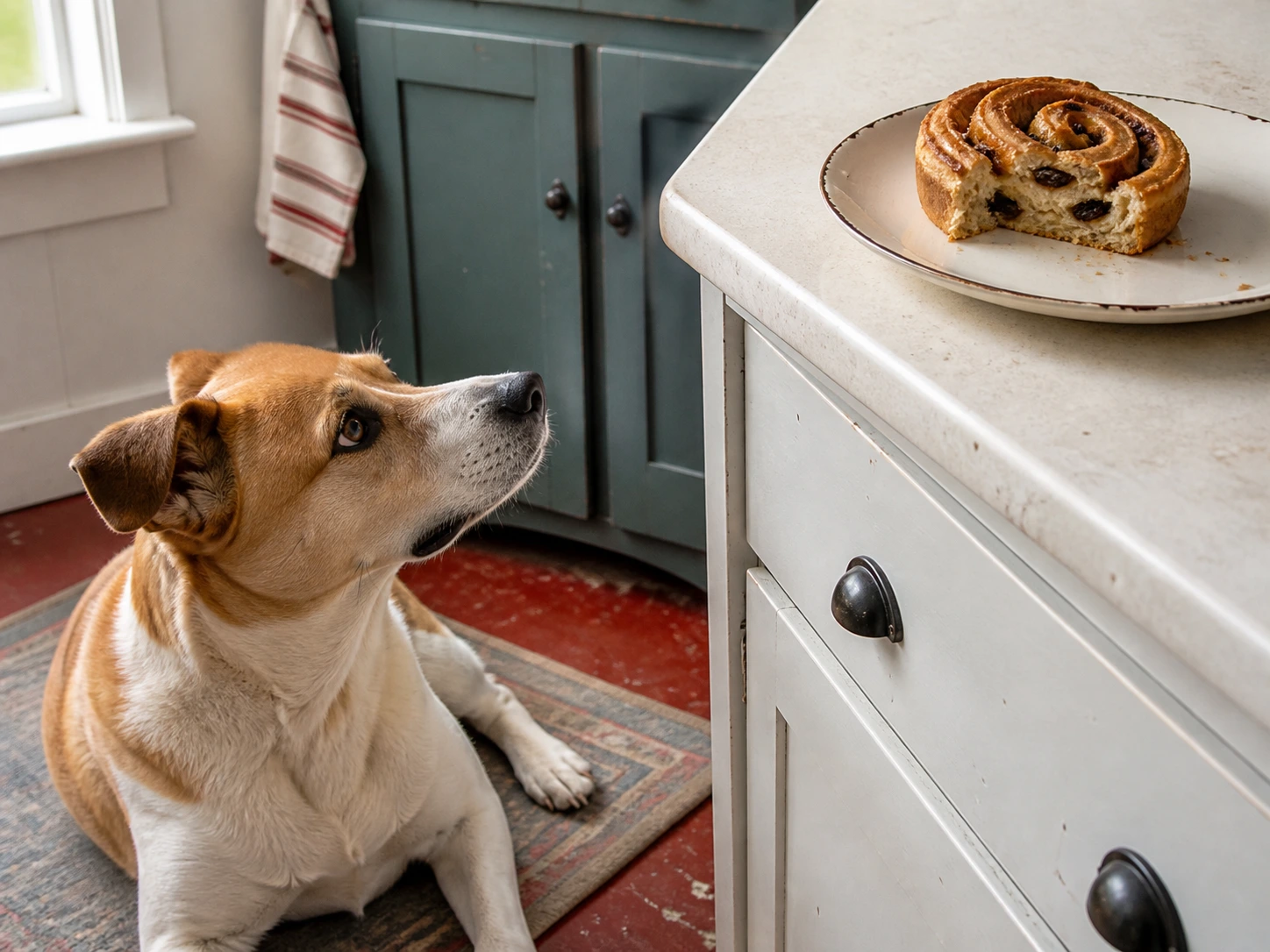
Here is the reassuring part first: if your dog snags one plain cinnamon roll off the counter, you are probably looking at a bad tummy day, not a trip to the emergency vet. The scary part is that a cinnamon roll is rarely just dough and cinnamon. It is a delivery vehicle for whatever the baker decided to add, and a few of those extras are the difference between “watch and wait” and “get in the car now.”
So the useful question is not really “can dogs eat cinnamon rolls.” They shouldn’t, but they can survive a small taste. The question that actually protects your dog is: what else was in that roll?
The roll itself: a slow problem, not a fast one
Strip a cinnamon roll down to its basics and you get bread dough (butter, sugar, flour, yeast, sometimes milk), a filling of more sugar and butter, a heavy dose of cinnamon, and usually a slick of frosting. None of that is acutely toxic. What it is, is a concentrated hit of fat and sugar that a dog’s system is not built to process in quantity.
Eat it once, and the worst case is vomiting, loose stool, and a sore belly for a day or two. Eat it often, and the calories pile into weight the dog carries into joint disease and diabetes down the road. The frosting is essentially sugar poured onto sugar, and it is the part most likely to trigger the vomiting-and-diarrhea combination.
A plain cinnamon roll is a fat-and-sugar problem, and fat-and-sugar problems usually announce themselves slowly, over a rough day or over months of extra pounds. What I want owners watching for isn’t the pastry itself. It’s the raisin they didn’t see, or the sugar-free frosting they didn’t think to check.
The add-ins that turn a mess into an emergency
This is where cinnamon rolls earn their spot on the do-not-share list. Any one of these can be dangerous in a small amount, and none of them are obvious once they are baked in.
Raisins are the one that surprises people most. Grapes and raisins can cause acute kidney failure in dogs, and there is no safe dose you can count on. For two decades nobody knew why. In 2021 the ASPCA’s Animal Poison Control Center identified the culprit as tartaric acid, which dogs are unusually bad at clearing from their kidneys. That is also why cream of tartar and tamarind belong on the danger list. If a cinnamon roll had raisins in it, do not wait for symptoms. Call your vet.
Nutmeg is the second hidden hazard, common in spiced holiday baking. It contains myristicin, which at high doses can cause a racing heart, disorientation, tremors, and seizures. A light dusting on a pastry is a lower dose than a dog raiding the spice rack, but nutmeg-heavy recipes are worth a call.
Xylitol is the modern wildcard. This sugar substitute shows up in “sugar-free” and “reduced-sugar” baked goods and frostings, and it is far more dangerous to dogs than regular sugar. It can crash blood sugar and cause liver failure, sometimes within an hour. If the roll or its icing was sugar-free, treat it as a poisoning and get help immediately.
Chocolate rounds out the list on any roll dressed up with cocoa or chocolate drizzle.
Raw dough is its own kind of trouble
If your dog got into cinnamon roll dough before it was baked, that is a different and more urgent situation than the finished pastry. Raw yeast dough keeps rising in the warm, wet environment of the stomach, which can distend it painfully and, at worst, twist or block the gut. At the same time, the yeast ferments the sugars into alcohol, which the dog absorbs and can become intoxicated by. Unproductive retching, a swollen belly, wobbliness, or a dog that seems drunk all warrant an emergency visit, not a wait-and-see.
What to actually do if your dog eats one
If it was a small bite of a plain roll with no raisins, nutmeg, chocolate, or xylitol, you can usually watch at home. Expect maybe a queasy day. Call your vet if the vomiting or diarrhea is severe or lasts more than a day or two.
If the dog ate more than a bite or two, ate raw dough, or ate a roll containing any of the four red-flag ingredients above, call your vet or an emergency line right away. Do not try to induce vomiting on your own unless a professional walks you through it. Early treatment, which may include the clinic inducing vomiting, works best when it happens fast.
What to give instead
Dogs do not need pastry, and there are plenty of sweet-ish snacks that carry none of this risk. Small pieces of apple, banana, blueberries, watermelon, or pear satisfy a sweet tooth. Remove seeds and cut everything into bite-sized chunks. For something savory, lean cooked chicken, pork, beef, or fish works, as do plain cooked eggs and vegetables like carrots, sweet potato, green beans, peas, and broccoli, all served without oil, butter, or seasoning.
What newer research adds
The biggest change since older “can dogs eat” guides were written is that the grape-and-raisin mystery finally has an answer. The tartaric acid finding, published by the ASPCA in 2021, matters for a practical reason: it means related ingredients you might not connect to grapes, including cream of tartar and tamarind, carry the same kidney risk. So a homemade roll made with cream of tartar deserves the same caution as one studded with raisins.
The other shift is xylitol’s spread. It now appears in a growing list of “sugar-free” and “keto” baked goods and frostings, so the sugar-free label that reassures a human should do the opposite for a dog owner. When in doubt about an unfamiliar sweetener, check the packaging or call before you decide it is harmless.
References
- Animal Poison Control Center. “Toxic Component in Grapes and Raisins Identified.” ASPCApro, 2021. https://www.aspcapro.org/resource/toxic-component-grapes-and-raisins-identified
- “Grape, Raisin, and Tamarind (Vitis spp, Tamarindus spp) Toxicosis in Dogs.” Merck Veterinary Manual. https://www.merckvetmanual.com/toxicology/food-hazards/grape-raisin-and-tamarind-vitis-spp-tamarindus-spp-toxicosis-in-dogs
- Riley, Elizabeth. “Yeast Dough Dangers in Pets.” Veterinary Partner, 27 May 2021. https://veterinarypartner.vin.com/default.aspx?pid=19239&id=10273298
- “Xylitol and Your Dog: Danger, Paws Off.” U.S. Food and Drug Administration. https://www.fda.gov/consumers/consumer-updates/xylitol-and-your-dog-danger-paws
Common questions
How much cinnamon is actually too much for a dog?
The spice itself is low-risk in the tiny amounts a baked roll contains. Problems start around 1/8 to 1/4 teaspoon of straight cinnamon powder for a small dog, and up to about a teaspoon for a large dog. That level almost never comes from a pastry. It comes from a dog getting into the spice jar. Cinnamon essential oil is a separate, more concentrated hazard and should never touch your dog.
My dog ate raw cinnamon roll dough. Is that worse than the baked kind?
Yes. Raw yeast dough is a genuine emergency. In the warmth of the stomach it keeps rising and can bloat, and the fermenting yeast produces alcohol the dog absorbs. Both are serious. Call your vet or an emergency clinic right away rather than waiting for symptoms.
Not a substitute for your vet. Our guidance is educational. For urgent symptoms, contact a vet or emergency clinic right away. Editorial standards
Dr. Park is a board-certified emergency and critical care specialist. She reviews our health and safety content for clinical accuracy and contributes guides on recognising urgent conditions. Her focus is helping owners act quickly and correctly when it matters most.
Meet our experts ↗Keep reading
 Health & WellnessYour Dog's Burping Is Normal. Until It's the Thing That Kills Them.Dr. Lena Park · 7 min
 FoodOne Tater Tot Won't Kill Your Dog. The Fifth One Might Ruin Your Night.Dr. Ravi Mehta · 5 min
 FoodThe Christmas Food That Sends Dogs to the ER Isn't Chocolate. It's the Gravy.Dr. Priya Nair · 8 min
 Food"Dogs Are Basically Wolves" Is How Raw Chicken Gets Fed. Here's the Catch.Dr. Lena Park · 7 min
 FoodYour Dog Ate a Gummy Worm? Read the Label Before You WorryDr. Lena Park · 6 min
 Health & WellnessWhite Chocolate Skips the Poison. It Keeps the Trap.Dr. Mara Chen · 6 min