


You're Probably Changing the Litter on the Wrong Schedule
How often to fully change your cat's litter isn't one answer, it's set by the type you buy. A breakdown by litter type, plus the daily habits that keep the box from turning your cat off it entirely.

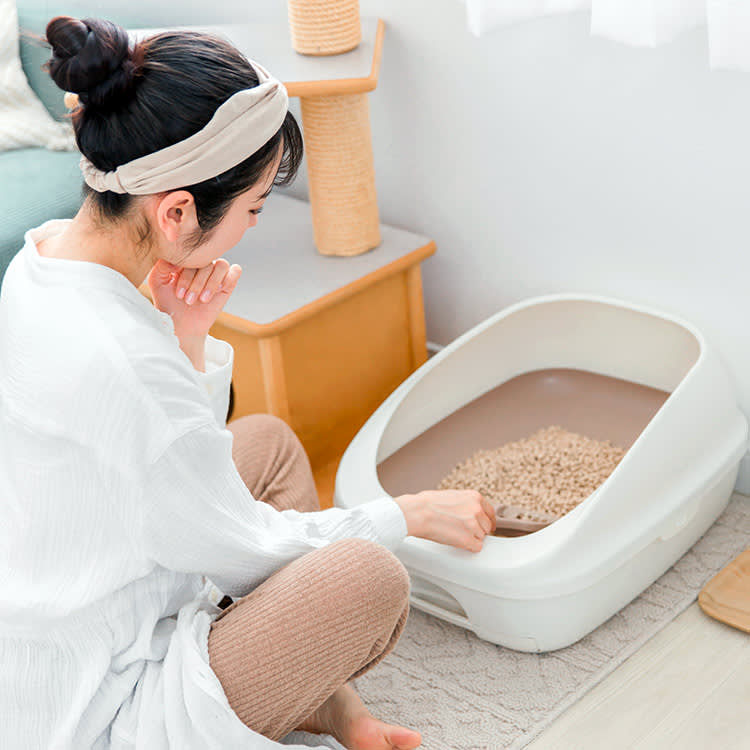
Walk down the cat aisle and you’ll find a genuinely overwhelming number of litter choices, each promising to be the least dusty, the most absorbent, the best for the planet, or the one your cat will finally approve of. But the question pet parents actually lose sleep over is simpler: how often am I supposed to change this stuff?
The frustrating truth is that there’s no single number, and any answer that ignores what’s in your box is wrong. A month-long stretch that’s totally fine for one litter would be a health hazard with another. So instead of chasing a magic figure, match your schedule to the litter you’re using. Here’s how to do exactly that, plus the daily upkeep that keeps your cat happily using the box in the first place.
Why letting it go too long is a real problem
Before the specifics, it’s worth being clear about the stakes, because a neglected box isn’t just an unpleasant smell.
Picture a portable toilet that hasn’t been serviced in a while, and how quickly you’d rather just go find a tree. Your cat runs the same calculation. When a box gets foul enough, a cat may simply refuse it and pick a quieter, cleaner corner of your home instead. On top of that, cat feces can carry bacteria, viruses, and parasites that pose a risk to other cats and sometimes to people, so keeping the box clean genuinely lowers everyone’s exposure.
When litter sits too long, it starts building up bacteria and ammonia, and that’s not only about odor. I’ve heard from plenty of pet parents whose cat developed urinary trouble or just quietly abandoned the box because it had gotten unpleasant to them. A cat deciding the rug is the better option is the last thing anyone wants.
The schedule, by litter type
Here’s where “how often” finally gets a real answer. Daily scooping applies to all of these; what changes is how often you dump everything and scrub the box.
Clumping clay. Most clumping litter is bentonite clay, which binds urine into hard clumps you can lift out, leaving the clean litter behind. Because you’re removing the waste so cleanly, the full change can stretch longer, often to about once a month. The tradeoffs: it’s dusty, which can bother a cat’s lungs, and it tracks around the house on paws. When urine starts pooling at the bottom of the box and you catch that ammonia note, that’s your cue to empty and scrub, roughly monthly.
Non-clumping clay. The original commercial litter. It won’t let you be selective when you scoop, so you throw out more usable material each time, but it’s less dusty and stretches further per pour. It generally needs a complete change more often, around once a week, since it’s harder to lift out every soiled spot.
Paper and wood. These plant-based, pellet-style litters have surged in popularity because they’re made from agricultural byproducts and feel more sustainable. They’re lightweight, soak up moisture well, and rarely cling to paws. But they don’t buy you extra time between changes, and if anything need it sooner: plan to swap them every five to seven days, since they disintegrate fast the moment they get wet.
Silica crystals. Also called crystal litter, this is the same family as the little desiccant packets, built to soak up a lot and last a long time, which lets you clean less often. It costs more, and some cats dislike the crunchy feel underfoot. Crystals tend to last about a month; you’ll know they’re done when they stop pulling in moisture.
The automatic option. A self-cleaning box like the Litter Robot sifts and cycles after each use, cutting down on dust, germs, and odor, and using less litter over time (it runs around $700). But the waste still lands in a drawer beneath the unit that you have to empty, roughly once or twice a week depending on how many cats you have. Emptying that drawer every week to ten days tends to keep it truly odor-free. Fair warning: nothing is automatic where cats are concerned, and not every cat takes to one.
Signs it’s time, no calendar required
Your nose and eyes will often tell you before any schedule does.
- It smells. An off odor is usually the very first signal the box needs attention.
- The poop is piling up. Some cats bury, some don’t, and the same cat can vary day to day. When waste is visible, you’ll be reminded sooner.
- Your cat starts going outside the box. Dirty litter is the easiest thing to rule out first here. Clean it; if the behavior continues, look at location, scent, box style, and your cat’s health.
How much litter, and how many boxes
Depth matters more than people think. Too shallow and waste sticks to the bottom; too deep and many cats simply won’t dig in it. Aim for a bed your cat can actually dig and bury in.
Two to three inches is the sweet spot for most cats. Go much deeper and a lot of cats won’t use it, go too shallow and you’re constantly scraping the bottom of the box.
On boxes, the rule of thumb is one per cat plus one more. Two cats means three boxes. Cats can technically share, but their territorial streak works against that kind of tidy efficiency, so extra boxes head off problems.
The daily habits that do the heavy lifting
Everything above works only on top of a consistent routine. Scoop out solids and urine at least once a day, ideally twice, and set a regular schedule for deeper cleaning to stop odor and residue from caking onto the box floor.
For a deep clean, toss the old litter, then wash the box with hot water and a mild detergent or dish soap. Skip solvents, bleach, ammonia, and anything strongly scented, because your cat’s nose will absolutely notice, and cats overwhelmingly prefer unscented everything. Dry the box fully, refill, sweep up any tracked litter, and clean your scoop too. If you’d rather avoid regular scrubbing, disposable biodegradable boxes and box liners can keep waste from sticking to the bottom.
When you dispose of used litter, bag it and put it in the trash. Not down the toilet, ever, no matter what the label claims. Every type will clog pipes, and cat waste can carry pathogens that don’t belong in the water supply.
The counterintuitive rule for making litter last
If you want a bag to go further, the answer isn’t scooping less to save what looks clean. It’s scooping more.
Scooping more, not less, is the whole trick. Lift the waste out promptly and you stop pee from creeping sideways into the good granules and turning the entire box. When people shake the scoop to rescue the little bits, a lot of that isn’t really clean anymore, and it’s exactly what kicks off the smell. A tight-clumping litter helps too, since you pull out only the mess and leave the clean stuff behind.
Frequent cleaning, in other words, isn’t just about hygiene. It’s the single best way to stretch every bag, keep the box inviting, and make sure your cat never has a reason to look for somewhere else to go.
Common questions
How often should I completely change my cat's litter?
It depends on the type. Clumping clay can often go about a month between full dump-and-scrubs if you scoop daily; non-clumping usually needs a complete change weekly; paper and wood pellets break down fast and need swapping every five to seven days; silica crystals can last around a month. Scooping solids and urine at least once a day is non-negotiable regardless of type.
Can I flush cat litter down the toilet?
No. No type of cat litter is safe to flush, even the ones labeled flushable. It clogs pipes, and cat waste can carry parasites that shouldn't enter the water supply. Bag used litter and put it in the trash.
My cat suddenly stopped using the box. Could it be the litter?
Often, yes. A box that's too dirty is one of the first things to check when a cat starts going elsewhere. Clean it and see if the behavior stops. If it continues, look at the box's location, whether the litter is scented, whether the box has a lid your cat dislikes, and rule out a medical issue with your vet.
How can I make a bag of litter last longer?
Counterintuitively, scoop more, not less. Frequent scooping keeps urine from seeping into and spoiling the surrounding clean litter, and a tight-clumping quality litter means you remove only waste instead of clean granules along with it. Keep the box somewhere well ventilated, too.
Sara Lim leads our Product Picks coverage, testing and comparing the things pets and their owners actually use. From everyday essentials to home-and-style finds, she focuses on honest, useful recommendations rather than hype.
Meet our experts ↗Keep reading
 LivingI Thought I Was Caring for My Cat. Lockdown Showed Me It Was the Other WayNina Vasquez · 5 min
 TrainingThe Neck Bite Is Never the Problem. The Body Around It Is.Dr. Nina Kohl · 8 min
 Health & WellnessYour Indoor Cat Will Never Get Out. Until the Night She Does.Dr. Amara Solis · 6 min
 TrainingThat Old Sweater Isn't Comforting Your Cat. It's Just Soft.Dr. Mara Chen · 8 min
 Health & WellnessMost 'Toxic' Plants Just Make Your Cat Drool. Two Genera Actually Kill.Dr. Nina Kohl · 9 min
 LivingScience Finally Cracked Orange Cats. The Gene Pulls a Trick No Other Animal Does.Claire Sutton · 5 min