


Those Black Specks on Your Cat's Chin? Blame the Bowl.
Cat acne looks like dirt and gets treated like a hygiene problem. Usually it's the plastic food dish, and the most effective first move costs about twelve dollars.

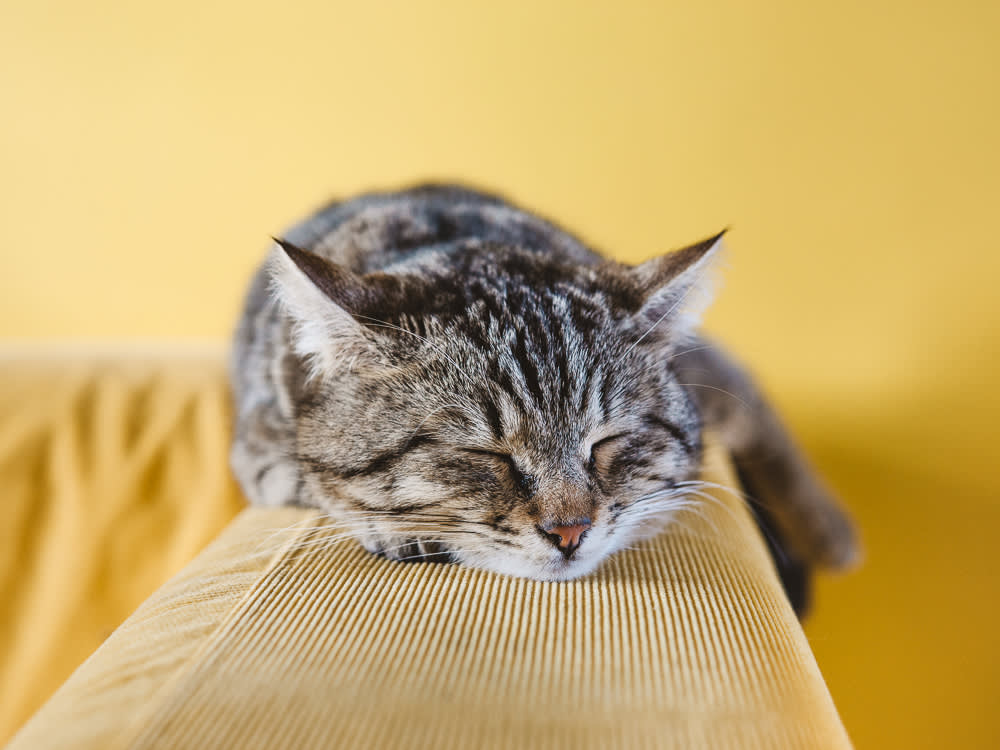
If your cat has a scatter of little black specks along the chin and lower lip, the kind that look exactly like ground-in dirt, you are probably looking at cat acne. It is real, it is common, and it gets misunderstood in a specific way: people treat it as a grooming failure, scrub harder, and wait for it to go away. But the single most common driver of feline chin acne is not dirt at all. It is the food and water dish, usually a plastic one, pressing against and rubbing that chin every time your cat eats. Which means the most effective first thing you can do is not a medicated wash. It is a twelve-dollar swap to a different bowl.
That reframe matters, because it turns a frustrating, recurring skin problem into something with an obvious lever. Fix the surface your cat’s chin touches all day, and you have removed the cause instead of just chasing the symptom.
What cat acne actually is
You do not hear much about feline skin conditions, partly because when a cat is itchy the vet’s first thought is usually fleas. Acne gets overlooked because it is easy to miss and often looks minor. But it can escalate. Blackheads, pustules, and scabs can spread across the chin and lips, and an untreated case can tip into a real infection with significant inflammation. So it is worth catching early.
Visually, it starts a lot like flea “dirt”: tiny black specks, but concentrated around the chin and lower lip rather than across the body. Left alone, those specks can turn red, swollen, and filled with pus.
The signs to look for
You will not necessarily see all of these, but any of them is worth acting on:
- Blackheads or dark specks on the chin and around the lips
- Redness and swelling of the chin
- Pustules or pus-filled pimples
- Scabs or crusts on the chin
- Extra scratching or rubbing of the face
- Hair loss on the chin
- Chin that seems painful when touched
If home care is not helping or things are getting worse, that is your cue to see your veterinarian.
Why it happens, and why the bowl leads the list
Several things drive feline acne, but in a lot of cases the root cause is simple: the chin is dirty, and it stays that way because of what it rests against. Here are the usual culprits.
- Plastic bowls. This is the big one. Plastic scratches easily, and those micro-grooves trap bacteria that then sit against your cat’s chin at every meal. Some cats also react to the plastic material itself. Switching to stainless steel or ceramic removes both problems at once.
- Dirty dishes. Even a good bowl left unwashed grows bacteria. Many cats need their dishes cleaned more often than their owners assume, ideally daily.
- So-so grooming habits. Not every cat is a fastidious self-groomer. Some need help keeping the chin clean.
- Excess oil production, which can clog the pores around the chin.
- Stress and anxiety. Yes, cats have these, and they can show up in the skin.
- Allergies to food, cleaning products, or things in the environment.
- A weakened immune system, for instance in a cat with diabetes or thyroid disease, which can make breakouts more likely.
Mild cases can often be handled at home. More severe or stubborn ones need a vet.
How a vet confirms it
Your veterinarian can usually diagnose feline acne a few ways:
- A close look at the chin during a physical exam is often all it takes.
- If the exam is not conclusive, cytology or a skin scraping can rule out infection, fungal issues like ringworm, and parasites.
- A biopsy is occasionally needed, but that is rare.
From there they will typically show you how to keep the chin clear and, if needed, prescribe medication.
Treating it
For mild cases, the goal is gentle cleaning that clears the pores without irritating the skin: cat-safe antiseptic wipes, chlorhexidine, or a carefully chosen benzoyl peroxide product, sometimes a medicated shampoo to cut oil buildup. If a bacterial infection has set in, antibiotics may be needed, and severe cases sometimes add a short course of a steroid to calm inflammation. And running underneath all of it: switch away from plastic bowls and wash the new one daily, because that removes the trigger the medication is fighting against.
What the newer evidence says
A couple of practical points from the veterinary dermatology literature sharpen the home approach.
On medication, the topical antibiotic mupirocin has held up well for infected feline acne. In one clinical evaluation it cleared or improved the condition in 24 of 25 cats over about three weeks, which is why vets reach for it on bacterial chin infections. It is prescription-only and vet-directed, but it is good to know an effective targeted option exists rather than only broad oral antibiotics.
On the daily-care side, the evidence keeps pointing back to the bowl. Dermatology guidance specifically recommends replacing plastic dishes with smooth, non-porous glass, ceramic, or stainless steel and washing them daily, and notes that for some cats this change alone resolves the acne. It also suggests that if you are choosing a wash, chlorhexidine tends to be gentler and easier for cats to tolerate than benzoyl peroxide, which is worth knowing before you buy. None of this is exotic, and that is the point: the highest-value moves here are cheap, boring, and daily.
Keeping it from coming back
Prevention looks a lot like treatment, minus the medication:
- Wash food and water bowls daily.
- Use stainless steel or ceramic, not plastic.
- Feed a good, balanced diet.
- Keep stress down where you can.
The bottom line
Cat acne is manageable, and it is most manageable when you catch it early and treat the cause, not just the specks. For a lot of cats, the cause is sitting on the kitchen floor right now. Start treatment at the first sign, swap the plastic bowl for stainless or ceramic, keep it clean, and see your vet if it does not respond, becomes red and swollen, or keeps returning. Untreated, feline acne gets uncomfortable and can scar, so it is worth the small effort now.
References
- White, S. D., et al. “Feline Acne and Results of Treatment with Mupirocin in an Open Clinical Trial: 25 Cases (1994–96).” Veterinary Dermatology, vol. 8, no. 3, 1997, pp. 157–164.
- Jazic, E., et al. “An Evaluation of the Clinical, Cytological, Infectious and Histopathological Features of Feline Acne.” Veterinary Dermatology, vol. 17, no. 2, 2006, pp. 134–140.
- Griffin, C. E. “How I Treat Feline Acne.” Veterinary Focus / CABI Digital Library, 2009.
- VCA Animal Hospitals. “Chin Acne in Cats.” vcahospitals.com.
Common questions
What happens if I ignore cat acne?
Mild acne can progress. Left alone, those blackheads can become red, swollen, and pus-filled, and can turn into a painful bacterial infection with scabs and even scarring. Occasionally it becomes chronic. Treating it while it's mild is far easier than treating an abscess.
Can I use human acne products on my cat's chin?
No. Human acne medications are not formulated for cats and some ingredients are unsafe for them. Use only products your veterinarian recommends, such as cat-safe chlorhexidine or a carefully chosen benzoyl peroxide preparation.
Will switching food bowls really help?
For many cats, yes. Plastic bowls scratch and harbor bacteria, and some cats react to the plastic itself. Swapping to stainless steel or ceramic and washing it daily removes one of the most common triggers, and sometimes that alone resolves it.
Not a substitute for your vet. Our guidance is educational. For urgent symptoms, contact a vet or emergency clinic right away. Editorial standards
Dr. Kohl is a board-certified veterinary dentist with a particular interest in preventive oral care. She reviews all dental health content at The Pet Times and contributes practical guides on home dental routines, professional cleaning, and oral disease prevention.
Meet our experts ↗Keep reading
 Health & WellnessYour Indoor Cat Can Still Get Fleas. Here's How They Sneak InDr. Mara Chen · 7 min
 Health & WellnessThe Twitchy Back Is Usually Nothing. The One Time It Isn't Has a Name.Dr. Lena Park · 8 min
 Health & WellnessOnly 5% of a Flea Problem Lives on Your Cat. Here's the Other 95%.Dr. Ravi Mehta · 9 min
 LivingLong Hair Is the Least Important Thing About a Long-Haired CatDr. Amara Solis · 10 min
 Health & WellnessYour Cat Started Itching After the Dog Arrived. The Dog Is the Least Likely CulpritDr. Lena Park · 8 min
 Health & WellnessThat Scaly Patch on Your Cat Could Be Yours NextDr. Nina Kohl · 7 min