


She Sued the Blue Angels Over Her Dying Cat. The Noise Science Is Real
A Seattle woman's lawsuit against the Blue Angels sounds absurd until you look at what loud noise actually does to a sick, noise-sensitive cat. Here's the case, and the real science underneath it.

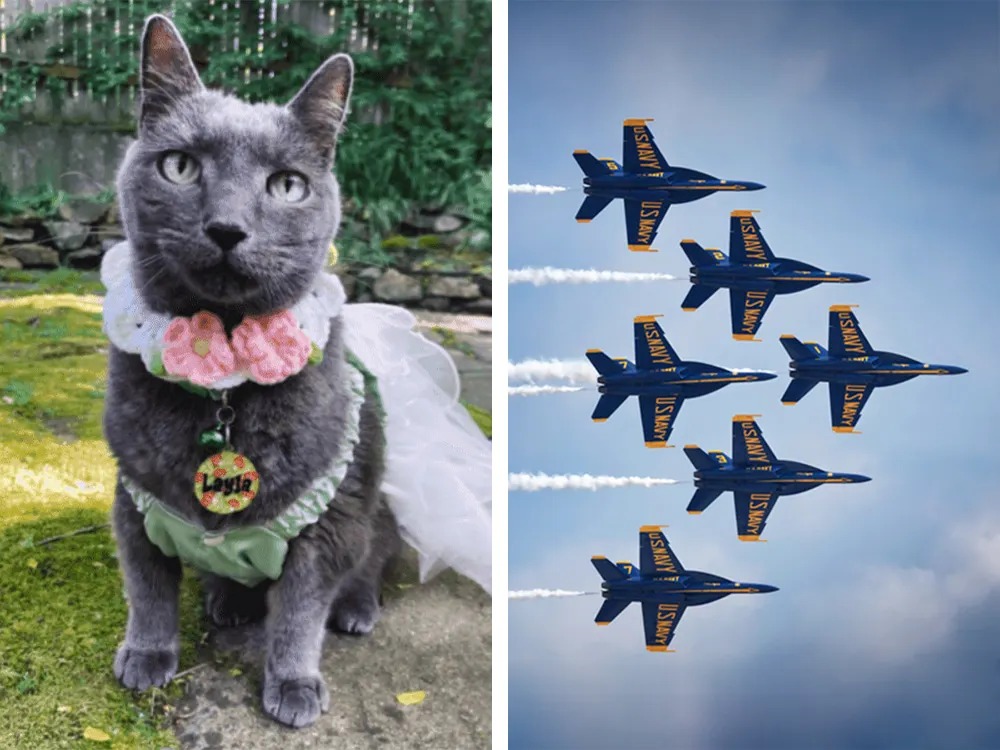
Some pet stories are easy to laugh off. A Seattle woman suing the U.S. Navy’s flight demonstration squadron for “terrorizing” her cat sounds like exactly that kind of story, the sort of headline you share with a raised eyebrow and forget by lunch. But there are two things under that headline worth taking seriously, and neither one is a joke: a genuine First Amendment question, and a real, documented biology of what loud noise does to a frightened animal.
What the lawsuit actually claims
In July 2025, Lauren Ann Lombardi filed a federal civil complaint against the Blue Angels. Her cat, Layla, had a heart condition and died in August 2024. Lombardi says the roar of the Blue Angels flying over Seattle during airshow season worsened Layla’s final days, and her complaint describes the cat, heavily sedated at the time, fleeing “in primal panic” beneath furniture as her breathing climbed to dangerous levels.
Her conflict with the squadron actually predated Layla’s death. In August 2024, Lombardi posted an angry, profane message on the Blue Angels’ Instagram account, accusing them of terrorizing her cat and other animals. The account, she says, then blocked her, which is where the legal core of the case lives. Because a government-run social media account is involved, the suit centers on the First Amendment: Lombardi argues that being blocked from a government account for her viewpoint violated her free speech rights. The named defendants include the squadron’s commanding officer and a public affairs officer. She is asking a court to unblock her, to bar the Blue Angels from blocking others based on viewpoint, to order First Amendment training for the officials named, and to cover her attorney’s fees.
It is a strange case, and its emotional language about a “walnut-sized brain” experiencing “pure debilitating terror” invites mockery. But strip away the theatrics and you are left with a real legal question courts have taken seriously before, whether public officials can block critics on government social accounts, and a real animal-welfare question about noise and sick pets.
The science the story is actually standing on
Here is the part the eye-rolling misses. Noise phobia in cats is not a figure of speech; it is a recognized medical condition, and the physiology behind it is well documented. A cat’s hearing far outstrips ours, reaching frequencies we cannot detect, so a sound that is merely loud to a person can be genuinely overwhelming to a cat. And the fear response is a whole-body event, not a mood. A terrified cat’s system floods with cortisol and adrenaline, heart rate spikes, and breathing changes.
For a healthy cat, that surge is unpleasant but survivable. For a cat with an existing heart condition, a sustained stress response is a real medical stressor, because a racing heart and a spike in stress hormones are exactly what a compromised cardiovascular system is least equipped to handle.
“We do not treat noise fear as a personality trait; it is a physiological event with real cardiovascular load behind it,” says Dr. Mara Chen, a feline behavior veterinarian on the Pet Times roster. “In a healthy cat, a fear spike passes. In a cat with heart disease, repeated surges of stress hormones and a pounding heart are not trivial. That is the piece people miss when they treat this only as a punchline.”
That does not resolve the lawsuit, and it does not prove a specific airshow caused a specific cat’s decline; that is a hard thing to establish, and a court, not a headline, will weigh it. But it does mean the underlying worry is grounded in real veterinary medicine, not just grief.
What to do if your own cat is noise-sensitive
Airshow weekend is the exotic version of a problem most cat owners will actually face this summer: fireworks and thunderstorms. If your cat hides, trembles, or bolts at loud noise, a few evidence-backed moves genuinely help.
Give them a sanctuary before the noise starts, a small interior room or a blanket-lined box in a closet, away from windows, where they can tuck themselves away. Mask the outside sound with acoustic layering, a fan or white-noise machine plus calm music, which can lower a stressed animal’s heart rate. A synthetic pheromone diffuser can add a background sense of safety. And for cats whose reactions are intense or prolonged, especially those with an underlying health condition, talk to your vet ahead of time about anti-anxiety medication. The key word is ahead: noise plans work when they are set up before the first boom, not improvised once your cat is already under the couch.
What’s new since the filing
As of now, the case remains an active First Amendment dispute rather than a decided verdict on whether jet noise can be blamed for a pet’s death, and that free-speech question, not the cat’s medical history, is what will most likely drive the ruling. Lombardi has publicly said she does not intend to drop it.
The broader shift the story reflects is real, though. Veterinary medicine has moved steadily toward treating noise anxiety as a legitimate medical condition worth preventing rather than a quirk to wait out, and summer-noise guidance for cats and dogs now routinely leads with early preparation, environmental management, and, when needed, medication. Whatever a court eventually decides about the Blue Angels, the underlying idea, that loud noise is a genuine health stressor for a frightened, fragile animal, is now mainstream veterinary thinking.
References
- U.S. District Court, Western District of Washington. Lombardi v. Bryan et al., complaint filed July 21, 2025. Coverage: NBC News. https://www.nbcnews.com/news/us-news/seattle-cat-terror-blue-angels-rcna220784
- Virginia Tech News. “Managing summer storm and firework anxiety in pets.” 2026. https://news.vt.edu/articles/2026/06/pets-storms-fireworks-anxiety-veterinary-expert.html
- VCA Animal Hospitals. “Preparing Your Cat for Thunderstorms and Fireworks.” https://vcahospitals.com/resources/behavior-cat/training/start-preparing-your-cat-for-thunderstorms-and-fireworks-now
Marcus Webb writes about the gear, gadgets, and everyday choices that make life with a pet easier. His coverage runs from product picks to training and the causes worth paying attention to, always with an eye on what actually earns a place in your home.
Meet our experts ↗Keep reading
 LivingYour Cat Can Tell You're Sick. Empathy Has Little to Do With It.Dr. Nina Kohl · 5 min
 LivingYour Cat Isn't Watching You Cook. He's Reading the Room.Dr. Mara Chen · 7 min
 Health & WellnessCat Scratch Fever Isn't a Rock Song. It's a Real Infection (You Still Don't Need to Panic).Dr. Nina Kohl · 5 min
 LivingThe Law Says Your Cat Is Furniture. This Judge Said Otherwise.Jordan Ellis · 6 min
 LivingA Jewelry Designer's Most Beautiful Object Is the Bengal Cat She Won't DecorateNina Vasquez · 5 min
 LivingYour Cat Didn't 'Imprint' on You Like a Duckling. What Actually Happened Is BetterDr. Nina Kohl · 7 min