


The Best Way to Dispose of Dog Poop Without Wrecking the Planet
Bag it and bin it, build a backyard digester, or flush it? Here's how to dispose of dog poop responsibly at home and on the trail, plus what not to do.

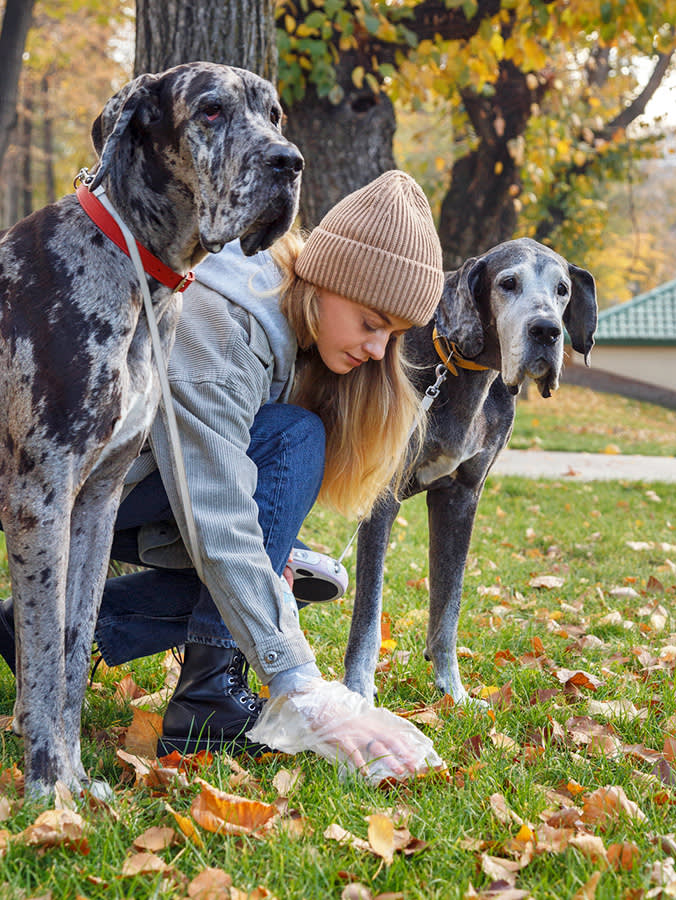
Every few days, a nagging internal reminder kicks in: it’s time to pick up the dog poop. Now and then I’ll rope one of my teenagers into the dirty work, but usually it’s me heading out to the lawn with the designated bucket and a fine-tine pitchfork, a trick borrowed from cleaning up after horses that beats a shovel. A pitchfork doesn’t leave divots in the lawn the way a shovel does, and it’s better for grabbing the small pieces. (Like dogs, teenagers will track dirt, and worse, through the house.)
If the average dog poops once a day, that’s at least seven piles a week, times two for Willy and Lilac, my spotted Cattle Dog / Collie rescues. If you live in a rural area like I do, it can be tempting to fling the poop into the woods. Resist. Here is the part that reframes the whole chore: this is not just an etiquette problem, it is a documented pollution problem with numbers behind it.
American dogs produce on the order of 10 million tons of waste a year, and the EPA has classified pet waste as a nonpoint-source pollutant since 1991, the same category as agricultural runoff. The reason is microbial, not aesthetic. A single gram of dog waste carries an estimated 23 million fecal coliform bacteria, and the Long Island Sound Study has calculated that two to three days of waste from just 100 dogs can contribute enough bacteria to temporarily close a bay and its surrounding watershed to swimming and shellfishing for miles. That pile on the lawn is not fertilizer waiting to happen. It is a storm-runoff problem in waiting. So while it is also unhygienic, unsightly, and smelly for your neighbors, the real stakes are downstream, literally.
So what is the best way to dispose of dog poop?
The simplest method is also the most common: bag it and throw it away. Cute, convenient bag holders make this a little more fun. City and suburban dog parents will find pet waste disposal stations in public parks, while folks in rural areas should always carry sturdy waste bags whenever they leave the house with their dog.
At home, pick up after your dog regularly, especially if you have neighbors who can see (or worse, smell) the poop in your yard. If your dog accidentally goes on a neighbor’s property, scoop it up immediately.
Can I throw dog poop in the garbage?
In most urban and suburban settings, the garbage can is the normal, and likely only, safe way to dispose of it.
A word on the green-labeled bags: the compostable claim carries an asterisk most buyers never see. That certification assumes industrial composting conditions — sustained heat and managed moisture a household trash bin never provides — so in a landfill the bag behaves much like any other plastic. Bags made from recycled materials deliver a more honest environmental win.
Dog behaviorist Colby Julien, a trainer at Geo-Sniffing, an outdoor scent-pod discovery game for dogs, has a hack for anyone with curbside collection: “Collect poop in a designated smaller bin with a bag in it, then toss the entire bag in the garbage bin on garbage day. I learned this the hard way. If you throw them directly into your city garbage bin they will fall to the bottom. Many times the bin is not fully lifted upside down, leaving tons of poop bags at the bottom of your bin. They can also freeze to the bottom as well.” This hack doubles as a courtesy to garbage handlers.
Whatever you do, don’t be that person who doesn’t pick up after their dog. Not even in a snowstorm in the dark of night. You may find yourself quietly shunned at the dog park for this breach of etiquette. Never leave dog poop on the ground.
That goes for the woods, too. If you’re hiking with your dog, leave-no-trace applies to dog poop. Bag it and carry it out. Some people argue that wild animals poop in the woods, so why can’t dogs?
Because what dogs eat, the food you buy at the store, isn’t found in nature and contains nutrients that throw off the balance of natural ecosystems. This matters especially near waterways, where the harmful bacteria in dog poop can make people and wildlife sick.
As distasteful as poop duty is, it’s a small price to pay for the love of your pup. It’s also a chance to play vet and check that your dog’s poop looks normal.
Can you compost dog poop?
Short answer: yes, with a big caveat. Never mix dog waste (or any pet waste) with regular food-grade compost. The bacteria in dog poop will contaminate the compost material and, eventually, your garden. The same goes for most municipal composting facilities, though it’s worth asking whether your city has a dedicated pet waste program.
The “yes” here refers to an in-ground pet-waste digester, an easy DIY compost bin that safely breaks down dog waste in your backyard and keeps it out of the landfill. Cut the bottom out of an old plastic garbage bin, drill holes up and down the sides, and dig a hole deep enough to bury it. Backfill loosely around the bin, toss in a layer of rocks and gravel for drainage, and keep the lid on when you’re not using it. Every now and then, add septic starter and water to encourage decomposition. Don’t throw bagged poop in the bin, even if the bags claim to be compostable or biodegradable. Over time, enzymes and bacteria turn the waste into liquid that’s gradually absorbed several feet underground.
Evie Graham is a waste management expert and owner of the waste company Direct U.K., and she advises dog parents on doing this the right way. Her skepticism about composting dog waste comes from experience on both sides of the fence: a neighbor’s supposedly eco-friendly composting setup fouled their shared backyard, and her own attempts at composting pet waste failed as well. What finally worked for her was a relic — an in-ground digester from the 1980s she unearthed in her parents’ garage, restored, and now relies on for her dog Scout’s waste.
One city in Canada has a forward-thinking plan: Mississauga, in southeastern Ontario, installed in-ground waste units for dog poop that are emptied monthly and sent to a designated processing facility, not the landfill.
Flushing dog poop
In some communities, dog poop can be flushed down the toilet if your home is on a public sewer system. Check with your local waste treatment plant, since some are equipped to kill the bacteria in dog poop. But do not flush dog waste if you have a septic system. Dog poop contains grass, hair, and bits of whatever your dog has been chewing, all of which can back up your system. Bags especially should never be flushed, since they clog pipes.
Graham has a funny-not-so-funny cautionary tale about those bags: her own toilet clogged after her son took the “flushable” label at its word. The household has since retired the idea entirely in favor of a plain bucket system, which she reports works far better.
So here is the playbook, start to finish: bag it and bin it when you are out, run an in-ground digester at home if you have the yard, check with your local treatment plant before you flush a single piece (and never if you are on septic), and keep dog waste out of your food-grade compost forever. Small chore, real downstream payoff.
References
- Managing Pet and Wildlife Waste — Nonpoint Source Pollution, U.S. Environmental Protection Agency
- Pet Waste and Water Quality — Long Island Sound Study
- FTC Staff Warns Marketers and Sellers of Dog Waste Bags That Their Biodegradable and Compostable Claims May Be Deceptive — Federal Trade Commission, 2015
- Avoid Stormwater Poo-llution and Pick Up After Your Pet — University of Idaho Water Resources Research Institute
- Roadside Guide to Clean Water: Proper Pet Waste Disposal — Penn State Extension
Common questions
Why is dog poop bad for the environment?
It's smelly and unsightly, but that's the least of it. Left on the ground or sidewalk, it joins storm runoff and pollutes public waterways with harmful bacteria. In the woods, it disrupts delicate ecosystems. And then there's the risk of tracking it inside, which can ruin your day.
What can I feed my dog to make their poop less smelly?
Some experts say premium, raw diets produce smaller, less gag-inducing poop. Others point to pumpkin, sweet potatoes, and other vegetables combined with meat to reduce odor, though nothing eliminates the smell entirely.
Is it safe to bury dog poop in my backyard?
If you have a bit of yard space (it doesn't take much) and you'd rather not fill your trash with poop, try a simple in-ground digester. Think of it as a mini eco-friendly septic tank for dog waste. Just be sure to label it and secure the lid.
What is the best way to dispose of dog poop?
The best and most convenient plan is to be prepared. Never leave home without poop bags, and hold onto them until you find a proper receptacle. Some people clip them to the dog's collar or harness; others carry a larger bag or container to store used bags until they reach a bin.
Are biodegradable and compostable dog poop bags good for the environment?
Under the right conditions, yes. But it's not safe to add dog poop in compostable or biodegradable bags to human-grade compost, and commercial dog waste compost facilities are rare. When those so-called eco-friendly bags get tossed into the normal waste stream, they don't actually break down any sooner, if at all. They're also often flimsier, and you can guess what that means.
Can I leave dog poop on the ground in the woods?
No. Dog poop contains bacteria that can disrupt natural environments and pollute waterways. Bag it and carry it out to a receptacle. As a last resort, if you run out of bags, bury it with a stick.
Leila Torres leads our Living coverage, from home life and travel to the products and rescue stories that come with sharing a life with animals. She edits and writes across the section, with a soft spot for pieces about the bond between people and their pets.
Meet our experts ↗Keep reading
 LivingA Nike Designer Decided Eco Dog Gear Didn't Have to Be UglySasha Ford · 6 min
 Living'Nobody's Around, It's Fine.' The 30-Second Decision You're Getting WrongTom Hadley · 6 min
 Product PicksEco Dog Toys Are the Last Holdout. These $16 Handmade Ones Show Why.Nina Vasquez · 4 min
 LivingThe 'Compostable' Poop Bag Is Often Greenwashing. Smarter Eco Swaps for Your DogNina Vasquez · 4 min
 Product PicksThis Montana Factory Grinds Up Your Dog's Old Toy and Makes You a New OneSara Lim · 8 min
 Product PicksThis Pet Brand Recycled 500,000 Water Bottles Into Dog Beds, and Made Them CuteNina Vasquez · 6 min