


Stop Taking the Attachment Quiz About Yourself. Take It About Your Pet
The internet wants you to diagnose your own attachment style. The more useful finding is that the way you parent measurably shapes whether your dog or cat becomes secure, and that part is something you can change.

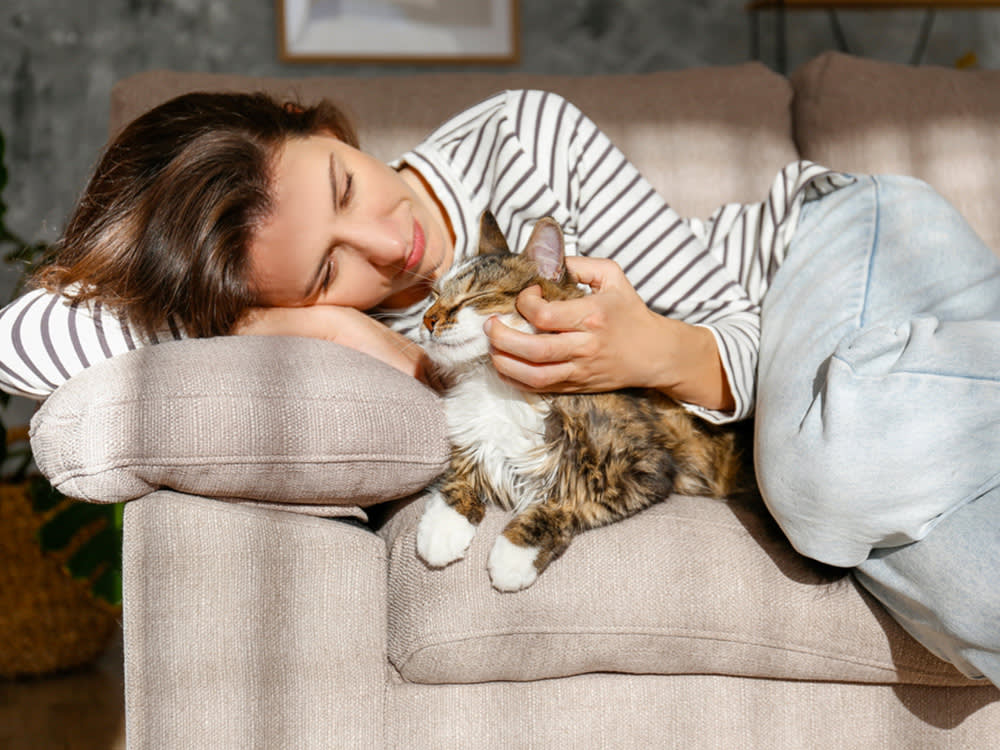
Attachment theory has become a full-blown internet personality test. You have probably already been sorted, secure, anxious, avoidant-dismissive, or disorganized, by some quiz that promised to explain your last three relationships. And it is tempting to point that same lens at your pets and ask which box you fall into as a dog or cat parent.
Here is the reframe this article is built on: that is the least useful question you can ask. Your own attachment style is largely settled and slow to change. What the research actually offers pet owners is something more hopeful and far more actionable: the way you parent measurably shapes whether your animal grows up secure, and unlike your own wiring, your parenting is something you can adjust starting today. So we are going to spend most of our time on the part you can control.
The four styles, briefly, because you need the vocabulary
A quick grounding before the useful part. Attachment theory came out of the work of psychologist John Bowlby in the 1950s and was developed further by Mary Ainsworth. The core idea is that early experiences with caregivers shape how we relate later, and it is usually described as four styles on a spectrum that can shift over a lifetime. Secure people tend to be trusting and emotionally available. The three insecure styles are anxious (fearing abandonment, craving reassurance), avoidant-dismissive (guarded, fiercely independent), and disorganized (wanting closeness but pushing it away).
Hold those four in mind, because they reappear, not in you, but in how your behavior lands on your animal.
The myth worth puncturing: loving your pet a lot does not mean you’re “broken”
First, a piece of internet folklore to retire. A 2022 study led by Johanna Lass-Hennemann surveyed 610 German dog owners and found that the people most intensely attached to their dogs leaned more toward insecure attachment with other humans, and reported more mental-health distress. That finding got flattened online into “if you love your pet this much, something’s wrong with you.”
That is a misread, and it matters. The study shows correlation, not cause. Your dog is not making your attachment style insecure, and adoring your pet is not a symptom.
“What this research most likely captures is a compensatory bond, not a defect,” says Dr. Nina Kohl, a psychologist who studies the human-animal relationship. “Someone who found human closeness unreliable early on may find an animal feels safer, more predictable, less likely to judge. That is not pathology. For a lot of people it is a genuinely healthy source of connection.”
So if you are the person who cannot look at your dog without announcing your love, relax. That tells us about the comfort you take in the bond, not about a diagnosis.
The finding that actually changes how you should act
Now the centerpiece. Researchers Lauren Brubaker and Monique Udell at Oregon State University borrowed a framework from human child development and applied it to dog owners, sorting them into three parenting styles: authoritative (high expectations, high responsiveness), authoritarian (high expectations, low responsiveness), and permissive (low expectations, low responsiveness).
The results were strikingly clean. Dogs of authoritative owners were the most securely attached: they read social cues, preferred their person over a stranger, and kept working persistently at a puzzle task. Dogs of authoritarian owners were more insecurely attached and gave up on the puzzle sooner. Dogs of permissive owners were just as happy to follow a stranger’s cues and made no progress on the puzzle at all.
The translation for daily life is concrete. Being warm is not enough, and being demanding is not enough. The combination, clear expectations delivered with consistent responsiveness to your dog’s needs, is what produces a confident, secure, problem-solving animal.
“Authoritative does not mean strict, and it does not mean permissive with a smile,” Dr. Kohl says. “It means your dog can predict you. Rules stay stable, and when your dog reaches for you, you reliably show up. Predictability is what a secure base is made of, for puppies the same as for children.”
What “authoritative” looks like at home
Practically, that means a handful of habits. Keep your expectations consistent so the same behavior gets the same response every time, rather than allowed on Monday and scolded on Thursday. Respond promptly when your pet signals a real need, whether that is fear, hunger, or wanting contact, instead of ignoring it or, at the other extreme, smothering them. And let them struggle a little with safe challenges, a puzzle feeder, a new environment, while staying available as the safe base they can check back to. That blend of structure and responsiveness is the lever the science actually hands you.
It runs the other way too: your style can feed their anxiety
The influence is not one-directional. A study published in PLOS One, surveying more than 1,500 owners in Germany and Hungary, found that owners with an avoidant attachment style, the guarded, independence-prioritizing type, reported more separation anxiety in their dogs. The authors’ hypothesis fits the parenting research neatly: an owner who is less responsive to a dog’s bids for security may, without meaning to, leave the dog without a dependable anchor, and an insecure, anxious dog is the result. If you recognize an avoidant streak in yourself, the fix is not therapy for the dog, it is leaning, deliberately, into responsiveness.
Cats have attachment styles too, and they’re remarkably stable
If you assumed this was a dog story, cats are in it as full participants. Oregon State researchers ran cats and kittens through a version of the same test used on human infants: time with the caregiver, time alone, then reunion. Securely attached cats greeted the returning owner, settled, and went back to exploring. Insecure cats either avoided the owner or clung in a frozen, ambivalent way, with stress signals like tail-twitching and lip-licking.
The proportions are the surprising part: about 65 percent of both kittens and adult cats tested as secure, almost exactly the rate seen in human infants. And lead author Kristyn Vitale found these styles barely budged even after weeks of socialization training, suggesting that once a cat’s attachment to its person sets, it tends to hold. The lesson is the same as for dogs, just front-loaded: the consistency and responsiveness you offer early shapes a bond that then stays put.
The bottom line
Your pet has no idea what an attachment style is. They know you are the source of food, safety, and cuddles, and that is precisely the point. Stop quizzing yourself and start watching what your behavior builds in them. The research is unusually encouraging here: secure animals are largely made, not just born, and the recipe, clear and consistent expectations paired with reliable responsiveness, is entirely within your reach.
References
- Lass-Hennemann, J., et al. “The relationship between attachment to pets and mental health: the shared link via attachment to humans.” BMC Psychiatry, 2022. https://link.springer.com/article/10.1186/s12888-022-04199-1
- Brubaker, L. & Udell, M. A. R. “Pet parenting style and dog behavior and cognition.” Oregon State University. https://news.oregonstate.edu/news/pet-parenting-style-influences-dog-behavior-oregon-state-university-finds
- Konok, V., et al. “Influence of Owners’ Attachment Style and Personality on Their Dogs’ Separation-Related Disorder.” PLOS ONE. https://journals.plos.org/plosone/article?id=10.1371/journal.pone.0118375
- Vitale, K. R., Behnke, A. C., Udell, M. A. R. “Attachment bonds between domestic cats and humans.” Current Biology, 2019. https://www.cell.com/current-biology/fulltext/S0960-9822(19)31086-3
Claire Sutton writes about life with pets, from the first days home to the small daily routines that make a household work. Her reporting spans people-and-pet relationships, training basics, and the practical side of bringing a new animal into the family.
Meet our experts ↗Keep reading
 LivingGive Your Pet a Job: The Case for a Capricorn-Season ResetNina Vasquez · 6 min
 LivingYour Dog Isn't a Sofa. Pennsylvania's House Just Voted to Say So.Claire Sutton · 4 min
 Health & Wellness'You'll Just Know' Is the Cruelest Advice in Pet Care. Ask These 12 Questions Instead.Dr. Lena Park · 10 min
 LivingAnyone Can Feed a Cat. Great Pet Sitters Do These Four ThingsNina Vasquez · 6 min
 LivingLess Than 1% of America's Cemeteries Are for Pets. These 6 Are Worth the Trip.Leila Torres · 7 min
 LivingThe Cutest Pet Doesn't Win. The Most Professional One Does.Sasha Ford · 5 min