


The Senior-Dog Starter Kit: 11 Things That Change a Graying Dog's Day
Aging is not a single problem to solve, it is three: slippery floors, sore joints, and a foggier brain. Here are 11 products organized around what is actually happening to your dog, with the one upgrade most owners skip until too late.

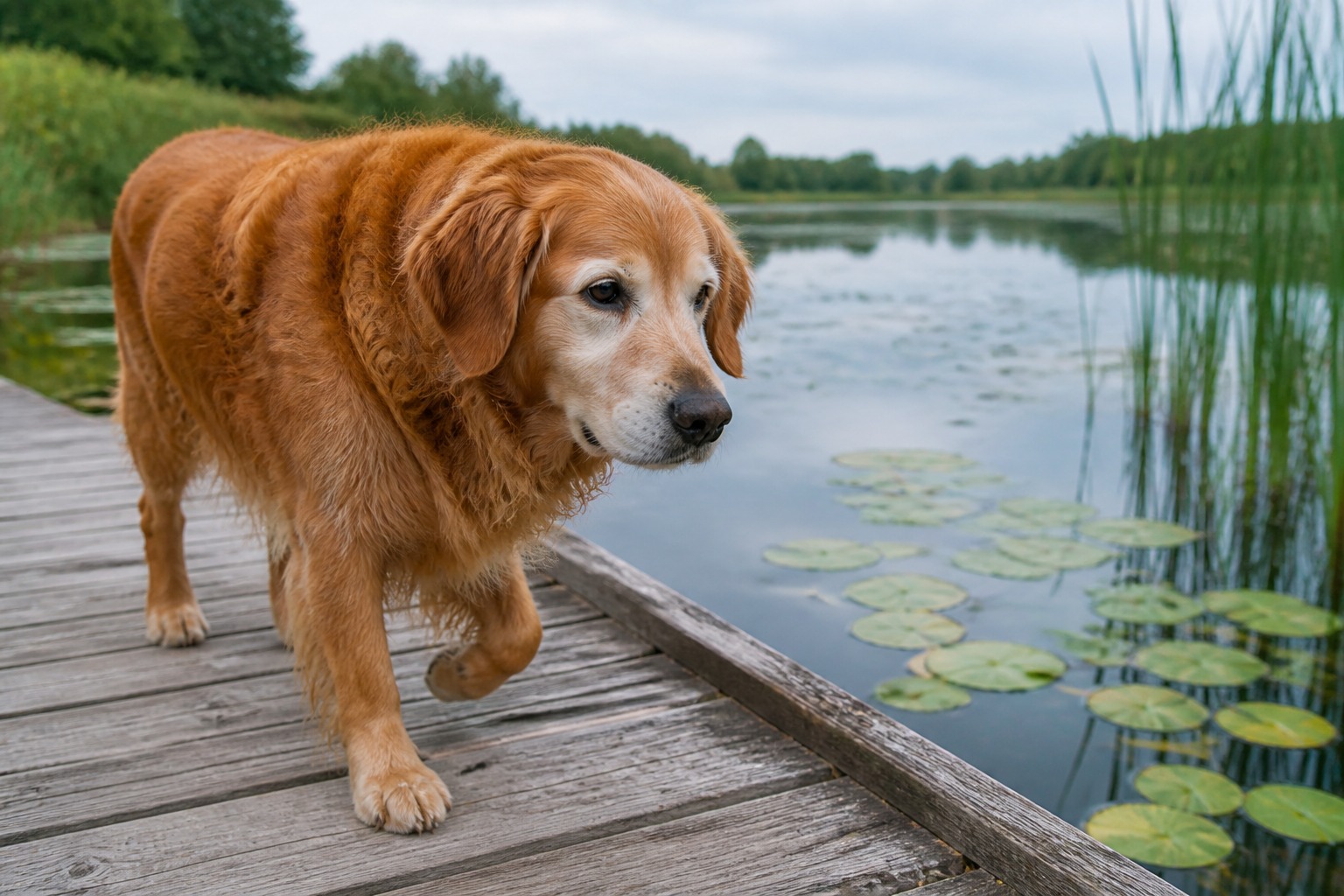
Aging sneaks up on a dog the same way it sneaks up on us: not all at once, but as a slow accumulation of small things. The good news, and it really is good news, is that almost none of those small things require a dramatic change. Your dog’s personality stays put. What shifts is the environment around them, and a handful of well-chosen products can keep a graying dog comfortable, mobile, and engaged for years.
The trick is to stop shopping by category and start shopping by problem. Three things change as a dog ages: footing gets treacherous, joints get sore, and the brain gets a little foggier. Organize your kit around those three, plus the everyday-comfort upgrades that smooth the whole transition, and you will spend money where it counts. Here are 11 things worth having, grouped by the job they do.
Owners tend to wait for a crisis, a bad fall or a sudden accident, before they adjust the house. The dogs that age best are the ones whose homes change a little before the crisis, not after.
Fix the footing first (the cheapest, highest-impact fixes)
Before you buy a single supplement, look at your floors. A dog that has lost confidence on slick surfaces will hold still rather than risk a slip, and that enforced stillness accelerates muscle loss and stiffness. Traction is the most underrated senior-dog intervention there is.
1. Stair treads and runners. Slippery stairs are where a lot of senior injuries happen. Adhesive carpet treads on the stairs and long runners down hardwood hallways give arthritic paws something to grip. Once a dog starts skating on the floor, they stop moving, and the lost muscle makes everything worse. Traction keeps them walking, and walking keeps them strong. Cheap rubber-backed throw rugs do the same job in a pinch.
2. Toe grips. These small rubber rings slip over the nails to add grip where the paw meets the floor, useful for dogs who won’t tolerate booties. One caution worth heeding: dogs who chew and swallow odd objects can ingest a grip, so they’re best for non-chewers and worth checking periodically.
Take the load off sore joints
Nearly every dog develops some arthritis with age, so the second job is reducing the force and effort it takes to do ordinary things.
3. An orthopedic bed. A true memory-foam orthopedic bed (not a fluffy pad with “ortho” on the label) distributes weight off the hips, knees, and elbows. For a dog that now sleeps most of the day, this is the single piece of furniture that matters most. Look for a dense foam base and a washable cover.
4. Ramps and steps. A dog that has always jumped onto the bed or into the car shouldn’t have to give that up, and shouldn’t keep landing hard on aging joints either. A padded ramp suits car trips and larger dogs; foam steps work for couch-and-bed access indoors. Either one removes dozens of small joint-jarring impacts a day.
5. A support harness with a handle. For dogs who struggle to rise or need help on stairs, a lifting harness with padded handles lets you assist without hauling on a collar. It’s gentler than a towel-under-the-belly improvisation and far easier on your own back.
6. An elevated food and water bowl. Raising the bowls a few inches spares the neck and shoulders, which helps larger dogs and any dog with neck or spine issues eat without straining downward.
7. Joint supplements. Glucosamine and chondroitin can support cartilage, and omega-3 fatty acids have the strongest evidence for easing inflammation. They won’t touch acute pain, but for chronic, low-grade arthritis they’re a reasonable foundation. The most powerful “supplement” of all, though, costs nothing: keeping your dog lean takes real load off every sore joint.
Look after the aging brain
This is the part most senior-dog guides skip, and it’s where the science has moved the most. Canine cognitive dysfunction, the dog version of dementia, is far more common than owners realize. Studies put its prevalence somewhere between roughly 14 and 22 percent of senior dogs overall, climbing steeply with age, to as high as 68 percent in dogs aged 15 to 16. Yet it goes badly underreported: in one survey, about 75 percent of dogs over seven showed at least one cognitive-change sign, but only around 12 percent of owners had mentioned it to their vet. The signs are easy to write off as “just getting old”: pacing, staring at walls, getting stuck in corners, disrupted sleep, or seeming briefly lost in a familiar room.
8. A brain-support supplement. Blends built around omega-3s (especially DHA), antioxidants, and medium-chain triglycerides are formulated to support cognitive function in aging dogs. They aren’t a cure, but paired with mental enrichment they may help slow the slide. The more important takeaway is behavioral: if you see the signs above, raise them with your vet rather than chalking them up to age.
Smooth the everyday stuff
The last group isn’t about a specific ailment, it’s about preserving quality of life as energy and continence change.
9. A dog stroller. When a dog can no longer keep up on the full walk, a stroller lets them still get outside for the sights and smells, which matters for a sharp mind as much as a tired body. Sniffing the neighborhood is enrichment, even from a seat.
10. Washable belly bands and diapers. Age-related incontinence is common and manageable. Vets generally recommend ruling out treatable causes first, but for ongoing leaks, washable wraps cut the cleanup and the stress for everyone. Pair them with a quick wipe-down routine to protect the skin.
11. An indoor potty option. For dogs who’d rather not navigate the stairs to the yard several times a night, a real-grass or bark-based indoor potty pad gives them a dignified option close to home and saves you some 3 a.m. trips.
The one rule for all of it
Buy for the problem in front of you, not the whole list at once. Watch how your dog actually moves through their day, where they hesitate, what they’ve quietly stopped doing, and fill that gap first. A senior dog rarely needs everything here. They need the two or three things that match what’s changing, added a little before the fall rather than after it.
References
- Salvin HE, et al. “Under-reporting of canine cognitive dysfunction signs to veterinarians.” Peer-reviewed CCD epidemiology.
- Yarborough S, et al. Dog Aging Project: canine cognitive dysfunction prevalence and age association, 2022.
- American Animal Hospital Association. “Mobility and the Senior Dog.”
- Bauer JE. “Therapeutic use of fish oils and omega-3 fatty acids in companion animals.” Journal of the American Veterinary Medical Association.
Common questions
What is the single most useful change for an aging dog?
Traction. Hardwood and tile turn a stiff dog's house into an ice rink, and the fear of slipping makes them move less, which makes the stiffness worse. Runners, rugs, and toe grips break that cycle for a few dollars before you spend anything on beds or supplements.
Do joint supplements really work?
They help, but they are a supporting player. The strongest evidence is for omega-3 fatty acids and for keeping your dog lean; glucosamine and chondroitin can add modest relief on top. None of them replace a vet's pain plan once arthritis is established, so think of supplements as the foundation, not the whole treatment.
Dr. Chen is a small-animal veterinarian who leads health and safety coverage at The Pet Times. She writes and reviews the bulk of our illness, condition, and safety content, translating clinical guidance into clear, practical advice owners can act on at home.
Meet our experts ↗Keep reading
 Product PicksDog Shoes Don't Fail Because They're Ugly. They Fail Because They Fall Off.Sasha Ford · 5 min
 Product PicksThis Founder Thinks Your Dog Wants a Routine as Badly as You DoSasha Ford · 5 min
 Product PicksThe $599 Dog Crate Isn't for Your Dog. It's for the Four Things Wire Crates Get Wrong.Marcus Webb · 5 min
 Product PicksMost Dog Sweaters Are for the Owner. This Cashmere One Is for the DogLeila Torres · 3 min
 LivingWhy the Dog Pee Smell Keeps Coming Back (and the One Thing That Kills It)Nina Vasquez · 7 min
 Product PicksTwinning With Your Dog Is a Science. Here Are 10 Pairings That Prove It.Nina Vasquez · 7 min