


15 Animal Horror Movies That Prove Dogs and Cats Scare Us Differently
Horror's dogs and cats deliver opposite kinds of dread: loyalty turned lethal versus inscrutable, patient menace. Fifteen films, sorted by the fear they trade in, for your spooky-season binge.

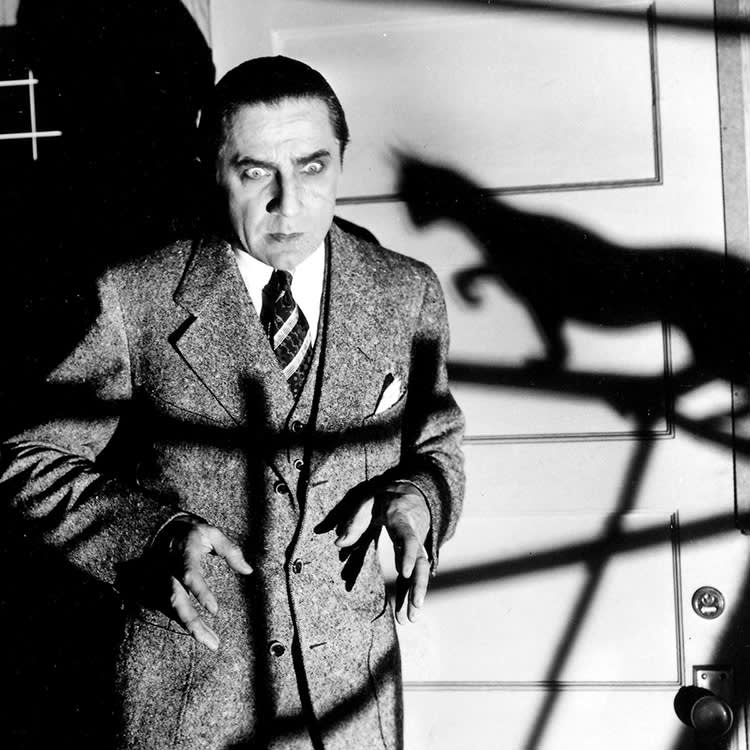
Watch enough animal horror and a pattern emerges that the usual “scariest pet movies” lists never name. Horror dogs and horror cats frighten us in opposite registers. The dog films almost always run on betrayed loyalty: the creature bred to love and protect us turns, and the horror is in the broken contract. The cat films run on the reverse, a sense that the animal was never really ours to begin with, watching with a patience that curdles into menace or revenge. Once you see that split, the genre organizes itself.
So instead of a flat ranking or the tired dog-then-cat block, here are 15 films sorted by the kind of dread they trade in. We added a couple beyond the usual baker’s dozen because the through-line earned them. Fair warning to soft-hearted animal lovers: several of these are genuinely upsetting, and we will flag the worst.
When loyalty turns lethal: the dog films
The scariest dog movies weaponize the bond. These are not monsters from the void; they are the family pet, or the loyal hound, or the working dog, turned against us. We run them newest to oldest, because the striking thing is how the same wound keeps reopening across 75 years of cinema.
White God (2014)
This Hungarian horror-drama about an uprising of street dogs led by a stray named Hagen won the Prize Un Certain Regard at the 2014 Cannes Film Festival. Hagen’s journey starts when he befriends 13-year-old Lili, whose father would rather buy a purebred than pay a “mongrel fee” to keep him. After Hagen is abandoned, nearly killed, sold into a dogfighting ring, and dumped at the pound, he escapes and leads his fellow strays in revolt. Some won’t call it horror, but be warned: Hagen’s ordeal is harrowing.
Bad Moon (1996)

An underrated werewolf movie in which the family dog is the real hero, the loyalty theme inverted: here the dog is the one who sees the danger. Based on Wayne Smith’s 1994 novel Thor, told from the dog’s point of view, it centers Thor as photojournalist Ted returns from a fateful trip to Nepal a changed man. The practical effects, especially the werewolf design, are a cut above the genre norm.
Baxter (1989)
Leave it to the French to make a genuinely good arthouse dog-horror film, complete with voiceover. It is very dark and will disturb anyone who can’t bear to watch animals suffer. Directed by Jérôme Boivin and based on Ken Greenhall’s 1977 novel Hell Hound, it unfolds from the perspective of Baxter, a violent white Bull Terrier desperate to be understood. His search for a worthy companion leads somewhere bleak.
Cujo (1983)
The one everybody names first, and still the purest expression of the idea. It takes real work to make a goofy breed like a Saint Bernard menacing, yet Cujo traumatized a generation of ’80s kids by doing exactly that. A bat bite turns Cujo rabid, and he terrorizes a mother and son stranded by a dead car. Between the lean story and Dee Wallace’s pitch-perfect Donna Trenton, it is an easy movie-night sell. Thank goodness Beethoven arrived a few years later to rehabilitate the breed.
Devil Dog: The Hound of Hell (1978)
A gleefully ridiculous made-for-TV entry that nails the loyalty-betrayed theme: a family adopts a sweet German Shepherd they name Lucky, never suspecting his previous owners were Satanists who folded him into a ritual. The everyday-pet-as-hidden-evil premise is the whole genre in miniature, and the low-budget TV-movie execution only adds to the charm. It did German Shepherds no favors.
Dracula’s Dog (1977)
Also known as Zoltan, Hound of Dracula, the supernatural-pet origin story you didn’t know you needed. Not, strictly, a good movie, but a great one if you like your horror gloriously silly. Romanian soldiers uncover Dracula’s tomb, a guardian un-stakes the wrong body, and soon a vampire Doberman is siring more vampire dogs. Dobermans’ reputation never recovered.
The Hound of the Baskervilles (1939)
The oldest film here, and the template for everything above it. The mystery that launched Basil Rathbone and Nigel Bruce’s long run as Holmes and Watson doubles as a great dog-horror story. Adapted from Arthur Conan Doyle, it follows the pair investigating a supposedly demonic hound picking off the Baskerville line. Things aren’t what they seem, and Holmes outsmarts the very human villain behind it, but the suspense of the beast on the moor is the draw. Many remakes exist; the 1939 version remains the most atmospheric.
When the watcher turns on you: the cat films
Cat horror works differently. The fear is not a broken bond but the suspicion there was never a bond at all, only an animal observing, biding its time, and occasionally settling a score. So these run in order of feline agency: from the cat who only watches, to the cat who acts, to the cat who comes back.
House (1977)
This Japanese cult classic is best seen with little explanation: a teenage girl and six friends visit her aunt’s country house, and one by one the house devours them. At the center is a Persian cat named Blanche, who watches the carnage with an eerie glow. She is so central that a warped version of her portrait anchors the poster. Not exactly frightening, but stare into that face long enough and you’ll swear something stares back.
The Uncanny (1977)
For a movie built on a cat conspiracy theory, the casting is almost miraculous. Hammer legend Peter Cushing plays a writer convinced cats are “the Devil in disguise,” telling his publisher three stories meant to prove felines are humanity’s most formidable supernatural foe, secretly keeping us subordinate. An absurd premise executed with total commitment.
Cat’s Eye (1985)
A perfect encapsulation of the watching-cat idea, and a worthy addition. This Stephen King anthology, directed by Lewis Teague, is bound together by a single stray cat who wanders through three stories, observing human cruelty and folly, before becoming the protector in the final tale, “General,” where it defends a young Drew Barrymore from a malevolent troll. The cat is the audience’s eyes, patient and unjudged, exactly the register cat horror lives in.
Cat People (1942)
Here the watching turns inward. Simone Simon plays a Serbian fashion illustrator convinced that physical intimacy will turn her into a panther. Director Jacques Tourneur builds a tense, noirish mood and lands real scares by keeping the horror off-screen, which set Cat People apart from the creature features of its era. Not really about cats, but too good to leave off.
The Tomb of Ligeia (1964)
In the 1960s Roger Corman directed eight films inspired by Edgar Allan Poe, and The Tomb of Ligeia was both the last and one of the finest. Vincent Price stars as Verden Fell, a widower who falls for a new woman only to be haunted by his late wife in the form of a meddlesome black cat. As so often when an animal embodies a character’s grief and guilt, the cat’s fate is grim, but the Gothic atmosphere and Price’s performance redeem the brutal ending.
The Shadow of the Cat (1961)
Now the cat stops watching and starts acting. After witnessing the murder of her owner, a tabby named Tabitha sets out to avenge her against everyone who conspired. The plotters sense something is wrong and try desperately to catch her, but she is far too clever. You can tell across scenes that Tabitha was played by several different cats, which only adds to the fun. Few Halloween pleasures rival watching a cat methodically outwit her would-be killers.
The Black Cat (1941)
Another Basil Rathbone entry, here as Montague Hartley, patriarch of a greedy family waiting for wealthy Henrietta Winslow to die so they can inherit. Henrietta keeps many cats, and the titular black one survives only because her groundskeeper, Bela Lugosi, defied orders to kill him as a kitten. As you’d hope, the cat is pivotal to the ending.
Pet Sematary (1989)
And finally, the cat who comes back. Not strictly about the Creed family cat, Church, but his death and reanimation in an ancient burial ground set the nightmare in motion. Adapted from Stephen King, it is a story about why meddling with the line between life and death never ends well. Louis Creed brings the cat back to spare his daughter grief, then tries the same with his son despite every warning. One of King’s most brutal tales.
Why the split holds
Line the two lists up and the pattern is hard to unsee. The dog films keep returning to the same wound, the protector that turns, the contract broken, because that is uniquely a dog kind of fear: we have asked dogs to love us unconditionally, so their betrayal lands as horror. The cat films keep returning to the watcher, the avenger, the creature that was only ever tolerating us, because that taps a real, low-grade unease anyone who has caught their cat staring at a blank wall already knows. Whether you’re a die-hard horror fan or just want something thematically right to play while you hand out candy, there’s a creature here for every taste. Just maybe don’t make eye contact with your own cat during the credits.
Tom Hadley writes about training and behavior, helping owners understand what their pets are trying to tell them. His work covers everyday manners, decoding common behaviors, and the small changes at home that make dogs and cats easier to live with.
Meet our experts ↗Keep reading
 LivingThose Pet Spa ASMR Videos Are Harmless. The Lesson They Teach You Isn't.Dr. Nina Kohl · 4 min
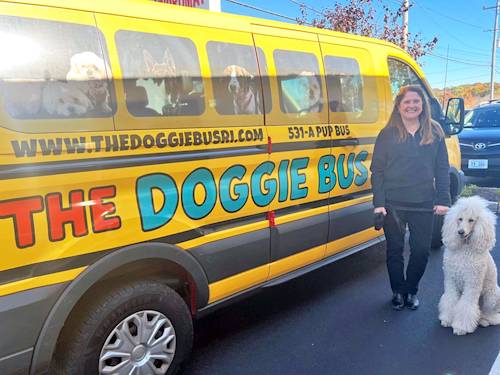 LivingThis Bright Yellow Bus Is Basically Uber, but Every Passenger Has Four LegsNina Vasquez · 4 min
 LivingTaurus Season Is a Rest Prescription. Your Pet Already Filled It.Sasha Ford · 6 min
 LivingHow to Get a Landlord to Say Yes to Your PetJames Okafor · 6 min
 LivingYour Dog Is the Only Reason You'll Actually Go Outside. Use It.Sara Lim · 5 min
 LivingEverybody Got a Second Dog. Her Order Book Was the First to Know.Jordan Ellis · 6 min