


The 9 Best Outdoor Cat Trees of 2026, Reviewed for Catios
A catio without a cat tree wastes the best part of going outside: the height. We reviewed nine outdoor cat trees and houses by the one thing that actually matters outside, weather survival, then sorted them by climber, lounger, and cold-weather cat.

Affiliate disclosure. This article contains affiliate links. We may earn a small commission if you buy through a link, at no extra cost to you. How we handle recommendations.
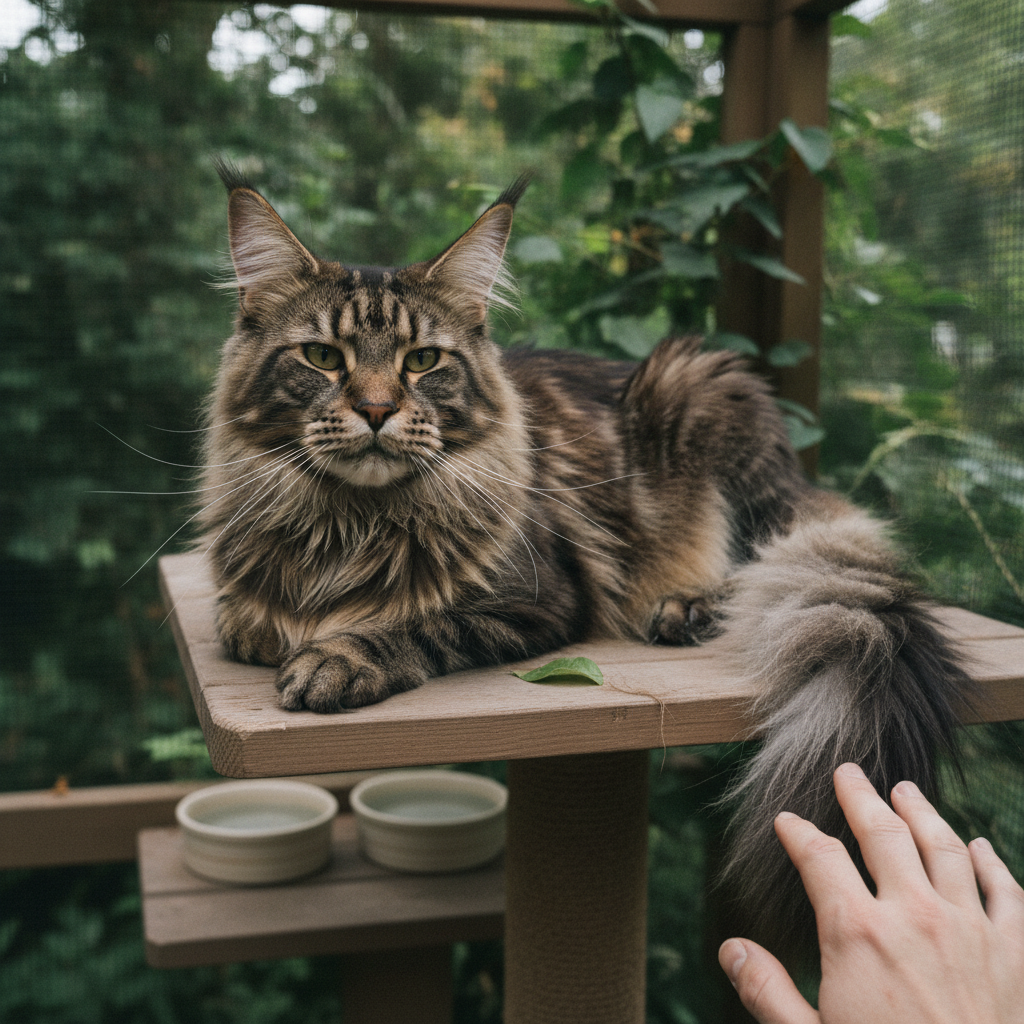
An outdoor cat tree has a harder job than an indoor one, and most roundups ignore it. Indoors, a tree only has to be tall and scratchable. Outdoors, it also has to survive: rain that rots particleboard, sun that bleaches and cracks plastic, humidity that grows mold inside a damp carpet platform, and wind that can topple a top-heavy tower onto the cat using it. That single difference, weather survival, is the lens we ranked everything through, because the prettiest outdoor cat tree is useless if it disintegrates by its second summer.
So before the picks, here is the way to think about it. A catio is the only safe way to give a cat the outdoors, since veterinarians are clear that free-roaming cats face real danger from cars, disease, predators, and the harm they do to local wildlife. Inside that enclosure, a vertical structure plays straight to a cat’s predator wiring: a high perch gives them a place to survey their territory and feel secure, and a sturdy post lets them burn off the extra arousal that all that outdoor stimulation creates. Keep your cat collared and microchipped before they ever go out, even into an enclosure, because the day a screen fails is the day the chip matters.
The cat-tree market also splits into three genuinely different products that get lumped together: open climbing towers (for cats who want height and a vantage point), enclosed houses (for cats who want shelter and a den), and heated houses (for cold-climate cats who want to stay out past the first frost). We picked the best of each rather than pretending one tree wins for every cat, which is why the list runs by use case instead of a single ranked order.
A quick note: our editors (and their pets) chose these products. Everything was in stock when we published, but cat trees do sell out. If you buy through our links, we may earn a commission.
How weatherproof materials actually compare
Before the picks, the material question deserves a straight answer, because it is the one that decides whether your tree lasts one season or ten:
- PVC and polypropylene are the most weatherproof. They shrug off rain, wipe clean, and never rot or mold. The tradeoff is looks (utilitarian) and that pipe-frame designs can let water pool inside the tubes.
- Cedar, redwood, and teak are the rot-resistant woods. They weather to a silvery gray but hold up for years outdoors thanks to natural oils, and they look far better than plastic. Pine and fir need a sealed waterproof finish to survive and will fail faster if that finish wears.
- Carpet and plush platforms are the weak point of any outdoor tree. They soak up rain and grow mildew. Outdoors, favor sisal, jute, or bare weatherproof board, and treat any cushion as a fair-weather-only, bring-it-inside accessory.
How to choose the right outdoor cat tree
-
Make sure the tower outweighs the cat (or cats) who will use it. That extra heft keeps it stable and safe while they climb and scratch.
-
Match the design to your cat’s preferences. If they are always scaling high places, go tall. If they favor a vertical scratching post, look for plenty of scratching surfaces. If they like to hide or curl up, find a tree with snug spots to burrow into.
-
Think hard about materials, especially since the tree needs to survive the weather. Real wood, PVC, and waterproof polyester materials tend to hold up best outdoors.
-
Consider the size of your outdoor space. For a patio or porch, something smaller or narrower may work better than a big tree built for a backyard.
-
Factor in your budget. Prices range widely, and a higher investment usually buys longer-lasting construction, though there are plenty of solid lower-end picks too.
Our top outdoor cat tree picks
We combed through countless shops and reviews to find the best outdoor cat trees available today. Because prices, heights, features, and materials vary so widely, we cast a wide net so there is something here for every cat and every outdoor space.
- Best overall: Maohegou 74-Inch Outdoor Weatherproof Cat Tower
- Best for large cats: GDLF Outdoor Cat Tree
- Best heated, for cold climates: K&H Pet Products Two-Story Outdoor Kitty House with Dining Room
- Best modern: Mau Reiya Cat Tree
- Best plastic: Maohegou 5-Level Cat Tree
- Best perch: FUKUMARU 81-in Jute Rope 5-Tier Cat Tree with Scratching Posts
- Best cat house: TRIXIE 3-Story Outdoor Wooden Cat House
- Best compact: Catry 29.7-in Modern Jute Cat Tree & Condo
- Best catio: PawHut Catio Outdoor Cat House Window Box
Best overall outdoor cat tree
This PVC tree brings the classic cat tree outside without losing any of the function. Built mostly from waterproof material, it is made to stand up to the elements for the long haul. It offers five perches for climbing, a cat cave, and nine scratching posts to cover all the usual cat-tree bases.
Pros
- Made of waterproof PVC (polyvinyl chloride) and PP (polypropylene)
- Tall for climbing (24”L x 25”W x 74”H)
- Five perches
- One cat cave
- Nine scratching posts
Cons
- Pricey at almost $200
- No extras like cat toys or cushions
Overall review
We love how cute and uncomplicated this tree is. Built almost entirely from PVC and PP, it is fully waterproof, so it should weather just about anything. At just over six feet tall, it is great for climbing and surveying the surroundings outdoors. It runs a bit expensive and skips the bells and whistles, but it is a solid investment that should last a long time on a catio.
Best outdoor cat tree for large cats
This tree is made for big cats with a big outdoor space to enjoy. The 5.5-foot wooden structure has four levels, including a large cat cave with a bridge that includes a sisal scratching mat, plus three sisal-wrapped posts.
Pros
- Tall for climbing (48.4”L x 43.5”W x 67”H)
- Four platforms
- One large cat cave with a bridge and sisal scratching mat
- Three sisal-wrapped scratching posts
Cons
- Pricey at $150
- Difficult to assemble
Overall review
If you have a supersized catio, this wooden structure is the perfect spot for outdoor climbing, scratching, and lounging. We love how expansive it is and how closely it mirrors the indoor cat-tree experience. It is great for large cats, and the bridge up to the cat cave is a thoughtful touch for big cats and those with mobility issues. A few reviewers note that assembly can be on the difficult side.
Best heated outdoor cat house, for cold climates
For catios that stay in use past the first frost, a heated house is the single upgrade that extends your cat’s outdoor season the most, and the K&H two-story model is the one we keep coming back to over the bare insulated boxes. A toasty heating pad warms both levels, and the standout feature is the second story set up as a “dining room,” so you can stash food and water bowls and let your cat linger outside for hours with everything within reach. The fleece-lined floors are washable, the four plastic doors are removable for airflow in milder weather, and the whole unit is MET Labs tested and certified to exceed US and Canadian electrical-safety standards, which matters for any heated product left out in wet weather.
If your priority is pure insulation over square footage, the simpler single-room heated houses (aluminum-foil insulated, elevated off the cold ground, with a waterproof heating-pad outlet and weatherproof roof and escape door) cover the basics for around $200, but they give up the food-bowl room and run larger and plainer. For most cold-climate catios, the two-story K&H earns the spot.
Pros
- Compact house that fits most catios or porches (27”D x 27”W x 22”H)
- Two fleece-lined, washable levels
- 20-watt orthopedic heated fleece floor on the bottom level
- Dining room with a lift-up roof so food and water stay outside with the cat
- Four removable plastic doors for warm-weather airflow
- MET Labs tested and certified, exceeding US and Canadian electrical-safety standards
- Priced under $100
Cons
- May run small for large cats
- Not tall enough for climbing or surveying
- No scratching post (pair it with a weatherproof post)
Overall review
The heating pad that warms both levels makes this a cold-weather essential, and the dedicated food-bowl room is the detail that lets a cat actually stay outside in the cold rather than just visiting. Double-check the interior dimensions against your cat, since it can run small for the biggest kitties, and add a separate sisal post if scratching matters, because this house is built for warmth, not claws.
Review rating: 4.5/5
Best modern outdoor cat tree
For anyone who wants function and good looks in equal measure, Mau delivers on both. The Reiya model is built from solid oak, which is durable and weather-ready. It has five platforms for perching and climbing, two of them with cushioned cat beds, plus one sisal-padded scratching post.
Pros
- Tall for climbing (31”L x 23”W x 54”H)
- Outdoor-compatible solid oak frame
- Five platforms for climbing and lounging
- Two cushioned cat-bed platforms
- One sisal-padded scratching post
Cons
- Expensive at $500
- Cushions are not ideal for full outdoor exposure
Overall review
We love the modern look of this tree, which is especially well suited to a screened-in porch thanks to the cushioned beds. The cushions are removable and washable, but they are best kept out of direct outdoor exposure. Otherwise, it is tall enough for climbing and perching, and the solid oak frame holds up well outdoors over time.
Best plastic outdoor cat tree
This sturdy plastic tree is built to endure the outdoors. Made of PVC and polyethylene, it is weatherproof enough to handle both the elements and rowdy playtime. It offers six platforms for climbing and ten polypropylene-wrapped scratching posts.
Pros
- Waterproof PVC pipes that need no glue
- Washable polyethylene platforms that do not snag fur
- Tall enough for climbing (22”L x 20”W x 46”H)
- Five platforms for climbing
- Ten polypropylene-wrapped scratching posts
Cons
- Pricey at around $150
- Not watertight (water can get inside when it rains)
Overall review
Plastic is a slam dunk for braving the elements, and this tree is no exception. The mid-size build stands just under four feet, fits most catios or screened-in porches, and still gives cats height to climb and perch. The PVC and polyethylene wipe clean easily. A few reviewers note that while it is waterproof, it is not watertight, so water can get inside the pipes during rain.
Outdoor cat tree with the best perch
This towering five-tier wooden perch suits catios that have some vertical room to spare. At just under seven feet, the wall-mounted tower is built for climbing and spotting wildlife from the safety of an enclosure. Five rotating platforms handle perching and climbing, and an entire post wrapped in sisal handles scratching.
Pros
- Very tall for climbing (81 inches)
- Five perches that rotate up to 180 degrees
- A full post wrapped in sisal for scratching
- Wall-mounted for stability
- Made of natural rubber wood for durability against the weather
- Priced under $100
Cons
- The wall-mounted design may not suit every catio setup
- May ship with a strong glue smell
Overall review
This is the ideal outdoor tree for cats who love to climb. Reviewers call it a perfect catio addition, noting it suits multiple cats and stands up to a lot of climbing and scratching. The wall-mounted build gives it real stability, though it may be a sticking point for catios that cannot support one. A few reviewers mention a strong chemical smell on arrival from the glue, which dissipates over time.
Review rating: 4.5/5
Best outdoor cat house
This wooden cat house is a perfect catio addition, made entirely of pine with a waterproof finish. It has three perching levels and hinged shutters you can open for a peek outside. The cat doors come with laminated flaps to block wind and rain, and a raised floor keeps air circulating. A large hinged door in the back makes maintenance and access easy.
Pros
- Compact enough to fit most spaces (22”L x 23.2”W x 37”H)
- Fully enclosed with hinged shutters and a hinged door
- Cat doors with laminated flaps to keep out wind and rain
- Three levels for perching
- One large rear hinged door for maintenance
- Raised floor for air circulation
- Priced under $100
Cons
- The smaller size is not great for multi-cat homes or catios
- Not ideal for larger cats
Overall review
For cats who want to be outside but still love an enclosed nook, this is the house for them. It works well in smaller outdoor spaces, standing just over three feet tall and a little under two feet wide. The weather-treated pine means it can brave a more exposed spot. With larger cats or several cats, though, the compact size becomes a constraint.
Review rating: 3.5/5
Best compact outdoor cat tree
For smaller enclosed spaces like a screened-in porch, this compact wooden tree, at roughly 2.5 feet tall, is a lovely way to fold your cat into the indoor-outdoor flow. Made from cedar, which holds up well in the elements, it has two levels including a cat cave, a cushioned perch, and a cat bed, plus a jute-wrapped scratching post.
Pros
- Compact dimensions for smaller spaces (15.7”L x 11.4”W x 29.7”H)
- One cat cave
- Two perches, one cushioned and one with a cat bed
- One jute scratching post
- Priced under $100
Cons
- Better suited to a screened-in porch than a fully exposed catio
- Cushions will need extra upkeep with outdoor exposure
- Not ideal for larger cats
Overall review
This is a great pick for smaller indoor-outdoor spaces you want to share with your cat. We love that this cozy tree still fits in several lounging spots, complete with washable fleece cushions. Its strength is also its limitation: it is quite small, so it is not the right tree for big cats.
Review rating: 4/5
Best catio
For anyone looking to get into the catio game, this PawHut is a great starting point. The freestanding structure is designed to sit against the side of your house (secured with L-shaped brackets and screws) with window access, so your cats can move freely between indoors and out. Built from solid fir wood, this screened-in cat house has five perches, a cat cave, a wooden bridge, a steel roof, and a human-sized door with a lock.
Pros
- Freestanding structure that sits against your house with window access (68”L x 35.5”W x 70.5”H)
- Fully screened in, except for the end against your home
- Five jump platforms
- One cat cave
- One wooden bridge
- A weather-treated steel roof
- One human-sized door with a lock
Cons
- Size and design may not suit every home or yard
- Higher price
Overall review
A catio can sound like a lot of work, but we like how turnkey this one is. Reviewers rave about how easy it is to assemble, which is a big plus for a starter catio. The against-the-wall window design makes indoor-outdoor access simple and keeps your cats safe while letting them experience the wider world. Just confirm the dimensions and layout will fit your exact space.
Review rating: 5/5
FAQs
What is the best material for an outdoor cat tree?
Start by looking for items labeled “weather-resistant.” Durable woods like cedar and redwood, or a sturdy plastic such as PVC, will do the job nicely.
How do you keep an outdoor cat tree safe for your cat?
First, choose a tree made from one of the weather-ready materials above. Then run regular inspections of its stability and durability, especially after any extreme weather that could compromise the structure.
Can you put a cat tree outside without a catio?
We strongly recommend taking the safety precautions that keep your cat contained within your yard. Veterinarians almost always advise against letting cats roam unattended outdoors. Wandering past the boundaries of your home is genuinely dangerous: cats can run into hazardous wildlife, pick up infections, or threaten the local wildlife themselves, and it piles on daily stress. A catio is the great middle ground, letting your cat experience the outdoors while staying safe.
References
- “Indoor Cats vs. Outdoor Cats.” American Society for the Prevention of Cruelty to Animals (ASPCA). https://www.aspca.org/pet-care/cat-care/indoor-cat-initiative
- “The Indoor Pet Initiative: Cats.” The Ohio State University College of Veterinary Medicine. https://indoorpet.osu.edu/cats
- Loss, S. R., Will, T., and Marra, P. P. “The impact of free-ranging domestic cats on wildlife of the United States.” Nature Communications, 2013. https://www.nature.com/articles/ncomms2380
Sasha Ford is a certified cat behaviour consultant who has worked with shelters, catteries, and private clients across the country. They review all feline behaviour content at The Pet Times, with expertise in multi-cat households, indoor enrichment, and stress-related disorders.
Meet our experts ↗Keep reading
 LivingYou Bought the Bed. She Sleeps in the Drawer. She's Not Being Rude.Dr. Nina Kohl · 6 min
 Product PicksYour Cat Doesn't Want a Present. She Wants Territory.Sara Lim · 6 min
 Product PicksThe 8 Best Cat Trees for Maine Coons, Sorted by Size and Your CeilingSasha Ford · 11 min
 Product PicksThe Window Hammock That Ends the Cat-Versus-Houseplant WarSara Lim · 3 min
 Product PicksYour Cat Shreds the Couch Because Every Scratching Post Is an EyesoreSasha Ford · 4 min
 Product PicksI'm Lazy About Scooping. The Litter Genie Turned Me Into a Neat Freak.Marcus Webb · 6 min