


"Grumpy" Is a Diagnosis You're Not Qualified to Make
When an old dog gets short-tempered, we call it a personality shift and move on. That word closes the case before anyone examines the dog, and usually the answer is pain.

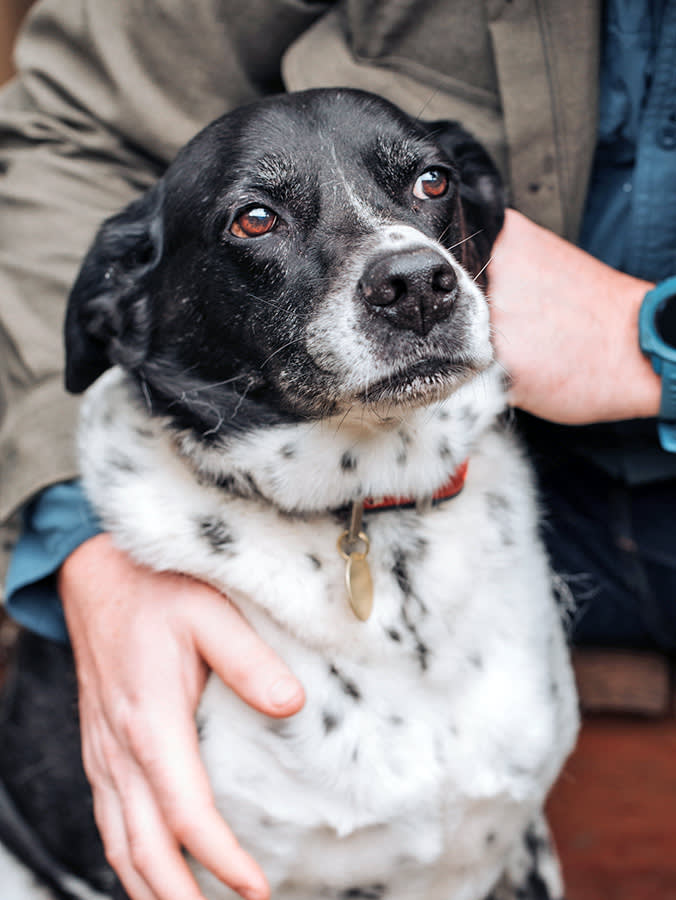
Your old dog snaps when you reach for them on the couch. They growl when the puppy bounds over. They are less patient, less playful, quicker to retreat to their spot and defend it. The easy story writes itself: they are getting grumpy in their old age. Settling into their curmudgeon era. It happens.
Here is the problem with that story. The moment you decide your dog is “just grumpy,” you have made a diagnosis, and it is a diagnosis that closes the file. Nobody examines a personality. If the change is really a shift in temperament, there is nothing to do but accept it. And so the single most common medical problem in older dogs goes unexamined, because a word got there first.
That word is doing a lot of quiet damage. In the vast majority of these cases, the dog is not grumpy. The dog hurts.
The thing “grumpy” is usually hiding
Start with the number that should reframe this whole conversation: studies estimate that around 80 percent of dogs over the age of eight are affected by osteoarthritis. Not eighty percent of some unlucky subset, eighty percent of ordinary senior dogs. And it is badly underdiagnosed, in part because dogs are experts at masking pain and in part because owners read the signs of it as something else. Something like grumpiness.
Think about what chronic joint pain does to a person’s fuse. A sore back makes you flinch when someone claps you on the shoulder. It makes noise, chaos, and change harder to absorb. Now put that dog in a home where a hand is reaching toward a painful hip, or a young dog is about to body-slam a stiff joint, and the growl makes perfect sense. It is not a mood. It is a report.
Owners tell me their senior dog has gotten cranky, and I ask them to show me where they pet the dog. Nine times out of ten, the ‘cranky’ spot is a painful one. The dog is not being difficult. The dog is telling us the only way they can that something hurts, and we have been calling that a personality.
Pain also raises the stakes on everything else. A new baby, a move, a change in the household is harder for a dog to weather calmly when their body already aches. The irritability people notice is often not about the change itself. It is about facing change while hurting.
The other real causes, none of which are “old age”
Pain is the big one, but it is not the only thing wearing the grumpy mask. Fading hearing and vision change a dog’s world in ways that read as bad temper. A dog who cannot hear you approach startles when you touch them. A dog who sleeps more deeply, then wakes disoriented, may snap in that first confused second. That is not aggression. That is a sensory gap.
Then there is canine cognitive dysfunction, the condition often called doggy dementia. It can bring genuine confusion, rising anxiety, and even new reactivity toward people or other animals in a dog who never showed it before. It is real, and it deserves to be named, but it is also over-assumed. Plenty of dogs written off as “senile” turn out to have a treatable problem underneath, which is why cognitive decline should be a conclusion a vet reaches after ruling other things out, not the first label an owner reaches for at home.
Breed history matters here too, because it tells you where to look. Long-backed dogs like Dachshunds are prone to spinal and disc trouble. Larger breeds such as German Shepherds carry higher risk of hip dysplasia. Labradors tend toward the weight gain that loads aching joints. Boxers face elevated cancer risk, spaniels are prone to ear infections, and Dobermans to heart conditions like dilated cardiomyopathy. None of these announce themselves politely. More often than not, a dog lives with the problem well before their person realizes anything is wrong.
Why “just old age” is the answer to refuse
Old age is not a diagnosis. It is the stage of life during which real, nameable, often fixable conditions become more likely. Treating “he’s old” as the end of the inquiry leaves a dog in pain that could be managed, sometimes dramatically.
If a vet brushes off a clear behavior change with ‘it’s just age,’ that is your cue to push, not to stop. Ask what could hurt. Ask about a pain trial, bloodwork, a dental look, a check of the eyes and ears. A good workup turns a vague ‘grumpy old dog’ into an actual list of things we can do something about.
This is the whole argument in one move: replace the label with a question. Not “is my dog grumpy,” but “what changed, and what could be causing it.” The first question ends the conversation. The second one starts the treatment.
What to bring your vet
You are the one who sees the pattern, so come with specifics. Note when the change started and whether it came on gradually or suddenly, since a fast change is more urgent. Track anything that shifted alongside the mood: appetite, thirst, energy, sleep, bathroom habits, and how they move getting up or lying down. Mention any new medications or diet changes. And watch for timing, whether the behavior clusters at night, after activity, or around being touched in a particular place. That last detail alone often points straight at the source.
From there your vet might suggest bloodwork, a urinalysis, imaging, a dental exam, or thyroid testing, not to hunt for exotic disease but to find the ordinary, treatable causes of a behavior change that looked, from the couch, like a bad attitude.
What actually helps
The good news on the other side of an honest diagnosis is how much can be done. Managing pain, when pain is the cause, often improves behavior fast and visibly; a dog who was “grumpy” turns out to be a dog who was sore. Weight and diet matter more than most owners expect, since a dog should not eat the same food and the same amount their whole life, and trimming excess weight takes real load off tired joints. Small changes to the home help too: ramps onto the couch or into the car, a hand up the stairs, softer bedding, and swapping high-impact games of fetch for gentler enrichment that works the brain without punishing the body.
And advocate for your dog in public. An older dog who does not want to be crowded or grabbed is not being unfriendly, and it is fair to tell people so, and to give your dog the time and space to decide when they want contact.
What newer research adds
Two threads in recent veterinary work sharpen the case for dropping the grumpy label. On pain, large primary-care studies keep confirming that canine osteoarthritis is both extremely common in older dogs and substantially underrecognized, with many affected dogs receiving no pain management at all, precisely because their discomfort gets read as normal aging. On cognition, the Dog Aging Project’s analysis of more than fifteen thousand dogs found that the odds of cognitive dysfunction rose sharply with each year of age and were strongly associated with inactivity, a reminder that keeping senior dogs gently moving is not just good for joints but may support the aging brain.
The direction of the science is consistent, and it points the same way this article does. The behaviors we file under “grumpy old dog” are, far more often than not, signals of something specific and something we can treat. The kindest thing you can do for an aging dog is refuse the easy word and ask the harder question.
References
- Anderson, K. L., et al. (2018). Prevalence, duration and risk factors for appendicular osteoarthritis in a UK dog population under primary veterinary care. Scientific Reports.
- Yarborough, S., et al. (2022). Evaluation of cognitive function in the Dog Aging Project: associations with baseline canine characteristics. Scientific Reports.
- Epstein, M., et al. AAHA Senior Care Guidelines for Dogs and Cats. American Animal Hospital Association.
- WSAVA Global Pain Council. Guidelines for the Recognition, Assessment and Treatment of Pain.
Common questions
My vet said it's 'just old age.' Is that a real answer?
'Old age' is a stage of life, not a diagnosis, and it is not a reason to leave a dog uncomfortable. If your vet dismisses a clear behavior change without examining for pain, sensory loss, or cognitive decline, it is reasonable to ask for that workup or to seek a second opinion.
How do I know if it's pain or doggy dementia?
You often cannot tell from the outside, because both can cause irritability, withdrawal, and reactivity. That is exactly why it needs a vet. Pain, arthritis, dental disease, and sensory loss are common and treatable, and they should be ruled out before anyone concludes it is cognitive dysfunction.
Not a substitute for your vet. Our guidance is educational. For urgent symptoms, contact a vet or emergency clinic right away. Editorial standards
Dr. Mehta is a board-certified veterinary nutritionist who evaluates pet food formulations, ingredient quality, and the science behind dietary trends. He writes and reviews all nutrition content at The Pet Times, including our food rankings and feeding guides.
Meet our experts ↗Keep reading
 Health & WellnessYour Dog's Germs Won't Make You Sick. Your Habits MightDr. Amara Solis · 6 min
 Health & WellnessDogs Don't Get Menopause. That's Exactly Why Senior Heat Cycles Are DangerousDr. Lena Park · 6 min
 Health & WellnessA Once-a-Year Flea and Tick Shot Is Here. The Real Story Is the Gap It ClosesDr. Ravi Mehta · 4 min
 LivingThe Only People Who Should Own a Husky Walk 11 Miles a DayMarcus Webb · 7 min
 Health & WellnessEvery Dalmatian Carries a Broken Gene. Fixing It Meant Adding a Pointer.Dr. Ravi Mehta · 8 min
 Health & WellnessThe Dog Cancer You're Checking for in the Wrong PlaceDr. Mara Chen · 6 min