
Let’s be honest — if a button existed that could keep your puppy or kitten in that perfect, wobbly, endlessly entertaining baby phase forever, plenty of people would at least consider pressing it. The appeal is undeniable. But growth is not optional, and it turns out the rate at which your pet grows carries real consequences for their health. Too fast causes one set of problems. Too slow signals another. The sweet spot is narrower than most people realize, and knowing whether your pet is hitting it requires more than a casual eyeball assessment.
We partnered with the Waltham Petcare Science Institute to build an interactive version of their evidence-based puppy and kitten growth charts. With this tool, you can track your pet’s weight over time and, working with your veterinarian, make better decisions about their nutrition and care. To understand how the charts work and why they matter, we spoke with Dr. Alex German, a professor of Small Animal Medicine at the University of Liverpool and one of the scientists who developed the underlying methodology.
Why growth charts belong in your new pet toolkit
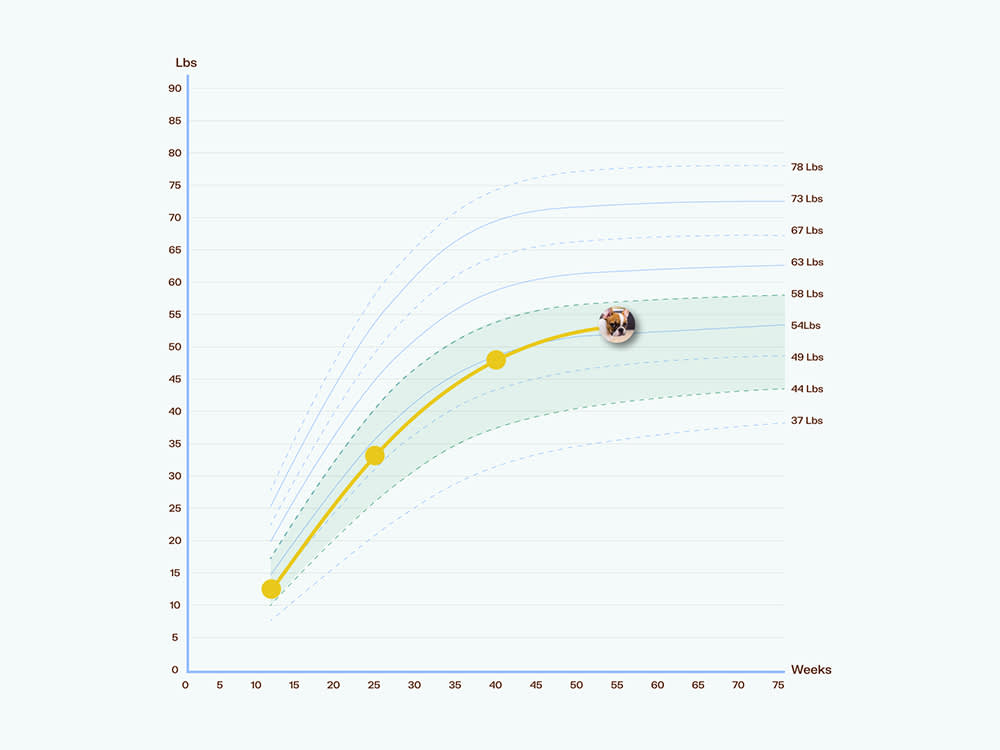
“The puppy and kitten growth charts are similar to growth charts for kids, with curves that show typical growth trajectories for populations of healthy individuals,” Dr. German says. “In fact, these charts use the same mathematical modeling as the charts the World Health Organization (WHO) developed for humans.” Each chart carries nine curves called centile lines. A healthy puppy or kitten will generally stay close to the same centile line across their entire developmental period.
Logging weight consistently makes it much easier to catch deviations early. A pet climbing into higher centiles might be putting on weight too quickly. One sliding into lower centiles could be lagging behind expected development. Both matter. Slow growth can be a sign of underlying illness. In medium and large dog breeds, growing too fast puts significant mechanical stress on developing bones, leading to conditions like osteochondrosis and hip dysplasia that can persist for the animal’s entire life. And across all puppies and kittens, packing on weight faster than the body is ready for creates a risk factor for obesity that’s much harder to address later.
Obesity itself is worth taking seriously. According to Dr. German, half of all adult dogs and cats are currently above their ideal body weight, and those extra pounds don’t just sit there harmlessly. “Obesity in pets can contribute to arthritis, respiratory issues, diabetes, poor quality of life, and even shorter lifespans. And it’s a lot easier to prevent obesity than it is to help a pet lose weight. The puppy and kitten growth charts are a fantastic tool for staying on top of a pet’s weight and spotting issues early, when they are easier to correct.”
Getting started with the growth charts
Monthly weigh-ins during the growth period produce the most useful data. Weighing can happen at home or at your vet’s office — either works — and the numbers then go into the growth chart tool. After several entries, a curve takes shape, and you start to see a real picture of your pet’s trajectory.
A deviation from the expected curve is not an automatic emergency, and it’s also not a signal to start adjusting food amounts on your own. What it is, most of the time, is a reason to check in with your veterinarian. From there, you can look at the full context — overall health, eating habits, any other symptoms — and make a reasoned decision together about whether anything needs to change.
“The growth charts are a great way to keep pet parents engaged in their puppy’s or kitten’s development and give them reassurance that they’re staying on top of their pet’s health,” Dr. German adds. And the value of regular weigh-ins doesn’t end when your pet reaches adulthood. Gradual changes in weight over months or years are nearly invisible to the naked eye, but a graph makes them obvious.
“The only way you really know how much to feed your pet is by whether they are gaining, maintaining, or losing weight. If you’re carefully measuring your dog’s food every day and he’s gaining weight, you know you’re feeding too much. If he’s losing, you’re feeding too little. So even after pets reach their adult weight, I still recommend that pet owners weigh them every three months. This will allow them to make any needed adjustments to their pet’s food intake before a weight problem gets out of hand and becomes more difficult to manage,” he explains.
Start tracking
Add your puppy or kitten to your pet profile and open the growth chart tool. Log a weight entry every four weeks through the end of the growth period. A few minutes a month is all it takes, and the picture that builds over time is one of the most useful things you can have in your corner as your pet grows up.