


The Dog Longevity Pill Is Almost Real. It Won't Buy You Forever.
An FDA-backed drug to extend dogs' healthy years is two-thirds of the way to market. The science is genuinely exciting. The marketing around it is going to be a nightmare.

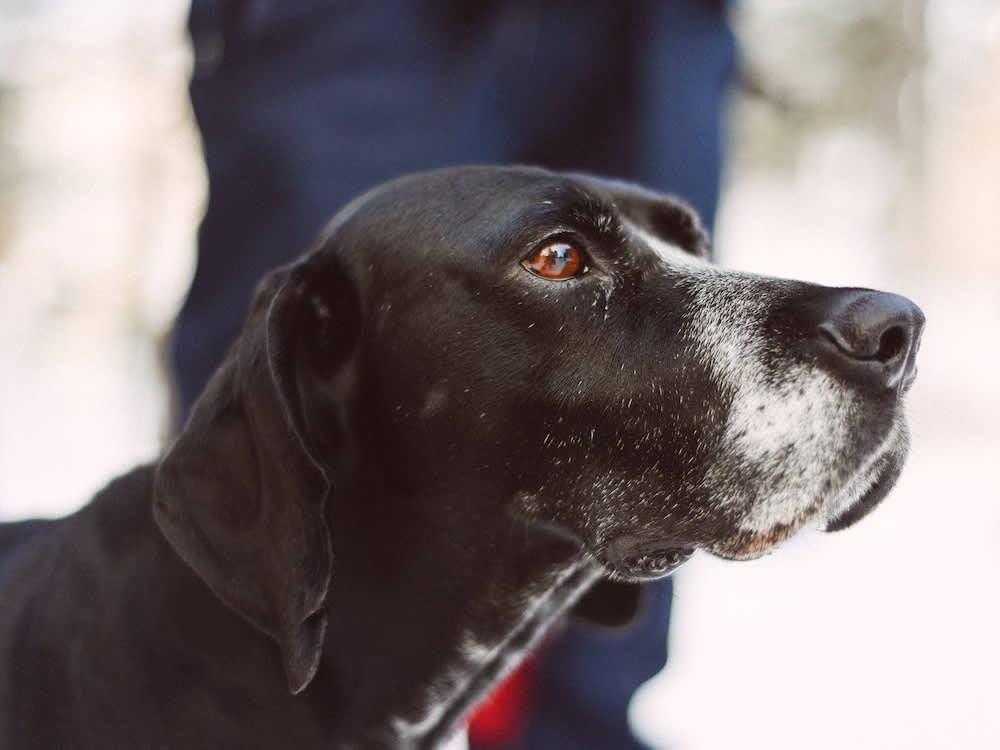
Somebody is going to sell you eternal life for your dog, and it will not be the company actually building the drug.
That is the strange position we are in as the first real canine longevity medicine closes on the market. The science underneath it is legitimate, the FDA is genuinely engaged, and the people running it are unusually careful about what they claim. The problem is everyone else. The moment this drug lands, the shelf next to it is going to fill up with things that sound identical and are not.
So it is worth getting clear now on what is actually coming, what it does, and where the ceiling is.
The specific claim, stated narrowly
The drug is LOY-002, from the biotech company Loyal, founded by Celine Halioua. It is a daily flavored tablet, developed for dogs aged 10 and older weighing at least 14 pounds.
Where it currently stands with regulators:
- The FDA’s Center for Veterinary Medicine accepted Loyal’s reasonable expectation of effectiveness in early 2025. That is the agency saying, in effect, we believe this is likely to work.
- In January 2026, the FDA accepted the target animal safety package.
- Two of the three technical sections required for conditional approval are therefore done. The remaining one is manufacturing, which sounds like paperwork and is not: every bottle has to be identical whether it ships to Alaska or Florida, and getting a process to that standard at scale takes a long time.
If manufacturing clears, LOY-002 could be on the market before the end of 2026. It would be the first drug approved anywhere for lifespan extension itself, in any species.
What it is not
Halioua herself has been blunt about this, and it is the most trustworthy thing about the project. Anyone promising a dramatic extension of lifespan, she has said, is promising something nobody has proven. Aging is not being cured here. Nobody at Loyal believes it can be.
What is well understood is the mechanism of aging in complex organisms, well enough to intervene at the margins. So the honest framing is:
This is preventive medicine. You start it while the animal is still well, and the goal is to hold him there for longer, by slowing the rate at which a body loses its resilience. That loss of resilience is what eventually presents as cancer, cognitive decline, and osteoarthritis. Loyal is explicitly not targeting any single disease. They are targeting the slide.
The distinction matters commercially. A supplement that promises to “reverse aging” is making a claim nobody can measure. A drug that proposes to keep a 10-year-old Labrador functioning like a 9-year-old Labrador for an extra year is making a claim you can actually test, which is why the FDA is willing to talk about it.
The question I get asked is ‘will this make him live longer,’ and the question people actually mean is ‘will I get more good years.’ Those aren’t the same thing, and only the second one is worth paying for. A frail extra year is not a gift to anybody.
Why big dogs die young, and why that’s the doorway
The most interesting thing in this whole story is not the drug. It is the reason the drug exists.
In dogs, size and lifespan run in opposite directions. A Great Dane might get six to nine years. A Chihuahua might get sixteen to eighteen. That is a staggering spread inside a single species, and it is not natural. It is a consequence of historical inbreeding, of selecting hard for size over generations.
In doing so, we handed large dogs something that behaves like a disease: a physiology that ages faster and fails sooner. LOY-002 targets IGF-1, insulin-like growth factor 1, the hormone that drives growth in puppies and, at elevated levels in older dogs, appears to accelerate cellular aging. Big dogs carry more of it.
Loyal is running a second program aimed at older dogs of any size and any breed. The one meaningful exclusion is at the very small end: toy breeds are harder to dose accurately. The vast majority of dogs, by size, should be eligible.
Why the experiment works on dogs and would not work on us
This is the part that quietly explains the whole field.
Timelines. Humans live too long to test an aging drug on. Give a person an anti-aging compound today and you might need decades to know whether it did anything. Dogs, and especially big dogs, show measurable biological aging in about six months. That feedback loop is what makes the science tractable.
Incentives. Human healthcare in the United States is fundamentally reactive; it pays for illness, not for its absence. Dogs, by contrast, have what amounts to a single-payer system that is fully aligned with prevention, because the payer is you. Owners are unusually willing to spend on keeping a healthy animal healthy, in part because you can see your dog age. Everyone with an old dog has the same story about the day the walk got shorter.
Cats are a different animal, literally. They live a long time already, which makes an aging trial slow and expensive. And they metabolize compounds differently enough from us and from dogs that things which work elsewhere sometimes go sideways in cats. Loyal wants to get there. It is not feasible yet.
What the evidence actually rests on
Two pillars, and they are worth knowing so you can evaluate the copycats.
Model organisms. In mice, interventions of the kind Loyal is pursuing have produced lifespan extensions in the double-digit percentages relative to average. That is real, and it is also mice.
A dog study, from the nineties. Purina ran a lifetime study in which Labradors were fed a calorically restricted diet against free-fed controls. The restricted dogs lived roughly two years longer. Caloric restriction improves metabolic fitness, which is broadly what these drugs are trying to accomplish pharmacologically. Two years, in a Labrador, is not a rounding error.
That old study is also the single most useful thing in this article, and it is free. The best-evidenced longevity intervention available to you today is keeping your dog lean. Not a supplement. Not a subscription. A body condition score in the healthy range, checked by your vet, held for life.
The ethics question, answered plainly
The objection people raise is that treating aging is somehow different in kind from treating disease.
It is not. An aging drug is targeting the same underlying process as a cancer drug, just at an earlier stage of it, and doing so in a way that reduces suffering for the animal and the person. There is no ethical problem here unless you think medicine itself is an ethical problem.
The real ethical exposure is elsewhere: in the marketing. A category this emotionally loaded, aimed at people watching their dog slow down, is a category built for exploitation. The correct response to “this pill will give you more time with your dog” is not enthusiasm. It is show me the trial.
What newer research adds
Two things have moved since this drug first made headlines.
The regulatory path is much further along than most people realize. As of early 2026, LOY-002 has FDA acceptance on both effectiveness and safety, with only the manufacturing section outstanding. Notably, it could reach the market before the company’s large STAY study concludes, under the FDA’s conditional approval pathway. That is a legitimate mechanism designed to get promising drugs to animals faster, and it also means the confirmatory data will still be coming in while dogs are taking the drug. Ask your vet about that, not because it is alarming, but because it is the actual state of the evidence.
The supplement aisle got there first. There is now a competing product, Leap Years, a soft chew combining an NAD+ precursor and a senolytic, backed by a randomized controlled trial run at North Carolina State’s veterinary school with Dr. Natasha Olby. That trial found significant improvement in senior dogs’ cognitive function over three months. It is genuinely the best-evidenced longevity supplement on the market. It is also worth reading carefully: the primary outcomes were owner-assessed, meaning owners scored their own dogs’ cognition, and owners who are hoping for a change are not neutral instruments. Encouraging, not conclusive.
That is the whole lesson in miniature. The good stuff in this category is real and modest. The stuff that promises more than that is selling you something else.
References
- Loyal, “One step closer to a dog longevity drug: What LOY-002’s safety milestone means to a practicing vet.” https://loyal.com/posts/loy-002-tas
- Business Wire, “Loyal Receives FDA Acceptance of Safety Package for Senior Dog Lifespan Extension Drug,” January 13, 2026. https://www.businesswire.com/news/home/20260113476778/en/Loyal-Receives-FDA-Acceptance-of-Safety-Package-for-Senior-Dog-Lifespan-Extension-Drug
- Business Wire, “Loyal Receives FDA Acceptance of Reasonable Expectation of Effectiveness for Senior Dog Lifespan Extension,” February 26, 2025. https://www.businesswire.com/news/home/20250226676005/en/Loyal-Receives-FDA-Acceptance-of-Reasonable-Expectation-of-Effectiveness-for-Senior-Dog-Lifespan-Extension
- Kealy, R. D., et al. “Effects of diet restriction on life span and age-related changes in dogs.” Journal of the American Veterinary Medical Association, 2002. https://pubmed.ncbi.nlm.nih.gov/11991408/
- Olby, N. J., et al. “A Randomized, Controlled Clinical Trial Demonstrates Improved Cognitive Function in Senior Dogs Supplemented with a Senolytic and NAD+ Precursor Combination.” bioRxiv, 2024. https://www.biorxiv.org/content/10.1101/2024.02.26.581616
- U.S. FDA Center for Veterinary Medicine, “Conditional Approval Explained: A Resource for Veterinarians.” https://www.fda.gov/animal-veterinary/resources-you/conditional-approval-explained-resource-veterinarians
Common questions
Why dogs and not cats?
Two reasons. Cats already live a long time, which makes it very slow and expensive to prove an aging drug works in them. And cats metabolize drugs differently enough from humans and dogs that compounds can have unexpected effects. Cats are on the eventual roadmap, not the current one.
Why do big dogs die younger?
Largely because we bred them that way. Selecting hard for size also selected for higher levels of the growth hormone IGF-1, which appears to accelerate cellular aging. A Great Dane may live six to nine years while a Chihuahua lives 16 to 18. It is, functionally, a condition we introduced.
What will it cost?
The developer has said it is aiming for a price in line with other veterinary products, somewhere in the range of $30 to $60 a month, and has been explicit that it does not want it to be a rich person's drug. No final price has been announced.
Not a substitute for your vet. Our guidance is educational. For urgent symptoms, contact a vet or emergency clinic right away. Editorial standards
Dr. Mehta is a board-certified veterinary nutritionist who evaluates pet food formulations, ingredient quality, and the science behind dietary trends. He writes and reviews all nutrition content at The Pet Times, including our food rankings and feeding guides.
Meet our experts ↗Keep reading
 Health & WellnessYour Dog Eating Dirt Is Usually Boredom. Sometimes It's Their Blood.Dr. Mara Chen · 7 min
 Health & WellnessThe 'Mystery Dog Illness' Wasn't a Mystery. Here Are 8 Ways to Keep Your Dog Out of It.Dr. Mara Chen · 7 min
 Health & WellnessYour Dog's Nose Predicts Their Lifespan. Nobody Wants to Hear It.Dr. Mara Chen · 7 min
 Health & WellnessThe Distemper Shot Has Side Effects. Reading the List Shouldn't Talk You Out of It.Dr. Ravi Mehta · 7 min
 Health & WellnessThe Dog Cancer You're Checking for in the Wrong PlaceDr. Mara Chen · 6 min
 Health & WellnessChronic Kidney Disease in Dogs Is a Race Against Time. How to Win GroundDr. Lena Park · 7 min