


Medicating a Cat Is Won Before You Pick Them Up: A Calmer Way to Give Liquid Meds
The syringe technique is the easy part. What actually determines whether liquid medicine goes down is the setup, the cat's stress level, and knowing when to stop fighting the syringe and ask your vet for a better option.

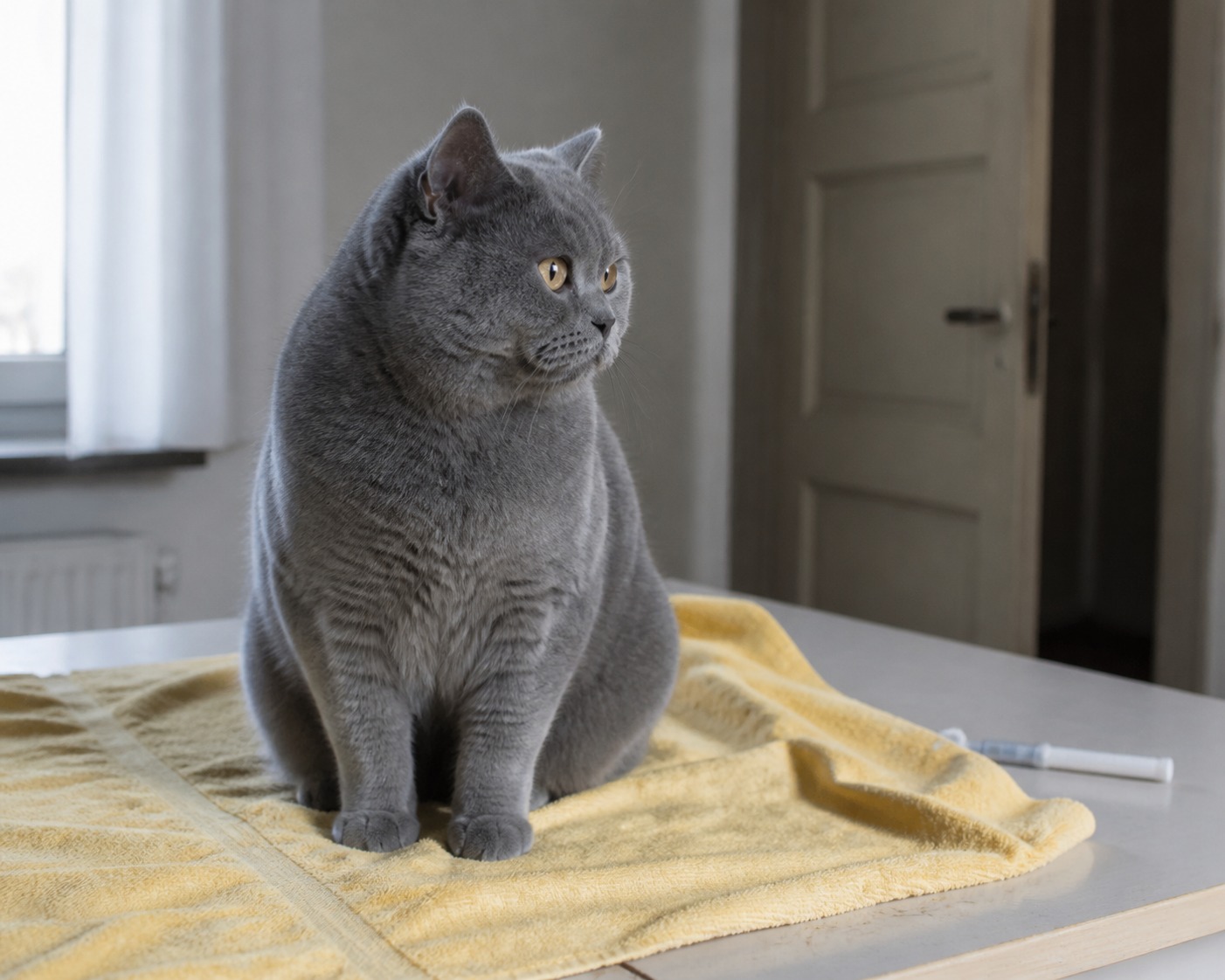
Most guides to medicating a cat are really just diagrams of where to point the syringe. That part matters, and we’ll cover it carefully. But anyone who has actually dosed a suspicious cat knows the truth: the battle is won or lost before you ever pick the cat up. A calm setup, a calm room, and a realistic backup plan do more than perfect thumb placement ever will. And the single most overlooked skill is knowing when to put the syringe down and ask your vet for an easier route.
Liquid medicine is usually the most accepted form for cats, more than pills, which they resist having forced down, and often more than food, which their nose and palate inspect like a crime scene. So liquid is a good starting point. Here’s how to give it without turning every dose into a wrestling match.
Win the setup before you touch the cat
Cats read intention. The moment they sense something unpleasant is coming, they’re gone, so your preparation has to be invisible and complete.
Get everything in place first: the medication, a syringe or dropper with clear dose markings (your vet or pharmacy can supply one), a towel, and the treats you’ll reward with afterward, all within arm’s reach. Many cats take medicine more willingly if it’s warmed slightly to body temperature rather than fridge-cold. Crucially, set up so you never have to walk away mid-dose, because the instant your hands leave the cat, the cat leaves the room.
Then quiet the environment. Pick a calm space, keep other pets and people out, ask the household to keep the volume down, and switch off the dishwasher or dryer. A boring, low-stimulation room lowers a cat’s baseline stress, and a less-stressed cat is far easier to handle than a tightly-held panicked one. This is the step people skip, and it’s the one that matters most.
People think the trick is a firmer grip. It’s almost the opposite. The calmer the room and the faster the whole thing is over, the less your cat braces for it next time. Stress compounds, dose to dose.
The wrap, the position, the placement
With the room set, the handling is straightforward.
Gently wrap your cat in a towel like a burrito to limit the flailing of legs and claws, a blanket for an especially determined escape artist. Hold them on a stable surface, a table or your lap, facing away from you and tucked snugly under your non-dominant arm so they can’t reverse out.
Now the part the diagrams get right. Grasp the head from above with your non-dominant hand, thumb on one side of the upper jaw, fingers on the other, and tilt the head back just slightly. Slip the syringe tip into the side of the mouth, behind one of the canine teeth, settling it into the small gap between the canine and the premolars behind it. The key detail: angle the tip to the side so it lays medicine onto the tongue, never aim it straight down the throat. Then squeeze slowly. Slow is the whole game, it gives the cat time to swallow and breathe, which is exactly what keeps liquid out of the lungs. Aspiration is the one real danger here, and it comes from going too fast, not from a cat that struggles.
Praise the entire time, and the second it’s done, deliver the best treat in the house. You’re not just rewarding the cat, you’re investing in the next dose being easier.
When the syringe isn’t working, switch tactics, don’t escalate
Here’s the part most step-by-steps leave out, and it’s the most useful. If the syringe keeps failing, the answer is rarely to hold tighter. It’s to change the method.
Food, with caveats. If your cat isn’t a food skeptic, mixing the dose into a teaspoon or less of strong-smelling food (tuna, chicken) can work, but only if your vet confirms the drug can be given with food, and only in a tiny amount you can be sure they finish, so you know they got the full dose.
A flavored formulation. Many liquid medications can be compounded into chicken or tuna flavors that a cat will take far more willingly. Ask your vet, this single change rescues a lot of impossible cats.
A transdermal gel. Some medications can be made as a gel you rub into the inside of the cat’s ear, no mouth involved at all. Not every drug can be delivered this way, but for the cat who turns every oral attempt into combat, it can be transformative.
A helper, or a pause. A second pair of hands to steady the towel-wrapped cat can make a borderline situation manageable. But if your cat becomes truly aggressive or panicked, stop. Forcing it is unsafe for both of you and poisons every future attempt. Call your vet and find a route the cat will accept.
Troubleshooting the common snags
A little spills, that’s normal, just refill and try once more if you’re confident none went in. But if your cat spits out a chunk and you can’t tell how much they swallowed, do not redose, wait for the next scheduled dose rather than risk doubling up, and check with your vet if you’re worried. Afterward, comfort the cat, keep speaking softly, and keep an eye out for side effects, vomiting, diarrhea, lethargy, or any difficulty breathing, and contact your vet right away if you see them.
Most courses of liquid medicine run a week or more, so the goal isn’t surviving one dose, it’s making dose number seven as calm as dose number one. The setup, the quiet, the treats, and the willingness to switch methods are what get you there.
This article is general guidance, not a substitute for your veterinarian’s instructions. Always follow the dosing, timing, and method your vet prescribes for your cat’s specific medication.
References
- Taylor S, et al. “Online survey of owners’ experiences of medicating their cats at home.” Journal of Feline Medicine and Surgery, 2022. doi:10.1177/1098612X221083752.
- Carney HC, et al. “AAFP and ISFM Feline-Friendly Nursing Care Guidelines.” Journal of Feline Medicine and Surgery, 2012. doi:10.1177/1098612X12445002.
- American Association of Feline Practitioners. “Giving Medication to Cats: Owner Resources.”
Common questions
Can I just hide it in food?
Sometimes, but cats are harder to fool than dogs. It only works for cats who don't notice changes in their food, which isn't most of them. If you try, confirm with your vet that the drug can be mixed with food, use a teaspoon or less so you know the full dose went down, and watch that they finish it.
My cat becomes aggressive when I try. What now?
Stop the wrestling match and call your vet, because fighting a terrified cat is unsafe for both of you and ruins future attempts. Ask about a flavored formulation (chicken, tuna), a transdermal gel rubbed into the ear, or a different drug entirely. A medication you can actually give beats a 'better' one you can't.
Not a substitute for your vet. Our guidance is educational. For urgent symptoms, contact a vet or emergency clinic right away. Editorial standards
Dr. Nair is a veterinarian focused on diet and feeding. She covers everyday nutrition, treats, and the many "can they eat this?" questions owners ask, grounding each answer in what is actually safe and sensible for dogs and cats.
Meet our experts ↗Keep reading
 Health & WellnessGetting Your Cat Fixed Can Cost $0 or $500Dr. Priya Nair · 6 min
 Health & WellnessA Blind, Paralyzed Cat Isn't a Tragedy. It's a Setup Problem.Dr. Nina Kohl · 7 min
 TrainingYour Cat Isn't Broken. But 3 of These 7 Habits Deserve a Vet Call.Dr. Nina Kohl · 8 min
 LivingYour Cat Has Been Asking for the Same 7 Things. You Keep Hearing 'More Cuddles.'Dr. Priya Nair · 8 min
 Health & WellnessCats Rarely Get Lyme. They Get Something Far Worse.Dr. Amara Solis · 8 min
 Health & WellnessNeutering Won't Change Your Cat's Personality. It Will Change His Appetite.Dr. Amara Solis · 8 min