


Shop the Treat Aisle by Job, Not by Hype: Our Tested Picks
Treats, toppers, chews, and feeding gear sorted by the job each one actually does, from training rewards to dental care to slowing down a gulper, with a picked product for every role and who it's right and wrong for.

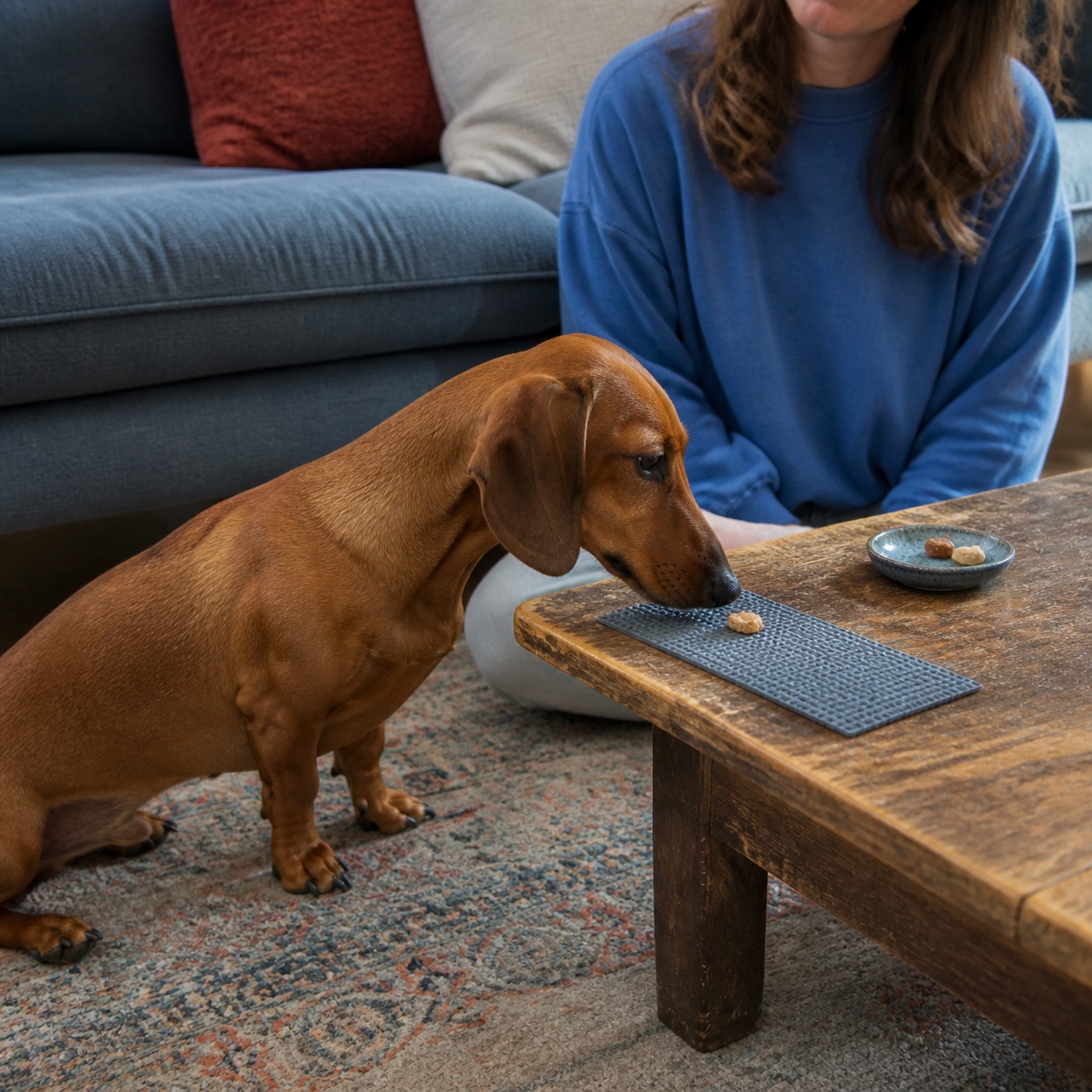
Some days it seems like your pet eats better than you, and honestly, that might be true. The trouble with the treat aisle isn’t a lack of options; it’s that everything claims to be the healthiest, tastiest, most miraculous choice at once. The fix is to stop shopping by hype and start shopping by job. Nearly everything in this category does one of four things: it rewards, it cleans teeth, it enriches a slow moment, or it makes mealtime work better. Decide which job you’re filling, then pick the product that does it well.
Two rules cut across all four. First, the 10 percent rule: treats and extras should stay under about 10 percent of your pet’s daily calories, whatever the job. Second, read the ingredient panel before the front-of-bag claims; a short, recognizable list beats a long one dressed up in buzzwords. With that, here are our picks, grouped by what they’re for.
Mealtime gear: bowls and feeders that fix a problem
The right vessel solves a specific issue, speed, posture, or whisker comfort, rather than just holding food.
Best whisker-friendly cat bowl
If your cat paces at their dish, paws food onto the floor, or leaves meals unfinished, whisker fatigue could be the cause. “Each time a cat’s whiskers encounter an object, a signal is sent to the brain,” says Dr. Gary Weitzman, CEO of the San Diego Humane Society, and too many at once can overwhelm. A shallow or tilted bowl keeps whiskers from brushing the sides. Vetreska’s tilted ceramic bowl pairs a wide, ergonomic shape with a non-slip mat.
Right for: cats showing whisker-fatigue signs. Wrong for: enthusiastic eaters who fling shallow-bowl food.
Best elevated dog bowl
Joint pain and aging go together. “I think elevated food bowls are a good idea for any dog, especially if they’re larger, or they have a chronic neck issue,” Dr. John Iovino says. This raised bowl from Pets So Good keeps a dog from bending too far at mealtime.
Right for: large or senior dogs with neck or joint issues. Wrong for: bloat-prone dogs, since raised bowls are debated for that risk, so ask your vet.
Best cat slow feeder bowl
For a cat who wolfs food, “Slow feeders are designed to help cats that tend to overindulge, eat competitively, or feast just for funsies,” says veterinarian Dr. Alycia Washington, adding they can cut vomiting and regurgitation. This Catit feeder has two tube shapes and difficulty levels, a sturdy silicone base, and comes apart for cleaning. One reviewer with an overweight, fast-eating cat called it “a life saver.”
Right for: overweight or competitive-eating cats. Wrong for: senior cats with dental pain who can’t dig.
Best dog slow feeder bowl
Speed-eating causes choking, gagging, vomiting, and can contribute to bloat, a serious condition. “My favorite way to keep dogs from scarfing down their food is a food puzzle or slow feeder,” says certified applied animal behaviorist Karen B. London, noting it also adds mental exercise. The Outward Hound Fun Feeder can slow a dog up to 10 times, comes in three sizes, and holds wet or dry food.
Right for: gulpers and bloat-prone breeds. Wrong for: flat-faced dogs who struggle with deep ridges.
Mealtime upgrades: toppers and supplements
For pets who need a nutritional nudge or a picky-eater fix.
Best dog food topper
Jinx’s topper has become a go-to against picky eating, adding vitamins a standard meal may lack. Go slow, though. “I don’t recommend offering special toppers or regularly switching up their food right out of the gate,” veterinarian Dr. Lindsay Bullen says. Give it time, then use it if your dog needs encouragement or a nutritional boost.
Right for: finicky dogs who need a nudge. Wrong for: dogs with sensitive stomachs prone to diet-change upset.
Best cat food topper
Cats are famously picky. Queer Eye’s Antoni Porowski and Jonathan Van Ness founded Yummers, offering “gourmet mix-ins” for flavor and “functional mix-ins” targeting heart, digestion, and allergies. “Our recipes are simple and don’t use any fillers,” Van Ness says, and many are single-ingredient and freeze-dried to preserve nutrients.
Right for: picky cats and targeted support. Wrong for: cats on a prescription diet, check with your vet first.
Best supplement for home-cooked diets
Cooking for your dog lets you control every ingredient, but it risks gaps. Migos makes an all-in-one supplement powder, built by vets and nutritionists, that supplies the vitamins and minerals a homemade diet can miss, including A and E, folic acid, and potassium. “My goal is to make real food for dogs accessible for everyone,” founder Caroline Artiss says.
Right for: home-cooked feeders who want balance insurance. Wrong for: dogs already on complete commercial food, who don’t need it.
Dental: chews that earn a checkup nod
A dental treat should clean through gentle chewing, not risk cracking a tooth.
Best dog dental treats
You know you should brush your dog’s teeth daily, and you probably don’t. Greenies’ chewy dental bones come in a range of sizes and flavors and are accepted by the Veterinary Oral Health Council for at-home dental care, which means they’ve been vetted for both safety and effectiveness. Always supervise, since a broken-off chunk could cause choking. And they’re not only for dogs, “Cats are very prone to gingivitis and periodontitis,” says veterinarian Dr. Lori M. Teller, so a cat version exists too.
Right for: daily plaque control without a toothbrush battle. Wrong for: aggressive gulpers who won’t actually chew.
Enrichment: making a slow moment count
These turn feeding into a job that occupies the mind.
Best cat grass
Even strict carnivores crave some greens. This set of three mini pots grows organic wheat, oats, rye, barley, and flax, chemical-free, sprouting in four to six days. It also steers cats away from potentially toxic houseplants. “Cat grass has been known to provide digestive benefits thanks to its impressive vitamin content: vitamins A and D, folic acid, niacin, and chlorophyll,” Dr. Teller says.
Right for: indoor cats who nibble plants. Wrong for: households wanting zero mess, since sprouting pots shed.
Best dog lick mat
Licking soothes, so a lick mat is a simple fix for anxiety, boredom, and speed-eating. “Lick mats engage your pet’s mouth and are especially helpful in giving vigorous chewers and nippers something else to do besides eat your rug,” says certified trainer Robert Haussmann. Smear on peanut butter or canned pumpkin and let them work. SodaPup is our pick for durability and design, made ethically in the U.S., with donations to animal rescues.
Right for: vet-visit prep, crate settling, and slowing a fast eater. Wrong for: dogs who destroy and swallow rubber, who need close supervision.
Rewards: treats for training and bonding
The best reward is small, high-value, and something you can hand over fast and often.
Best dog peanut butter
Many commercial peanut butters hide sugar or, worse, xylitol, which is toxic to dogs. “Ideally, a natural peanut butter is the best product for dogs to eat, as these don’t have added salt and sugars,” veterinarian Dr. Amy Fox says. West Paw’s creamy, blueberry-flavored treat is gluten- and grain-free, packed with fiber, and dispenses cleanly into a stuffable toy.
Right for: hiding pills, stuffing toys, and lick-mat spreads. Wrong for: dogs on calorie restriction, since nut butter is dense.
Best dog chews
New Zealand’s Ziwi Peak was created by Peter Mitchell, a former free-range deer farmer, and the air-dried bites are 96 percent meat, organs, and New Zealand green mussels, about as close to a wild diet as your pet will get. They’re grain-free with no added carbohydrates or artificial ingredients, and the bite-size format makes them double as training rewards. As training partner Tressa Fessenden-McKenzie puts it, “Treats are your most valuable currency” when teaching a dog new tricks.
Right for: grain-sensitive dogs and training. Wrong for: heavy chewers who need something longer-lasting.
Best dog jerky treats
There’s nothing like a treat your dog truly loves, and it feels better when it’s good for them. Migos, a Malibu-based fresh dog food brand, oven-roasts nutritious cuts, beef heart, liver, and grass-fed angus, into a simple jerky with no preservatives and no artificial colors or flavors. “After seeing what was available on the market, we wanted to create a very simple and healthy treat to complement our fresh food line,” founder Caroline Artiss says.
Right for: high-value training rewards and dogs who need a single-ingredient option. Wrong for: dogs on strict fat limits, since organ-meat jerky runs rich.
Best cat treats
Cats put up with supermarket cat cookies for too long. Inspired by a scruffy mutt named Bocce, Andrea Tovar started baking treats in a tiny New York City kitchen in 2010, cooking with ingredients from local farms: nitrate-free bacon, peanut butter from Teddies (a family-owned Massachusetts farm), and antibiotic-free chicken from Bell & Evans in Pennsylvania. Bocce’s soft chews for cats are protein-first, by-product-free, and limited-ingredient, and at roughly one calorie each they’re ideal for a weight-watching cat.
Right for: picky cats, weight management, and frequent training rewards. Wrong for: anyone who wants a crunchy dental treat, which this isn’t. As veterinarian Dr. Annette Louviere notes, “Generally speaking, treats should make up no more than 10 percent of your cat’s daily calories.”
A note on how we chose
Our editors picked these products for the job each does best, weighing vet and trainer input, ingredient quality, and real-world durability. They were in stock at publishing but may sell out. Match the product to the job you’re actually filling, keep the 10 percent rule in mind, and your pet gets the benefit without the hype.
References
- Veterinary Oral Health Council: VOHC Accepted Products. https://vohc.org/accepted-products/
- American Kennel Club: How Many Treats Can I Give My Dog? https://www.akc.org/expert-advice/nutrition/how-many-treats-can-i-give-my-dog/
- Cornell Feline Health Center: Feeding Your Cat. https://www.vet.cornell.edu/departments-centers-and-institutes/cornell-feline-health-center/health-information/feline-health-topics/feeding-your-cat
- American Veterinary Medical Association: Bloat (Gastric Dilatation-Volvulus) in Dogs.
Not a substitute for your vet. Our guidance is educational. For urgent symptoms, contact a vet or emergency clinic right away. Editorial standards
Sasha Ford is a certified cat behaviour consultant who has worked with shelters, catteries, and private clients across the country. They review all feline behaviour content at The Pet Times, with expertise in multi-cat households, indoor enrichment, and stress-related disorders.
Meet our experts ↗Keep reading
 FoodYour Dog Can't Have Your Ice Cream. Here Are 5 They Can, and How to Pick One.Sara Lim · 5 min
 Product Picks7 Holiday Dog Treats That Actually Earn a Spot in the StockingSara Lim · 6 min
 FoodSalmonella Pulled These Freeze-Dried Chicken Treats. Check Your Pantry for the Lot Numbers.Dr. Mara Chen · 3 min
 Product Picks22 Spooky-Cute Toys and Treats Your Resident Goblin DeservesSara Lim · 8 min
 Product Picks8 Pet Advent Calendars Worth the Countdown (and How to Pick One)Sasha Ford · 6 min
 Product PicksHolistic Pet Products: What's Actually Worth It, and What's Just WooDr. Ravi Mehta · 7 min