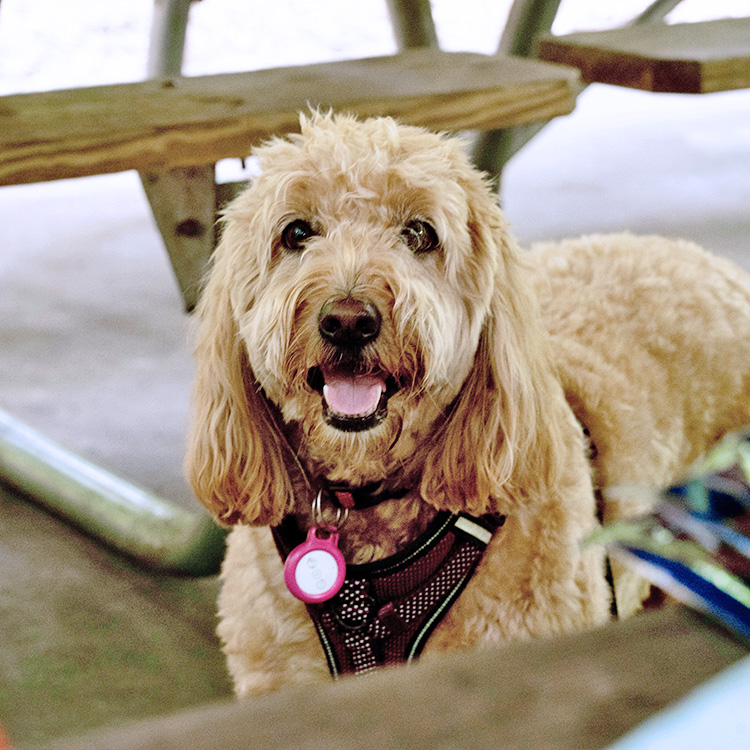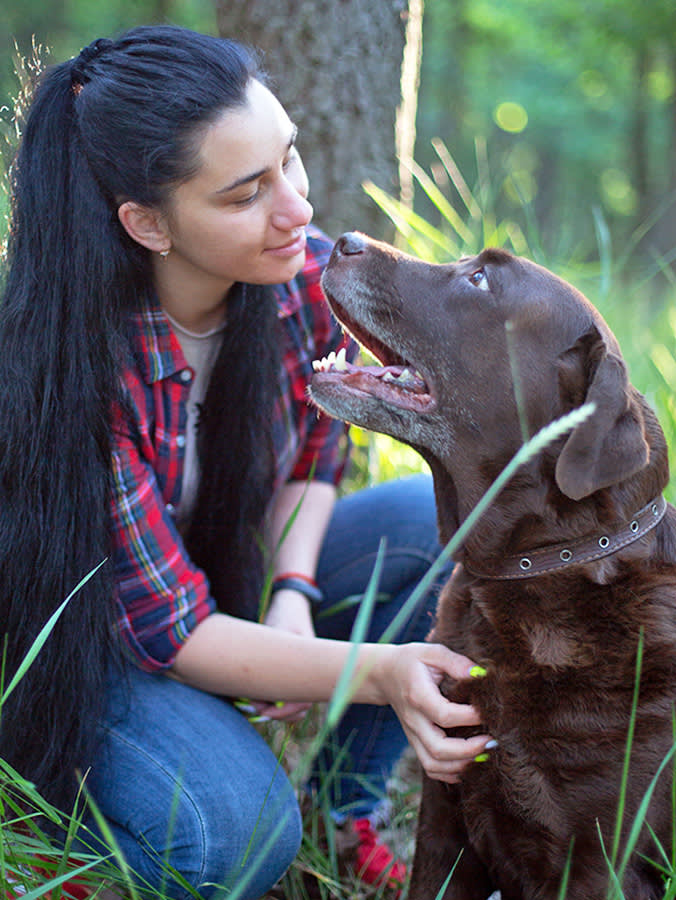
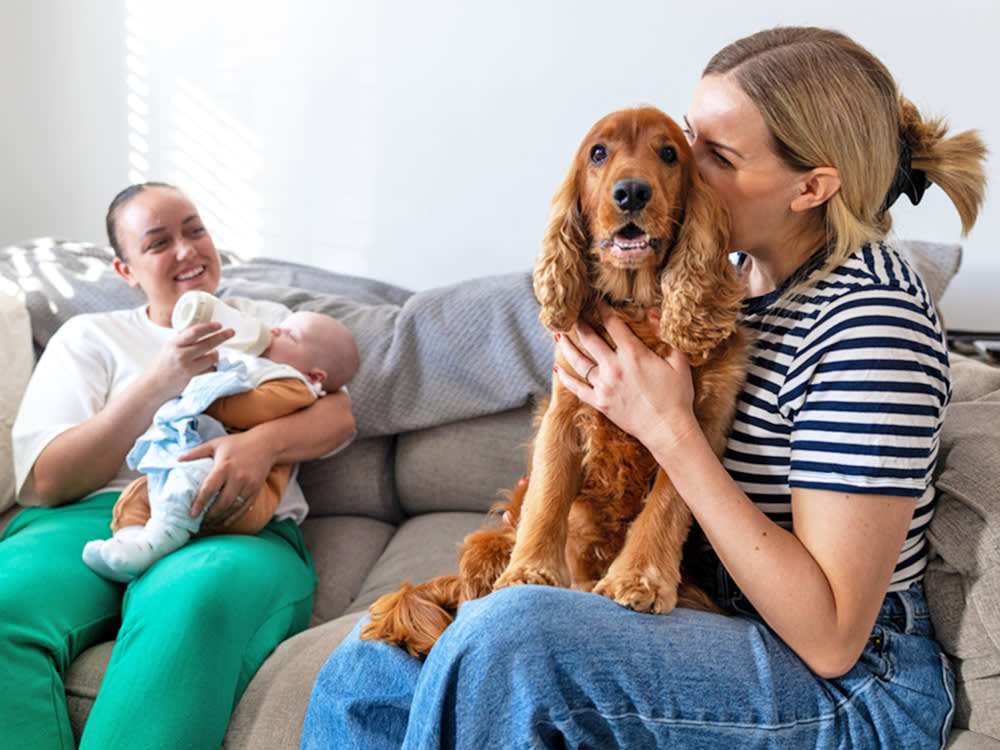
When Hilary Weaver brought home her puppy Georgie seven years ago, she quickly found herself in over her head. Puppies are undeniably adorable, but they are also a relentless amount of work, demanding constant supervision, careful routines, and the kind of patience that does not come naturally when you are sleep-deprived and cleaning up your third mess of the morning. “I was super overwhelmed,” she tells me. “I had to start thinking differently and living differently and every time we left the house I had to make sure she had all her accessories, her pills, her toys. It was a lot.”
At some point, she mentioned offhandedly to a coworker that looking after Georgie was “like having a baby.”
The coworker, who had children of her own, did not take this well. “No, it’s not,” she said flatly, and then walked away.
That two-word dismissal left a mark. “I was so embarrassed,” Weaver says. “I wasn’t saying Georgie was a baby, but she was the closest I had come at that point, and [caring for her] was a lot.”
There is an understandable disconnect here.
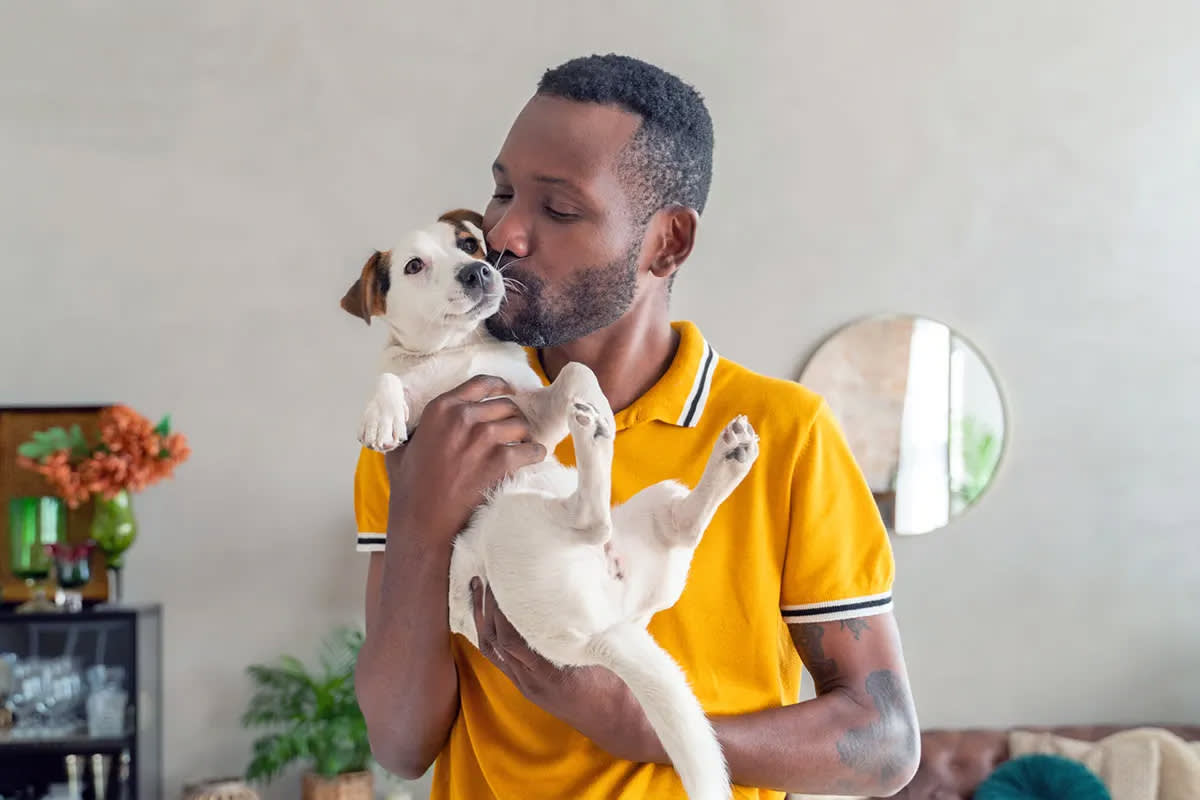
Weaver’s experience is not an outlier. Pet parents across the board, whether they are child-free by choice or simply not at that stage of life yet, often find that the love they pour into their animals is met with skepticism, dismissal, or outright ridicule by people who have taken a different path.
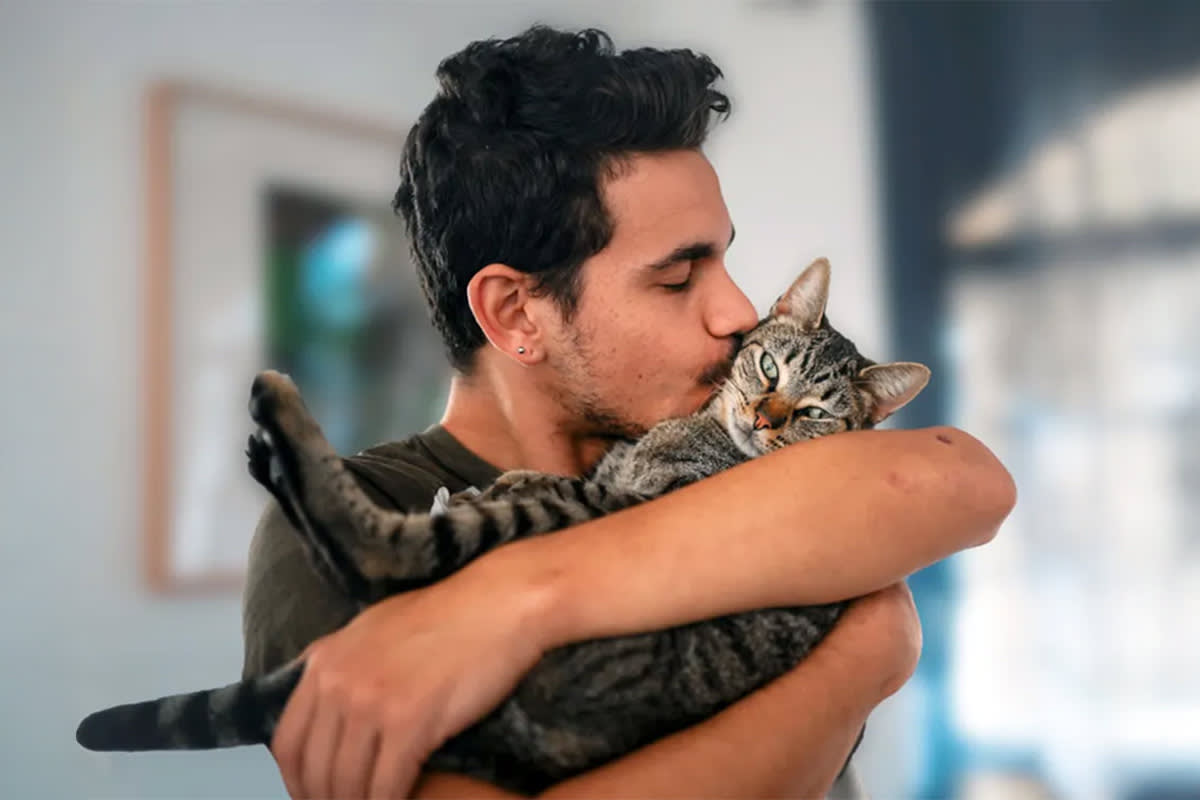
“People are so caught off guard when I do things for my cats that they might do for their human kids,” says Anna Tripolitis, cat mom to Fleur and Tula. “For example, every year my girls and I do a full-on photoshoot for our holiday card. I write their names and ages and will sometimes even give updates on their interests and life events. When I tell people this, they usually laugh and tell me I’m ridiculous.”
International cargo pilot Robbie Barnhart does not currently have pets of his own, his schedule and the absence of a live-in partner make it unworkable, but he is a deeply devoted godparent to the animals belonging to his closest friends. “I flew across the country to petsit my friend’s dog when she was covering the royal wedding, and I ask for updates on my godpets daily,” he says. Even so, he regularly feels judged by colleagues who have children. “When I worked for a passenger airline, the question of kids would often come up with my coworkers. A flight attendant asked me if I had kids, and I said, ‘No. I don’t want them. Only dogs.’ And she said, ‘Oh, you’ll change your mind when you get older,’ but that is not true for me; I’ve stood firm in my convictions for nearly a decade now.”
The assumption that pet love is just a phase on the way to “real” parenting is a persistent one. “I’m engaged and getting married next year,” says Lauren Dixon, pet mom to calico cat Sookie and Cattle Dog mix Spider-Man. “With that, comes a lot of questions or assumptions about kids being the next step in my relationship, but my fiancée and I are very happy with our animals and feel fulfilled. We’ve made it very clear that kids are not in our plan, but one family member in particular keeps bringing it up. For me, my pets are my kids, and it’s frustrating to feel like others don’t see it that way.”
There’s sometimes something closer to hostility in how people respond to those who’ve chosen pets over children, especially if those pet parents are bold enough to call their animals their kids. Even an offhand, analogous comment, the kind Weaver made to her coworker, can get treated like a direct attack on the institution of parenthood itself.
After Barnhart told the flight attendant he didn’t ever want kids, she became unable to talk about anything else. “From that point, it became her prerogative to defend her choice to have children — when I didn’t care or ask,” he says. And yet, she continued to push the issue, as if she needed him to want kids in order to feel confident and secure in her own decision to have them. “She’d tell me: ‘They’ll break your heart, but it’s so worth it.’ and I was like, ‘Sounds miserable to me, Shelly.’”
According to Cheryl Groskopf, a dual-licensed marriage and family therapist and professional clinical counselor at Evolution to Healing Psychotherapy in Los Angeles, Barnhart seemed to have a pretty accurate understanding of what was going on in that interaction. “A lot of parents — not all, but a lot — have wrapped their entire self-worth and purpose into the experience of raising human kids,” Groskopf says. “It’s the most all-consuming role they’ve ever had — physically, emotionally, and financially.”
She continues: “So, when someone casually says, ‘My dog is like my child,’ it can hit a nerve. Not because the person hearing that hates dogs. But because part of their brain interprets it as, ‘You’re not that special.’ Or worse, ‘That brutal, life-altering sacrifice you made? I can get that same feeling just by adopting a rescue.’”
That is not the message pet parents are sending, though. It certainly was not what Weaver meant. She was expressing genuine love for her dog and real struggle with the demands of new puppy parenthood. The fact that her coworker seemed to read it as an insult reveals something about the coworker, not about Weaver. Still, it stings when the people around you cannot seem to hold space for what you’re going through.
Of course, Weaver’s coworker may well have been overwhelmed in her own right. Hearing someone describe their dog as exhausting, however lightly, might have felt a bit like someone complaining about a paper cut while you’re dealing with something far more serious.
People with kids definitely feel the stress.
Parents often feel overworked and like they can’t meet expectations. A March 2025 poll from Talker Research found that 53 percent of parents find it “impossible to measure up to the ‘perfect’ parents they see on social media.” In addition, 94 percent of parents said they experience “an average of seven instances of chaos on a daily basis.” It can be an exhausting job, and it’s really no wonder that so many people are opting out of it these days.
On the other hand, someone choosing not to have children may be especially triggering for someone who maybe felt like they had no choice in the matter themselves.
Maybe they felt pressured to have kids by their partner, their family, a doctor who told them they were running out of time, or society at large. Maybe it never really occurred to them that not having children was even an option. So, when they see someone making a choice they feel they were denied, they feel resentful. Or maybe they just wish they had a break sometimes. Even if they love their kids. Even if they wouldn’t want to trade places with that child-free person in a million years.
This issue goes a lot deeper than what’s at the surface.
In either case, it’s not really about kids versus pets. “It’s about belonging and identity and the need to have one’s life choices validated in a society that often sets narrow expectations for what fulfillment should look like,” says Jessica Tate, chief clinical officer at Milton Recovery in Palm Beach, Florida. “The fact is, we live in a culture where the traditional path — partner, children, the nuclear family — is still upheld as the default measure of adulthood and success. Those who pursue alternative forms of connection, such as being a devoted pet parent, are sometimes perceived as deviating from that script.”
And that can be especially upsetting for people who chose not to deviate and now have unresolved or unexamined regrets and resentments around that decision.
But just because you are triggered by someone, doesn’t mean they are doing something wrong. There is a tendency in our culture to blame others for the way we are feeling and to say, “I’m uncomfortable, and it’s your fault.” And while it may be comforting to shift the blame for your hurt to someone else, it doesn’t address the real issue, which is whatever feelings, memories, or conflicts that moment of discomfort brought up for you. “That’s where the healing work needs to be done,” Groskopf says.
She adds that if you want to actually move through these feelings, you need to zoom out. “For parents of kids: Notice if you’re feeling unseen, exhausted, or like nobody appreciates the weight of what you carry.” That’s real. But it doesn’t mean others are minimizing it; they’re just having a different experience.
Groskopf advises anyone who feels judgmental toward a child-free pet parent to observe their own hangups first. In this instance, she says, just realizing “‘this isn’t actually about [the pet parent] — it’s about what this stirred up in me’ is enough to lower the temperature.”
Operate with curiosity and empathy.
If you are close with the person who is judging you and feel the need to discuss the issue further, try to approach that interaction with curiosity rather than defensiveness. Ask questions and state your case without trying to convince them of its superiority. “It is OK for us to have different values,” says Ashley French, a licensed professional counselor at Denver Therapy in Denver. “Remember that the decision to have children or not, to have pets or not, is a reflection of our own desires and circumstances, not an attack on someone else’s choices.”
It’s also worth remembering that not all people who have pets instead of children do so by choice. “Sometimes, pet parents want to be human parents but have trouble conceiving or cannot conceive, have lost a child, or feel they do not have the financial resources to parent well,” French says. “And in these cases, rejection and being seen as ‘less than’ by parents with human kids can feel especially painful.”
This is certainly the case for Weaver, who has been struggling with infertility for two years. “Being a dog parent is a salve while my partner and I are going through this process, which has been so painful, frustrating, and expensive,” she says. “I know it’s not exactly the same as having a kid, but it’s what I’ve got right now, and it’s not for lack of trying.”
And if, after all this, you’re still feeling hurt by someone else’s response to your choices, walk away. That may be easier said than done, but you cannot change another person. You can only change yourself, and protect your peace. “It’s not worth interacting if one or both parties demonstrate an inability to accept that other adults made a different decision, or if they are just shaming one another. This behavior doesn’t demonstrate a willingness to understand, just a desire to win,” French says.
Plus, Groskopf says, you don’t have to make a “dramatic exit” from the interaction: “Just a shift. Pull back. Respond less. Give short, kind replies. You’re allowed to disengage without announcing it. And if you want to name it before stepping away, say something like: ‘I think we see this really differently, and that’s OK. I just don’t think these conversations feel good for either of us.’ That’s it. You’re not trying to win. You’re protecting your nervous system. And that’s the real work, anyway.”