


The Campaign Had a Secret Weapon, and She Weighed Ten Pounds
Annie Wu Henry built the viral TikTok playbook behind John Fetterman's 2022 Senate win. The unofficial role that kept the war room functioning belonged to her dog, Bella, the office's resident stress reliever.
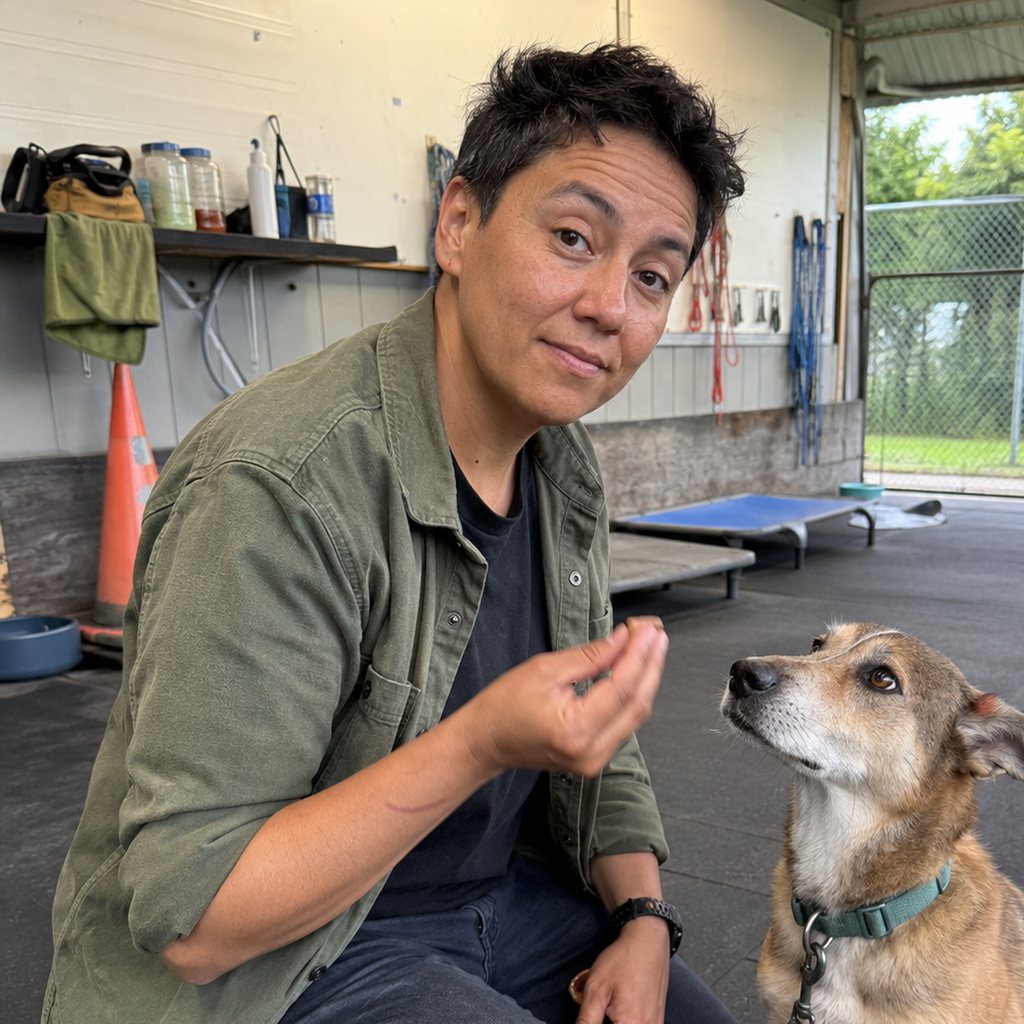

Every high-pressure workplace develops its own unofficial infrastructure: the person who makes the coffee, the desk where everyone vents, the ritual that keeps a stressed team from fraying. On one of the most-watched political campaigns of 2022, a surprising amount of that load was carried by a Shih Tzu and Yorkie mix named Bella, who weighs about as much as a bag of flour and has a closet that includes an extra-small Fetterman shirt and an Eagles jersey.
Bella belongs to Annie Wu Henry, the Philadelphia-based social media producer who became internet-famous for the TikTok strategy behind Senator John Fetterman’s win over Mehmet Oz in Pennsylvania’s bruising 2022 Senate race. That work has been studied and copied since. Less discussed, and arguably just as instructive, is what her dog was doing in the office while she did it. So rather than walk through the campaign and then mention the dog, it’s worth flipping the frame: this is the story of how one small dog became a piece of a winning campaign’s emotional machinery, told through the producer who brought her to work.
The strategist behind the screen
To understand Bella’s job, you have to understand the pressure she was absorbing. Henry’s brief was to make a Senate campaign genuinely native to the internet, not a stiff politician awkwardly chasing a trend, but content that understood the platforms and the audience from the inside.
Her guiding principle was a line borrowed from Taylor Swift: “embrace the cringe.” She’s explained that it wasn’t about doing offbeat things half-heartedly, it was about fully committing to them. “It was really about leaning into the things that we were doing,” she has said, “not just doing them, but really going for it.” When the strategy called for defining the opponent, the team defined the opponent. When TikTok was the move, they committed to doing it well rather than dabbling.
The output became a template. There was the clip imagining Oprah taking Oz down, the video challenging Oz’s claim about where he grew up, and a remix of one of Oz’s own videos set to a Swift soundtrack, a nod to the fact that Swift is a Pennsylvania native. The tone walked a deliberate line: pointed about the opponent’s record, but never mean for its own sake. “We never wanted it to feel mean or gross,” Henry has said, contrasting it with the opposition’s approach. Even the jokes were calculated, every choice had a reason behind it, she’s noted, “even if it did seem a little goofy.”
Dogs, it turns out, were woven into the campaign’s public identity too. Fetterman’s own two rescue dogs, Levi and Artie, were central enough to the story to get their own social account, written from the dogs’ perspective by an anonymous staffer, mixing behind-the-scenes charm with the issues the campaign wanted in front of voters. “Everyone loves dog content,” Henry has said, and the team knew it. There was even a “Dogs for Fetterman” sticker.
The job no one assigned her
Bella’s official status was nonexistent. Her actual function was clear to everyone who worked there.
“She was definitely an emotional support animal,” Henry has said. “When I took her into the office, I think she was the emotional support animal for the office.” On a campaign, where the hours are long, the stakes feel total, and the stress is relentless, that role is not a cute footnote. It’s a release valve. Henry describes a coworker taking Bella out for a walk simply because he needed a few minutes to decompress on the job, the dog as a socially acceptable excuse to step away and breathe.
This matches something researchers who study workplaces have found repeatedly: short, low-effort breaks and small doses of positive interaction help buffer acute stress, and a friendly dog is an efficient delivery system for both. Petting a calm, willing dog is a brief, grounding interruption to a spiraling day. Bella, for her part, was a willing participant. She “obviously liked the attention of being played with and being held,” Henry has said. The arrangement worked in both directions, which is exactly why it worked at all.
It helps that Bella has the right temperament for the job. Henry describes her as young enough to still want to play but mellow enough to be easy company, a dog who is, in Henry’s words, “really good at chilling.” That blend, engaging when you want engagement, undemanding when you don’t, is close to the ideal profile for a dog who’s going to share a frantic workspace with a dozen exhausted adults.
A campaign dog’s actual workload
Bella was not a full-time fixture on the trail. She was usually based at Henry’s parents’ place in York County, which happens to be Fetterman’s home turf too, and came to visit, including a handful of days at the office and a little time on the campaign trail. She was in Pittsburgh for a rally, though when it turned into a downpour, she sat that one out with a friend rather than getting soaked.
Her most public outing was civilian, not political. After the Eagles advanced to the Super Bowl, Henry took Bella to Broad Street in Philadelphia to join the celebration, getting out before the crowd “got too, too crazy.” Bella, in her little Eagles jersey, was both overwhelmed and thrilled by the crush of people, and the crowd was thrilled right back to find an Eagles pup in the mix. It’s a small scene, but it captures the same thing the office did: a dog functioning as a tiny, mobile source of shared good feeling among stressed-out humans.
She’s also, by her owner’s account, an easy dog to dress, within limits. No hoods or anything on her head, but she’s fine in soft, light layers, a T-shirt, a little jacket, the jersey. That cooperative streak is part of why she travels and socializes as smoothly as she does.
Dog person, with an asterisk
Henry’s devotion to Bella sits in gentle tension with her other great internet love, Taylor Swift, an avowed cat person. Henry is a dog person mostly by circumstance, she’s allergic to cats, so she grew up with dogs. She’s diplomatic about the rivalry: cats have personality, she allows, but dogs are more fun and more inclined to cuddle and play.
She’s also honest about the tradeoffs in a way many dog owners quietly recognize. A cat, she admits, might actually fit her current lifestyle better, since cats can be left to fend for themselves while dogs, hers especially, want attention “pretty much 24/7.” That she chooses the more demanding animal anyway is its own kind of statement about what she gets back. “I just like pets in general,” she’s said; if she weren’t allergic, she’d happily cuddle a cat too. But Bella, she says, is “the perfect little dog.”
What a ten-pound dog teaches a war room
It would be easy to file Bella under “fun campaign trivia,” the staffer’s dog who wore tiny political merch. The more useful reading is that she illustrates something real about how stressed teams stay functional. The most demanding workplaces don’t run on willpower alone; they run on small, repeated moments of relief, and a steady, willing dog can manufacture those moments on demand.
Henry built the visible machine, the strategy, the timing, the instinct for what would land online. Bella ran the part of the operation nobody puts on an org chart: the part that let a coworker step outside, breathe for two minutes with a small dog on a leash, and come back able to keep going. On a campaign measured in viral hits and a final vote count, that quieter contribution is harder to tally but not hard to believe.
Editor’s note: In the period after Henry’s interview about the campaign, Senator Fetterman was hospitalized, first for a medical setback and later to receive treatment for depression. Depression following a stroke, as one psychiatrist told The New York Times at the time, is very common, often serious, and importantly, very treatable. Fetterman’s openness helped bring stroke recovery and mental health into a national conversation, and we wish him a full and meaningful recovery.
Jordan Ellis is a certified professional dog trainer with a decade of experience working with rescue organisations and private clients. They specialise in anxiety, reactivity, and positive reinforcement methods, and review all training and behaviour content at The Pet Times.
Meet our experts ↗Keep reading
 LivingShe Paints the Rescue Dogs Nobody Wanted. They're Unforgettable.Leila Torres · 4 min
 LivingYour Dog Walker Loses $5 of Every $15 Walk. Here's Where It Goes.James Okafor · 8 min
 LivingThe 8 Dogs Who Built the Entire Pet-Influencer EraLeila Torres · 5 min
 Living'Pup Pop' Is a Real Genre. These 7 Music Videos Prove the Dog Is the Best PerformerJordan Ellis · 6 min
 LivingThe 90-Day Rule for Adopting a Dog With Someone NewClaire Sutton · 6 min
 LivingHis Dog Walks Into the Office at 5 P.M. and Ends the WorkdayJames Okafor · 6 min