


Puppy or Grown-Up Pet? Stop Choosing With Your Heart, Run This Audit
The young-versus-adult decision is usually made on cuteness and regretted later. Here is an honest self-audit, a side-by-side comparison, and the case for the adult pets who need you most.

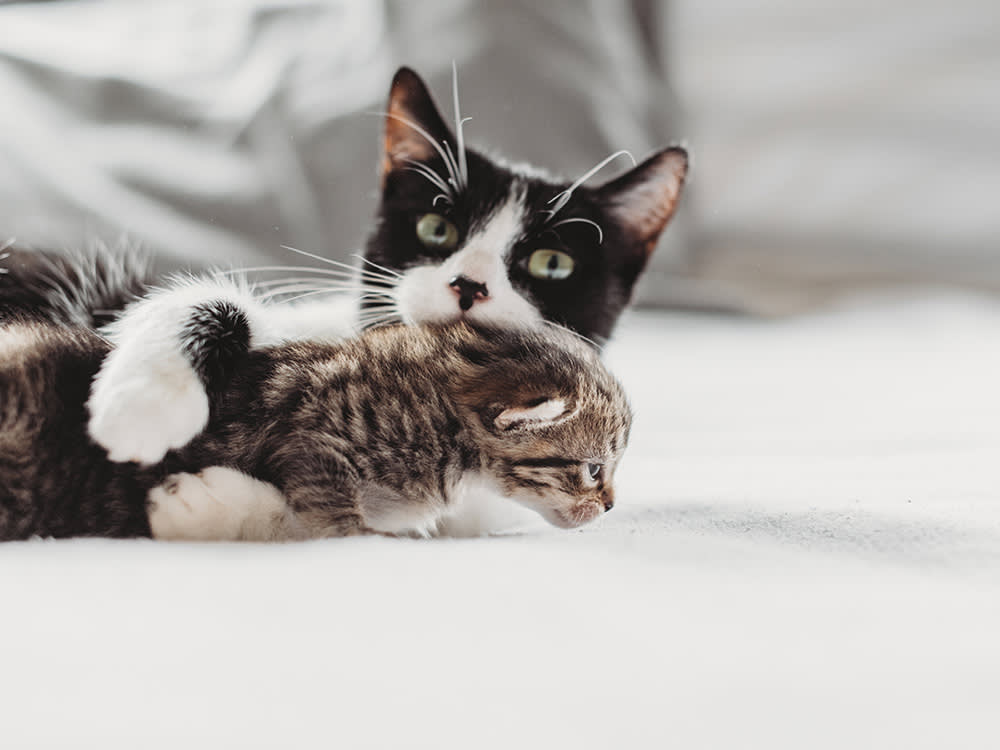
Most people choose between a puppy or kitten and an adult pet with the wrong organ. They fall for the fresh-puppy smell or the tiny kitten toe beans, take the baby home, and only later run into the gap between the adorable creature they imagined and the year-plus of training, cleanup, and round-the-clock attention they actually signed up for. The cuteness is real. It is also the worst possible basis for the decision.
The better way to choose is to stop asking “which is cuter” and start asking “how much does my real, current daily life overlap with what each life stage demands.” That is an answerable question, and answering it honestly is the difference between a joyful adoption and a regretted one. So before you fall in love, run the audit.
The self-audit: five honest questions
Score yourself on each of these. Lean toward a puppy or kitten if your honest answers cluster on the first option, toward an adult if they cluster on the second.
- Time. Can you realistically devote large chunks of the day, for a year or more, to training, supervision, and play? Or is your schedule already full, with long stretches when no one is home?
- Tolerance for mess and chaos. Are you genuinely fine with accidents, chewed belongings, and a sometimes-destroyed pair of shoes? Or do you need your home to stay mostly intact?
- Patience for the unknown. Are you excited to shape a developing animal and accept that their adult personality is partly a gamble? Or do you want to know exactly who you are getting?
- Budget and timing for setup. Are you ready for puppy-or-kitten startup costs and vet schedules? Or would waived adoption fees and an already-vetted animal make your life easier right now?
- Energy match. Does your household run high-energy and hands-on? Or do you want a calmer companion who fits a quieter, more predictable rhythm?
Notice that none of these questions is about cuteness, and all of them are about you. That is the point. The right choice is the one that matches the life you actually live, not the one you picture on a perfect Saturday.
What you are really signing up for, side by side
Here is the honest comparison, built from the practical realities of each stage.
| Factor | Puppy / Kitten | Adult Pet |
|---|---|---|
| Training | Intensive: housebreaking, basic cues, leash work, socialization, handling | Usually arrives with the basics down; may need fine-tuning |
| Cleanup | High: accidents, teething damage, sensitive stomachs | Low to moderate; mostly past the destructive stage |
| Time demand | Very high, especially first year or two | Manageable around a normal schedule |
| Personality | A gamble; shaped but not guaranteed by you | Known and on display from day one |
| Cost at adoption | Standard or higher fees, full vetting ahead | Fees often reduced or waived; usually already fixed, chipped, vaccinated |
| Energy | High, frequent zoomies and chaos | Generally mellower, though not silent |
| Best for | People home often, with time, patience, and tolerance for mess | Busier people, first-time adopters wanting predictability, calmer homes |
The training reality
Training is the single biggest demand of a young animal, and it falls more heavily on dog people than cat people, since a kitten will hopefully come home at least litter-box trained. With a puppy, the first chapter of your relationship is housebreaking, basic cues like sit, stay, and heel, leash training, and socialization with people and other animals. With a kitten, the young window is the prime time to teach them to accept handling, including sensitive spots like the belly and feet, and to learn that your hand is not a chew toy.
The personality question
This is where adopting an adult quietly wins for a lot of people, and it is worth hearing from a behavior perspective.
“The most common thing adopters tell me they want is a lap cat,” says Dr. Mara Chen, a veterinarian on our advisory roster. “And the most reliable way to get one is to adopt an adult who is already being a lap cat in front of you. People believe they can mold a kitten or a puppy into exactly the temperament they want, and the truth is, so much of temperament is simply not under our control. We can encourage and train, but we cannot guarantee. With an adult, what you see is genuinely what you get.”
That predictability cuts both ways and is its own kind of gift. If you need a specific energy level, a kid-tolerant nature, or a calm companion, an adult lets you choose a pet who already demonstrates exactly that, rather than hoping a baby grows into it.
Time, mess, and your actual schedule
Young animals need consistent, frequent care, both for practical reasons, like a puppy needing out every couple of hours, and for development, since the more positive time they spend with people while young, the more confident they become as adults. As Dr. Chen puts it, kittens are “go, go, go nonstop play,” and they need a matching level of attention. A tired, well-entertained young animal is far less destructive than a bored one, but providing that takes someone around.
Adults are the opposite. An adult cat is usually fine on its own through a workday, and an adult dog may need only a midday walk or a chance to go out. If you work longer hours or want to keep an existing routine, an adult fits a real schedule far better than a baby does.
There is also a money angle people overlook: many agencies reduce or waive fees on adult animals to help them find homes, which can mean hundreds of dollars saved on an animal who is already microchipped, fixed, and current on shots, right when you are spending on setup.
The case for the pets who need you most
Here is the part that should weigh on the scale alongside your self-audit: adult and especially senior pets need homes more urgently than puppies and kittens do. They wait longer, they get passed over, and they end up in shelters for reasons that usually have nothing to do with being bad pets. They deserve a loving home every bit as much as any baby, and they will return the favor with just as much companionship and affection.
The fear that you get less time, or a less intense bond, with an older pet does not hold up. Pets bond deeply with new families at any age, and many adults and seniors have years ahead of them. What you trade away in puppy potential, you gain in certainty, ease, and the particular satisfaction of helping the animal least likely to be chosen.
The honest bottom line
Neither choice is better in the abstract. A puppy or kitten and an adult pet simply need different things and suit different people. Run the audit honestly, look at the side-by-side, and pick the stage that matches the life you actually have, not the one in the daydream. Do that, and whichever you bring home, you will have chosen with your head, which is exactly what gives your heart the best shot at the long, happy version of this story.
Marcus Webb writes about the gear, gadgets, and everyday choices that make life with a pet easier. His coverage runs from product picks to training and the causes worth paying attention to, always with an eye on what actually earns a place in your home.
Meet our experts ↗Keep reading
 Product PicksThe Pet Carrier That Buys a Rescue Dog a Ride OutLeila Torres · 4 min
 LivingHalf of Survivors Won't Leave Without the Dog. Only 12% of Shelters Take One.Nina Vasquez · 9 min
 LivingThe Easter Bunny Is a 10-Year Commitment. Make Yours Chocolate.Nina Vasquez · 5 min
 LivingLA's Big Shelter Idea: Pay People to FosterMarcus Webb · 4 min
 LivingOne in Three Pets Has No Home. The Top Reason People Give Theirs Up Isn't Cruelty.Nina Vasquez · 7 min
 Living18 Pet Charities That Turn Your Giving Tuesday Dollar Into a Real RescueJordan Ellis · 8 min