


8 AAPI-Founded Pet Brands That Started With a Problem No One Would Solve
These aren't feel-good Heritage Month picks. Each of these eight AAPI-founded pet brands exists because a founder hit a real problem firsthand, which is exactly why the gear is good.

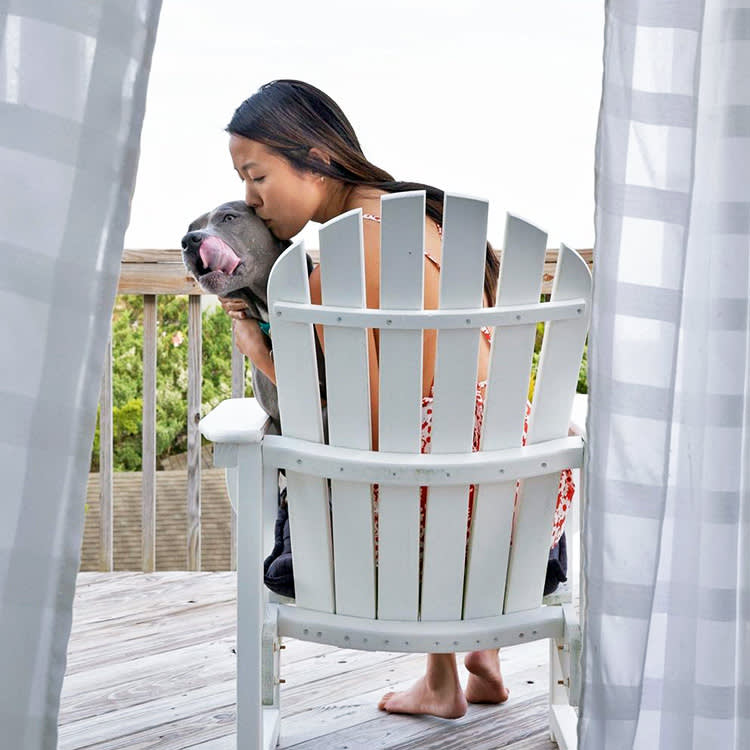
The easy way to write about AAPI-founded pet brands during Asian American and Pacific Islander Heritage Month is to round up some logos and tell you to feel good about your cart. The more useful angle is the one the brands share without meaning to: nearly every one of these companies started because its founder ran into a problem no existing product solved, then built the fix. That origin is why the products are worth your money in May and every other month. Grouped by what they make, here are eight, and the problem each one set out to crack.
For the adventurous, hard-on-gear dog
Durability is not a marketing word for active dogs. It is the difference between buying a harness once and buying it four times.
Wildebeest began as Jane Lee’s passion project after she adopted her rescue dog and wanted gear that could keep up. It has grown into a one-stop shop for active dogs, with collars, harnesses, leashes, treat bags, and jackets in colorful, ultra-durable builds. The standout policy, and the reason it earns a spot over flashier brands, is free repairs for life, for life, a genuine commitment to cutting waste and keeping gear in use for years.
Boo Oh comes from furniture and product designer Jay Sae Jung Oh, whose sculptural furniture work has appeared in Architectural Digest and won Best in Show at Design Miami. She started Boo Oh after her new Frenchie (the eponymous Boo) shredded ordinary dog products far too fast. Her industrial-design background shows in minimalist pieces built to last. Right for the design-minded owner who wants gear that looks intentional and survives a chewer.
RIFRUF exists because of a sidewalk. When founder Peter Liu’s dog Caesar stepped on broken glass in their New York neighborhood and cut his paw, Liu went looking for protective dog shoes that were both functional and not embarrassing, and found nothing. So he made them: breathable mesh, a protective rubber insole, and an adjustable strap, built to look and feel like a real sneaker. RIFRUF also regularly partners with social-cause organizations including The Trevor Project, Stop AAPI Hate, Asian Americans Advancing Justice, the Asian American Legal Defense and Education Fund, and Act to Change. A buyer’s note: protective footwear takes a patient acclimation period, so order early and let your dog get used to it indoors first.
For the toy box
The best toys do double duty, holding up to teeth while keeping a dog’s brain busy.
P.L.A.Y. is a B-Corp certified, San Francisco-based maker of some of the most charming, playful toys around, with environmental ethics baked in. Headquarters runs entirely on renewable energy, and the toys are stuffed with PlanetFill, an eco-friendly filler made from recycled plastic bottles.
“Now that I am a father of two, I am even more cognizant of the importance of leaving a better world behind for our future generation,” founder Will Chen has said. “That’s a strong enough motivation to look at business decisions not just from a profit standpoint but from an environmental and social responsibility perspective.”
The Furryfolks makes some of the cleverest-designed toys on the market, built to be enriching and interactive rather than just cute, with practical touches like treat pockets and squeakers. The thesis from co-founder Hye Min is that a toy should strengthen the bond between dog and owner, not just occupy the dog, which is the right bar for anyone shopping enrichment rather than novelty.
For the stylish pet (and the conscientious shopper)
Pet apparel gets a bad rap as frivolous, but the better brands take sourcing as seriously as silhouette.
Jax & Bones founder Tinya Nguyen turns soda bottles and fabric scraps into plush beds, durable toys, and accessories, all produced locally in Los Angeles.
“Our dogs are really like our children, so every fabric, every dye, every raw material we give them needs to be closely inspected,” she has said. “When I’m trying a new material, I actually scratch it, kind of like a dog, and smell everything. I’m a little obsessive, but I think we’re all obsessed with our animals.”
For every sale, Jax & Bones donates 10 percent of proceeds to rescue and animal-welfare groups.
Little Beast is practically a rite of passage for stylish pet parents, a Gen Z and millennial favorite making sweaters, fleeces, onesies, and parkas for trendsetting dogs and cats, without sacrificing ethics for fashion. Founder Jisu Kim has said she is “super conscious of where the products I purchase are coming from” and leans on small, local businesses for the care that goes into each piece.
For the treat jar
Maison de pawZ makes artisanal, Parisian-inspired “pâwtisseries,” from birthday cakes to pumpkin-spice-latte biscuits, hand-cut and slow-baked in small batches with locally sourced ingredients. The practical detail that makes them more than novelty: each biscuit is low-calorie and capped at five ingredients hand-picked from farmers’ markets, which makes them a reasonable option for pups with sensitive stomachs. As with any treat, count them toward your dog’s daily calories rather than on top of them.
Eight brands, one pattern. Every founder here started as a frustrated pet owner before they were an entrepreneur, which is why the products solve problems instead of inventing them. That is the real reason to add them to your cart, this month and beyond.
References
- Federal Asian Pacific American Heritage Month. asianpacificheritage.gov, https://asianpacificheritage.gov/.
- B Lab. “About B Corp Certification.” bcorporation.net, https://www.bcorporation.net/en-us/certification/.
- Salon 94 Design. “Jay Sae Jung Oh.” salon94design.com, https://salon94design.com/designers/jay-sae-jung-oh/.
Sasha Ford is a certified cat behaviour consultant who has worked with shelters, catteries, and private clients across the country. They review all feline behaviour content at The Pet Times, with expertise in multi-cat households, indoor enrichment, and stress-related disorders.
Meet our experts ↗Keep reading
 Product PicksTikTok Sold You the Demo, Not the Dog. 7 Gadgets That Survive Real Life.Sasha Ford · 8 min
 Product PicksA Bored Dog Wrecks Your Couch. These 6 Picks Wreck Their Boredom Instead.Marcus Webb · 5 min
 Product PicksThe 5 Products Ashland Avenue's Papa the Poodle Can't Live WithoutNina Vasquez · 3 min
 Product PicksThe Best Dog Toys Aren't Toys. They're Puzzles.Jordan Ellis · 6 min
 Product Picks9 Cult-Favorite Dog Products, and the Exact Problem Each One SolvesSara Lim · 6 min
 Product PicksA Fashion Founder's Dog Shelf, Audited: 2 Are Real Buys, 1 Is a PropSara Lim · 7 min